Mastering Real-World AI: Deep Learning's Quest for Cross-Subject Generalization in EEG Decoding
Explore how deep learning tackles inter-subject variability in EEG decoding for applications like clinical diagnostics, motor imagery, and emotion recognition, ensuring robust AI performance.

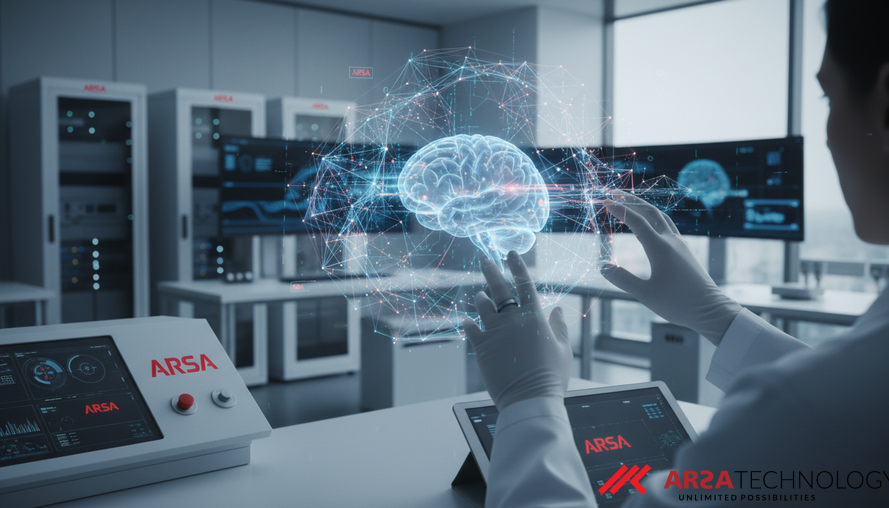
The Promise and Challenge of AI in EEG Decoding
The advent of deep learning has revolutionized numerous fields, and its application to electroencephalography (EEG) signal decoding stands as a testament to this transformative power. EEG, which records electrical activity in the brain, has become a cornerstone in computational neuroscience and brain-computer interfaces (BCIs). Deep neural networks excel at automatically extracting meaningful features from complex, high-dimensional time-series data like EEG, moving beyond traditional methods reliant on hand-crafted features. This has propelled significant advancements across various critical applications, from enhancing clinical diagnostics for conditions such as epilepsy to interpreting cognitive and affective states like emotion, and even decoding motor imagery, as discussed in a comprehensive survey on the topic (Li et al., Cross-Subject Generalization for EEG Decoding: A Survey of Deep Learning Methods).
However, translating these powerful deep learning models from controlled laboratory settings to real-world applications faces a formidable hurdle: the profound inter-subject variability inherent in EEG signals. Each individual's unique physiology, brain anatomy, and cognitive processing result in distinct neural signatures. While a model might perform exceptionally well on data from subjects it was trained on, its performance can drastically decline when presented with data from a new, unseen individual. This challenge, known as the cross-subject generalization problem, is a critical barrier to widespread adoption of EEG-based AI solutions.
Understanding the Cross-Subject Conundrum
Inter-subject variability in EEG is not merely noise; it's a structured phenomenon rooted in the uniqueness of each individual. From differing skull thicknesses to variations in baseline neural rhythms and even personal cognitive strategies for performing the same task, a multitude of factors contribute to these distinct neural signatures. This physiological diversity creates what machine learning experts call a "domain shift" – a significant difference in data distribution between the training subjects and a new, unseen subject.
The consequences for deep learning models are twofold. First, the domain shift means the model encounters data patterns it hasn't adequately learned to interpret. Second, the high capacity of deep neural networks makes them prone to "overfitting" to these unique, subject-specific features in the training data, rather than identifying the more universal, task-relevant neural patterns. Empirical evidence strongly supports this. Studies have shown that standard deep learning models, when trained on multi-subject EEG datasets, can identify individual subjects with high accuracy, essentially using their brain signals as biometric identifiers. This indicates the models are indeed latching onto individual-specific traits, which then impedes their ability to generalize to new users.
Deep Learning's Toolkit for Generalization
The good news is that inter-subject variability, while challenging, is not random. The availability of metadata – specifically, the knowledge of which subject generated which EEG signals – offers a powerful opportunity. Researchers are leveraging this structural information to design advanced deep learning methodologies that explicitly address the cross-subject generalization problem. Instead of trying to smooth over individual differences, these approaches aim to model, align, or disentangle the very variability that makes generalization difficult.
The academic landscape has seen the emergence of several methodological families, each offering a unique strategy to achieve robust, subject-independent performance. These include sophisticated techniques like feature alignment, adversarial learning, feature disentanglement, and contrastive learning. These methods represent a strategic shift from simply building more powerful models to engineering models that can actively learn and adapt to the inherent diversity of human brain signals, paving the way for more reliable and impactful applications. Similar challenges arise when deploying AI in complex, variable environments, such as optimizing AI Video Analytics systems for diverse camera angles or lighting conditions across different client sites.
Methodological Approaches to Inter-Subject Variability
To systematically tackle the cross-subject challenge, deep learning methods broadly fall into distinct categories:
- Feature Alignment: These frameworks work to minimize the distribution shift between the data from training subjects (source domains) and a new subject (target domain). Techniques often involve statistical moment matching or geometric alignment, essentially "normalizing" the features so that signals representing the same task look similar across different individuals. This helps ensure that a model trained on one set of subjects can better understand the features from another.
- Adversarial Learning: Inspired by Generative Adversarial Networks (GANs), this approach introduces a "minimax" game. A feature extractor is trained to generate representations that are useful for the main task (e.g., emotion recognition) but simultaneously "fool" a separate "subject discriminator." The goal is to force the feature extractor to learn representations that are subject-invariant – meaning they don't carry enough information for the discriminator to identify the individual, thus promoting generalization.
- Feature Disentanglement: This methodology takes a more analytical route, aiming to mathematically decompose the complex neural signal into distinct components. The goal is to separate the underlying "task-relevant" components (e.g., the specific brain activity for a motor imagery task) from the "subject-specific" components (e.g., individual physiological quirks). By isolating and removing subject-specific influences, the model can focus purely on the patterns relevant to the task, improving generalization.
- Contrastive Learning: These methods leverage subject metadata to structure the embedding space – the mathematical space where data points are represented. They define "positive" pairs (data points that should be similar, such as different subjects performing the same task) and "negative" pairs (data points that should be distinct, like the same task performed by different subjects vs. a different task). This encourages the model to cluster data by task across subjects while explicitly separating subject identities, leading to more robust task-specific features. These principles are also vital for systems like Face Recognition & Liveness SDK, where accurately identifying individuals while being robust to varying conditions is paramount.
These advanced deep learning strategies are crucial for systems that need to operate reliably in diverse real-world environments. They aim to deliver a higher degree of robustness and accuracy, enabling widespread adoption of AI-powered solutions.
From Research to Real-World Impact: The Future of Generalized EEG AI
The pursuit of cross-subject generalization in EEG decoding has profound implications beyond neuroscience labs. The ability to deploy AI models that consistently perform well on unseen individuals is critical for practical, scalable applications across various sectors. For enterprises, this translates directly into tangible business outcomes: reduced deployment costs, increased operational efficiency, and higher trust in AI-driven insights. For example, a robust BCI for motor imagery could revolutionize assistive technologies, while generalized EEG for emotion recognition could enhance human-computer interaction across diverse user populations.
ARSA Technology, with its expertise since 2018 in developing and deploying practical AI and IoT solutions, recognizes that performance in varied environments is key. Our commitment to delivering "Practical AI Deployed. Proven. Profitable" solutions means tackling challenges akin to EEG's cross-subject variability. Whether it's optimizing AI Box Series for edge deployments in diverse industrial settings or ensuring the reliability of AI-powered smart systems, the principles of robust generalization are universal. As the field advances, critical elements for real-world decoding include understanding the theoretical limitations of current methodologies, recognizing the structural value of subject identity for adaptive learning, and the emergence of "EEG foundation models" – large, pre-trained models capable of broad generalization, similar to how large language models function today. These developments promise to accelerate the journey from experimental prototypes to impactful, privacy-by-design, and high-performing AI systems in healthcare and beyond.
To explore how ARSA Technology can help your enterprise leverage advanced AI and IoT solutions that deliver measurable impact and robust performance in real-world conditions, we invite you to contact ARSA for a free consultation.
**Source:** Li, T., Yan, Y., Dou, F., Song, W., & Zhang, X. (yyyy). Cross-Subject Generalization for EEG Decoding: A Survey of Deep Learning Methods. IOP Publishing Journal vv (yyyy) aaaaaa. Retrieved from https://arxiv.org/abs/2604.27033