Honda's Strategic Pivot: Accelerating Hybrid Innovation with AI and Data-Driven Manufacturing
Explore Honda's shift towards hybrid technology with new Accord and RDX prototypes, analyzing its strategic implications for manufacturing, ADAS, and how AI & IoT optimize automotive production.

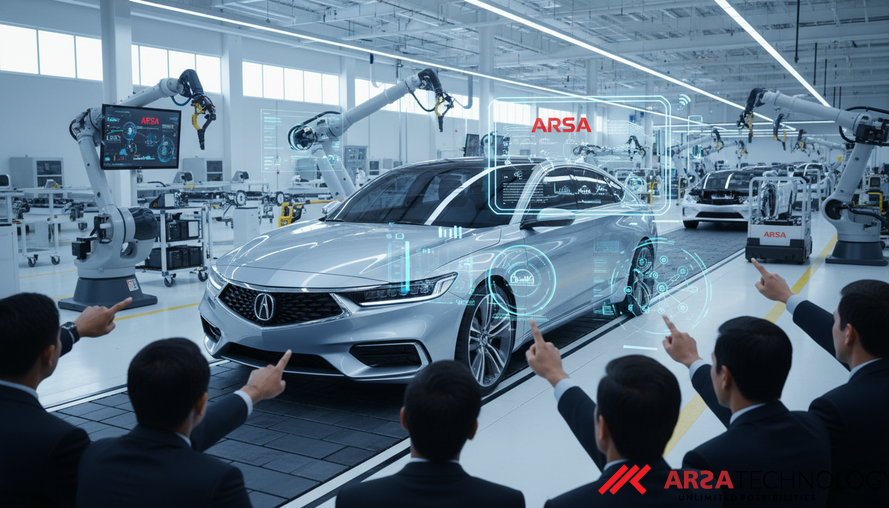
The automotive industry is in a constant state of flux, driven by technological advancements, evolving consumer demands, and shifting regulatory landscapes. Amidst this dynamic environment, major players like Honda are continually re-evaluating their long-term strategies, particularly concerning electrification. A recent announcement highlights a significant pivot for Honda, indicating a stronger emphasis on hybrid vehicles as a bridge to a sustainable future, backed by advancements in its core engineering and manufacturing capabilities, where sophisticated AI and data platforms play an increasingly critical role.
Re-Evaluating the Path to Electrification: Honda's Strategic Shift
Honda recently unveiled prototypes for two key hybrid models: an Accord sedan and an Acura RDX SUV. These vehicles represent the vanguard of Honda's renewed commitment to hybrid technology, being the first of 15 new hybrid models the company intends to launch globally by the end of its fiscal year ending March 31, 2030. This strategic acceleration towards hybrids signals a re-calibration of its electrification goals, moving away from previous ambitious targets for purely electric vehicles (EVs). Earlier goals, such as achieving one-fifth of sales from EVs by 2030 and 100 percent from EVs and fuel cell vehicles by 2040, are being de-emphasized. Instead, Honda now plans to channel more development and production resources into its hybrid lineup, recognizing their immediate market viability and ability to deliver significant fuel economy improvements.
Next-Generation Hybrid Systems and Performance Gains
Central to Honda's updated strategy is the development of a next-generation two-motor hybrid system. This advanced system, initially featured in the Acura RDX SUV, is projected to significantly cut costs and enhance fuel efficiency. Honda aims to reduce the cost of its hybrid system by over 30% compared to its 2023 iteration. This cost optimization, coupled with a new platform and an electric all-wheel-drive (eAWD) setup, is expected to yield more than a 10% improvement in fuel economy. Such engineering feats are often underpinned by extensive data analysis and simulation, utilizing computational models to predict performance and identify efficiencies long before physical prototypes are even built.
Optimizing Production and Deploying Advanced Driver Assistance Systems (ADAS)
The pivot towards hybrids also necessitates strategic adjustments in manufacturing. Honda is reallocating production capacity in its Ohio plants to focus on manufacturing gas and hybrid vehicles. Furthermore, the company will collaborate with its partner LG to repurpose sections of their joint venture's EV battery production lines for hybrid battery manufacturing. This agile response in production planning highlights the critical role of data-driven supply chain management and manufacturing optimization. Tools like AI Video Analytics Software can be deployed in industrial settings to monitor production efficiency, ensure safety compliance, and identify bottlenecks in real time, supporting such significant operational shifts.
Beyond powertrains, Honda is also advancing its driver assistance technologies. A next-generation Advanced Driver Assistance System (ADAS) is slated for launch in 2028, with plans for deployment in over 15 models within five years. The development and refinement of ADAS rely heavily on vast amounts of sensor data, real-time processing, and sophisticated computer vision AI. These systems require immense data collection, processing, and analysis capabilities, often leveraging cloud infrastructure for scalable training and deployment, to ensure safety and reliability.
Global Market Dynamics and Regional Focus
Honda’s refined strategy acknowledges the diverse global automotive market. While North America will be a primary focus for its next-generation hybrid models, particularly "large-size models" launching in 2029, its approach in Japan differs. In its home market, Honda intends to expand its EV model lineup, predominantly in the mini-vehicle (kei car) category, beginning with an electric version of its N-BOX minicar in 2028. This nuanced regional strategy demonstrates a deep understanding of local consumer preferences and regulatory environments, informed by comprehensive market data and analytics. The ability to collect and interpret traffic patterns and urban mobility data, for instance, is vital for AI BOX - Traffic Monitor solutions that help cities plan for diverse vehicle types and optimize infrastructure.
Navigating Financial Realities with Data-Driven Decisions
The decision to pivot towards hybrids follows a substantial financial re-evaluation. Honda previously announced a write-down of up to 2.5 trillion yen ($15.7 billion) on its EV investments. However, the company is optimistic that these EV-related losses will be "resolved" by 2029, with a comprehensive reevaluation of its EV plans scheduled for 2030. This financial adjustment underscores the high stakes involved in automotive development and the importance of continuous, data-backed strategic reassessment. For companies navigating such complex investment decisions, leveraging real-time operational data and predictive analytics can mitigate risks and identify more profitable pathways. Such capabilities are part of the expertise ARSA Technology has built, being experienced since 2018 in delivering solutions that transform passive infrastructure into intelligent decision engines across various industries.
The Role of Advanced AI, IoT, and Data in Automotive Evolution
Honda's strategic shift exemplifies how the automotive industry, while focusing on vehicle types (hybrid vs. EV), is fundamentally driven by technological innovation in the background. AI, IoT, and data form the backbone of modern automotive development, manufacturing, and operational intelligence.
- AI: Powers advanced driver-assistance systems (ADAS) for safety, optimizes manufacturing processes through predictive quality control and automation, and even informs design decisions by simulating performance under various conditions. Computer vision, a core component of AI, is essential for tasks ranging from identifying defects on a production line to enabling autonomous driving features.
- IoT: Connects vehicles, factory equipment, and infrastructure, generating continuous streams of data. Industrial IoT solutions enable real-time monitoring of machinery, predictive maintenance to prevent downtime, and efficient resource allocation in plants. In smart cities, IoT sensors integrate with traffic management and Smart Parking System solutions, adapting to diverse vehicle fleets.
- Data: Is the fuel for AI and IoT. Collecting, processing, and analyzing vast quantities of data from R&D, manufacturing, supply chains, and operational vehicle performance allows automotive companies to make informed decisions, identify trends, and refine strategies. Cloud platforms provide the scalable infrastructure needed to handle and analyze this immense volume of data, offering flexibility for global operations while on-premise solutions ensure data sovereignty for sensitive operations.
As automotive manufacturers continue to navigate the complexities of electrification and smart vehicle development, the strategic deployment of AI, IoT, and data analytics will be paramount for efficiency, safety, and sustained profitability.
Source: Honda’s hybrid future starts with new Accord and RDX prototypes by Stevie Bonifield
To explore how advanced AI and IoT solutions can optimize your enterprise operations and drive strategic transformation, we invite you to contact ARSA for a free consultation.