AI-Powered Glaucoma Detection: Revolutionizing Early Screening with Electronic Health Records
Explore how deep learning algorithms, validated with EHR data, are transforming glaucoma detection, enabling scalable pre-screening and improving patient outcomes without specialized equipment.

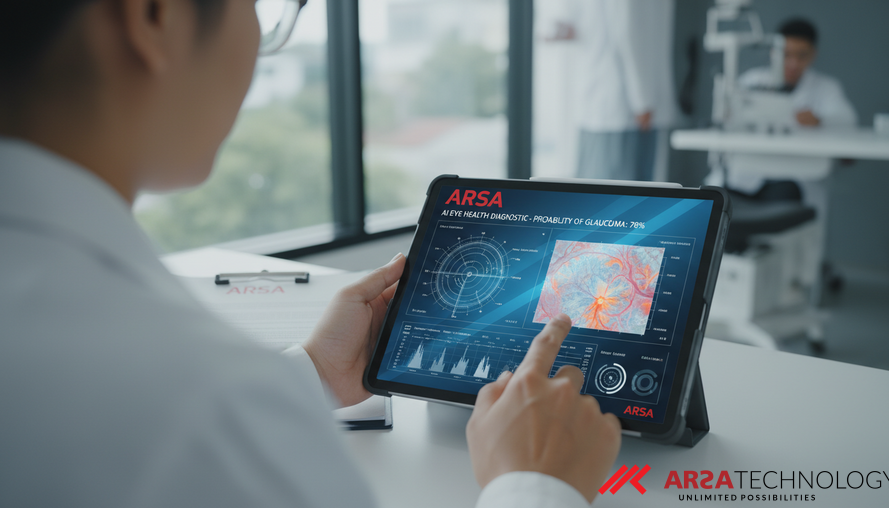
Glaucoma, a leading cause of irreversible blindness worldwide, often remains undiagnosed until its advanced stages. This significant challenge in global healthcare stems from the reliance on specialized ophthalmic examinations and equipment, which are not readily available in general medical settings. The absence of routine, accessible screening tools means many individuals at risk miss the critical window for early intervention. However, new research is demonstrating how advanced artificial intelligence (AI) and readily available electronic health records (EHR) can bridge this gap, offering a scalable solution for early glaucoma detection.
The Challenge of Undetected Glaucoma: A Global Health Imperative
The insidious nature of glaucoma means it frequently progresses without noticeable symptoms until substantial, irreversible vision loss has occurred. This silent progression makes early diagnosis paramount for effective treatment and preserving sight. Current screening methods typically involve comprehensive eye exams and advanced imaging of the optic nerve, procedures that demand specialized equipment and trained ophthalmologists. Consequently, identifying at-risk individuals who should be prioritized for these evaluations becomes a significant hurdle, particularly in regions with limited access to specialist care.
Moreover, clinical prediction models designed to address such challenges often face a critical problem: their performance can degrade when deployed in new clinical environments. This "dataset shift," caused by variations in coding practices, patient demographics, or measurement protocols between institutions, necessitates rigorous external validation to ensure a model's reliability and generalizability. This highlights the urgent need for validated, AI-driven tools that can intelligently stratify risk and streamline the patient referral process for specialized care.
Leveraging AI and EHRs for Early Detection
A recent study from the Department of Ophthalmology at Stanford University, published by John Xiang, Rohith Ravindranath, and Sophia Y. Wang (Source: Validating a Deep Learning Algorithm to Identify Patients with Glaucoma using Systemic Electronic Health Records), introduces a promising solution: an AI-powered Glaucoma Risk Assessment (GRA) model that utilizes only systemic EHR data. This innovative approach aims to identify patients at a high probability of glaucoma without requiring specialized ophthalmic exams, making pre-screening more accessible and scalable. The model was initially trained on the extensive All of Us Research Program national dataset, which encompasses diverse clinical, environmental, lifestyle, and genetic information from over 850,000 individuals across the U.S.
The core objective was to develop predictive models using deep learning to identify high-risk patients based solely on their systemic health information, a strategy that could facilitate early, efficient, and scalable detection of glaucoma. The model’s ability to predict glaucoma diagnosis with an AUROC (Area Under the Receiver Operating Characteristic curve) of 0.863 and a Positive Predictive Value (PPV) of 0.587 in its initial training demonstrated its potential. A PPV of nearly 60% indicates a substantial enrichment of glaucoma diagnoses in the high-risk group compared to the general population prevalence of less than 5%, suggesting significant utility as an EHR-based pre-screening tool.
Deep Learning Architecture: Bridging Data to Diagnostics
The deep learning model employed in this research utilizes a sophisticated architecture combining autoencoders with a 1-dimensional convolutional neural network (1D-CNN). Autoencoders are a type of neural network used for unsupervised learning, designed to efficiently compress and reconstruct data. In this context, they were used to transform one-hot encoded (a common way to represent categorical data like diagnoses and medications) diagnosis and medication data into more compact, "dense" feature representations. These dense representations are then concatenated with other input features, such as patient demographics, laboratory results, and physical examination measurements.
The combined feature set is then fed into a 1D-CNN. Convolutional Neural Networks are typically known for image processing, but 1D-CNNs are adept at identifying patterns in sequential or tabular data, making them suitable for EHR analysis. The 1D-CNN further processes this data to identify complex relationships and patterns indicative of glaucoma risk. This modular architecture allows the model to effectively learn from varied data types within the EHR. For solution providers like ARSA Technology, deploying such advanced AI models often involves careful consideration of the underlying infrastructure, from custom AI solution development to robust deployment strategies.
Validating AI in the Real World: The Stanford Study
To address the crucial issue of "dataset shift" and demonstrate real-world applicability, the pre-trained All of Us model underwent external validation and fine-tuning using an independent cohort of 20,636 adult patients from the Stanford Byers Eye Clinic. This cross-sectional study included patients seen between November 2013 and January 2024, with approximately 15% having a glaucoma diagnosis. Glaucoma was defined rigorously, requiring at least two encounters with an associated diagnosis, excluding glaucoma suspects.
The transfer learning process involved "fine-tuning" the pre-trained model on the Stanford data. This means that instead of training a new model from scratch, the existing model’s knowledge was adapted to the new dataset. Experiments were conducted to find the optimal number of trainable layers within the 1D-CNN. Freezing too many layers (making them untrainable) would limit adaptation, while unfreezing too many could lead to "catastrophic forgetting" of previously learned knowledge or overfitting to the new, smaller dataset. The researchers found that performance improved with more trainable layers, up to 15, and also with the addition of more training data. This demonstrates the critical role of transfer learning in making AI models adaptable across different healthcare systems, an approach frequently used by technology providers with AI Box Series solutions for rapid, localized deployment.
Key Findings and Their Clinical Significance
The external validation at Stanford yielded highly promising results. The best-performing model achieved an impressive AUROC of 0.883 and a PPV of 0.657.
- AUROC (Area Under the Receiver Operating Characteristic curve): A measure of the model's ability to distinguish between patients with and without glaucoma. An AUROC of 0.883 indicates a strong discriminatory power, meaning the model is highly effective at correctly classifying patients.
- PPV (Positive Predictive Value): The proportion of patients predicted to have glaucoma who actually do have the condition. A PPV of 0.657 means that roughly two-thirds of the patients identified as high-risk by the model indeed had a glaucoma diagnosis.
Furthermore, the model's calibration was consistent with actual clinical risk. Patients in the highest prediction decile (the top 10% most likely to have glaucoma according to the model) showed the highest glaucoma diagnosis rate (65.7%) and treatment rate (57.0%). The study also confirmed that the model-predicted risk aligned with traditional clinical indicators like intraocular pressure (IOP) and cup-to-disc ratio (CDR), even though these were not direct inputs to the systemic EHR-only model. This suggests the model is capturing relevant underlying health patterns associated with glaucoma. These findings underline the potential for such AI systems to significantly improve patient flow and resource allocation within healthcare, much like how ARSA's Self-Check Health Kiosk streamlines initial health screenings.
The Future of AI-Powered Healthcare Screening
The implications of this research are profound. An EHR-only Glaucoma Risk Assessment model has the potential to enable highly scalable and accessible pre-screening for glaucoma, drastically reducing the need for specialized imaging in initial evaluations. This could empower primary care physicians to identify at-risk patients more effectively and prioritize referrals to ophthalmologists, ultimately leading to earlier diagnoses and better patient outcomes. Such systems can also help address health disparities by making screening more widely available and reducing barriers to specialty care.
For enterprises and public institutions, especially in the healthcare sector, this represents a significant leap towards truly intelligent operations. Solutions that offer on-premise deployment, like many of ARSA Technology's offerings, become critical for sensitive medical data, ensuring full control over data, privacy, and performance while adhering to strict compliance requirements such as GDPR and HIPAA. The ability of AI to transform passive data into actionable intelligence, as demonstrated by this study, underscores the value of strategic technology partnerships for accelerating digital transformation in healthcare.
To explore how AI and IoT solutions can transform your organization's operational challenges into intelligent advantages, we invite you to contact ARSA for a free consultation.