Advancing Child Language Learning: Introducing Abjad-Kids for Arabic Speech AI
Explore Abjad-Kids, a pioneering Arabic speech dataset for children's education. Learn how hierarchical AI models and new datasets drive innovation in language learning technologies.

Introduction: Bridging the Gap in Child Speech AI for Education
The landscape of Artificial Intelligence has transformed numerous industries, yet its application in child speech recognition, especially for languages with fewer digital resources, remains an underexplored frontier. While mature AI models excel at understanding adult speech, they often struggle with the unique acoustic and linguistic characteristics of younger speakers. This disparity creates a significant bottleneck for the development of effective educational technologies, particularly in Computer-Assisted Language Learning (CALL) for children. The ability to interact naturally through speech is crucial for engaging young learners and fostering effective language acquisition.
For languages like Arabic, the challenge is compounded by its rich phonetic inventory and the subtle articulatory differences between sounds, which become even more pronounced and variable in child pronunciation. This critical gap in research and development has limited the creation of truly interactive and personalized learning environments that can adapt to a child’s specific pace and needs. To address this, researchers have introduced Abjad-Kids, an innovative Arabic speech dataset designed specifically for kindergarten and primary education, marking a significant step forward in making AI more accessible and effective for young Arabic learners.
The Unique Challenges of Children's Speech Recognition
Developing robust speech classification models for children presents a unique set of obstacles that differ significantly from those encountered with adult speech. Children's voices are characterized by inconsistent pronunciation, a wide range of developmental variability, and distinct acoustic properties (such as higher pitch and varying speaking rates). These factors mean that AI models trained on adult speech typically perform poorly when applied to younger demographics. Furthermore, for a language as complex as Arabic, subtle phonetic differences between letters can lead to high "intra-class similarity," where distinct sounds are often confused by conventional AI systems, especially when spoken by children.
A major impediment to progress in this field has been the severe lack of high-quality, publicly available datasets tailored for children's speech, particularly for "low-resource languages" like Arabic. Low-resource languages are those for which limited digital data exists, making it difficult to train advanced AI models effectively. Existing Arabic speech datasets primarily focus on adult speakers and are often designed for broad applications like automatic speech recognition rather than the precise "keyword spotting" or "speech classification" needed for educational tools. This data scarcity restricts the development and evaluation of reliable AI models essential for truly interactive educational experiences.
Introducing Abjad-Kids: A New Resource for Arabic Education
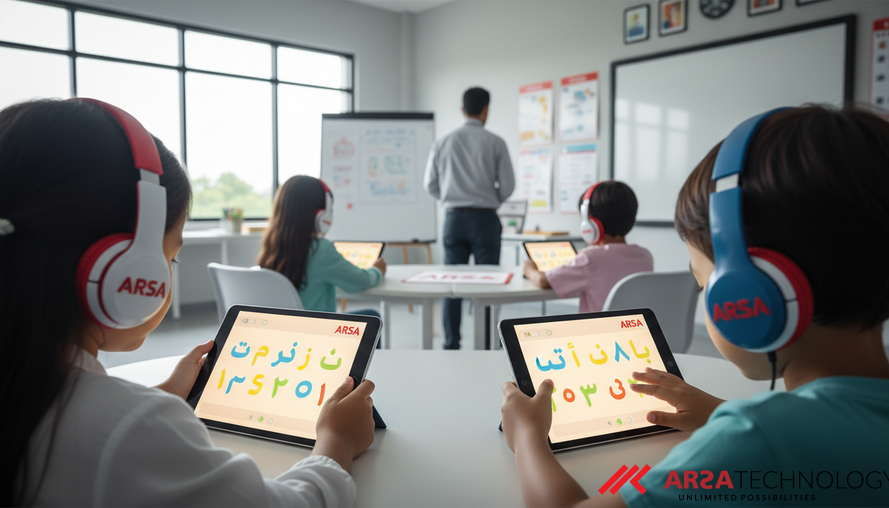
To overcome the pervasive data scarcity, researchers have introduced Abjad-Kids, a groundbreaking Arabic speech dataset meticulously designed for kindergarten and primary education. This dataset focuses on fundamental learning elements such as alphabets, numbers, and colors, providing a much-needed resource for developers and educators. Comprising 46,397 audio samples collected from children aged 3–12 years, Abjad-Kids covers 141 distinct classes. Crucially, all samples were recorded under controlled conditions, ensuring consistency in duration, sampling rate, and format, which is vital for training high-performing AI models.
The public availability of Abjad-Kids is poised to enrich the representation of children's speech in global datasets, serving as a valuable foundation for future research in Arabic speech classification for young learners (Source). This initiative opens doors for the creation of more effective Computer-Assisted Language Learning (CALL) applications, smart educational toys, and interactive platforms that can genuinely support Arabic-speaking children in their foundational learning journey. Companies like ARSA Technology, with expertise in custom AI solutions, can leverage such datasets to build tailored applications that deliver real-time feedback and pronunciation assistance, moving beyond rote memorization to foster engaging and personalized learning environments.
Innovative Classification: A Hierarchical Approach
To tackle the inherent challenges of high intra-class similarity in Arabic phonemes and the limited number of samples per class, the researchers behind Abjad-Kids proposed an innovative "hierarchical audio classification" methodology. This approach utilizes powerful "CNN-LSTM architectures"—a type of deep neural network that combines Convolutional Neural Networks (CNNs) for identifying spatial patterns in audio features with Long Short-Term Memory (LSTM) networks for processing sequences and understanding temporal relationships. This combination is particularly effective for complex audio data.
The hierarchical methodology decomposes complex classification tasks into simpler, two-stage processes. For instance, alphabet recognition is first handled by an initial "group-splitting model," which categorizes sounds into broader, linguistically similar groups. This is then followed by specialized classifiers that operate only within each specific group. The study evaluated two grouping strategies: "static linguistic-based grouping" (pre-defined groups based on how sounds are articulated) and "dynamic clustering-based grouping" (AI-driven grouping based on acoustic similarities). Experimental results showed that the static linguistic-based grouping yielded superior performance, demonstrating the effectiveness of integrating linguistic knowledge into AI design. This kind of nuanced architectural design is crucial for real-world deployments, often requiring robust edge AI systems for localized processing.
Practical Implications and Future Directions
The experimental findings from Abjad-Kids highlight the significant potential of CNN-LSTM models, especially when combined with data augmentation techniques (which artificially expand the dataset by creating variations of existing audio samples). This approach markedly improves classification accuracy. However, the study also revealed a common challenge in AI development: "overfitting." Overfitting occurs when an AI model learns the training data too well, including its noise and idiosyncrasies, leading to poor performance on new, unseen data. This issue, observed even after data augmentation and model regularization (techniques to prevent overfitting), is primarily attributed to the limited number of samples available, underscoring the continuous need for larger datasets.
Despite these challenges, the Abjad-Kids dataset and the proposed hierarchical methodology lay a critical foundation for the next generation of AI-powered educational tools. The ability to accurately classify children's speech in Arabic will pave the way for adaptive learning platforms, interactive language tutors, and diagnostic tools that can identify pronunciation difficulties early on. The insights gained from Abjad-Kids are invaluable for organizations like ARSA Technology, which has been experienced since 2018 in developing and deploying practical AI and IoT solutions across various industries. Such a dataset can inform the design of scalable, privacy-by-design systems that convert complex data into actionable intelligence, enhancing learning outcomes and operational efficiency in educational settings. Future work will undoubtedly focus on expanding data collection to mitigate overfitting and further refine these promising models.
Conclusion: Advancing AI for Young Learners
The development of the Abjad-Kids dataset represents a pivotal contribution to the field of child speech classification, particularly for low-resource languages like Arabic. By providing a high-quality, comprehensive dataset and pioneering a hierarchical classification methodology, researchers have addressed critical barriers to building effective AI-driven educational applications. While challenges like data scarcity and overfitting persist, the innovations presented offer a clear path forward for creating more inclusive, interactive, and personalized learning experiences for children worldwide.
To explore how advanced AI and IoT solutions can transform your organization's educational initiatives or other operational challenges, we invite you to contact ARSA for a free consultation.
**Source:** Abjad-Kids: An Arabic Speech Classification Dataset for Primary Education