Advancing De Novo Protein Design: How AI Foundation Models Are Reshaping Molecular Engineering
Explore Proteo-R1, an AI framework leveraging multimodal large language models and diffusion models to revolutionize protein design. Learn about its dual-expert approach, enhancing interpretability, control, and efficiency in creating novel proteins.

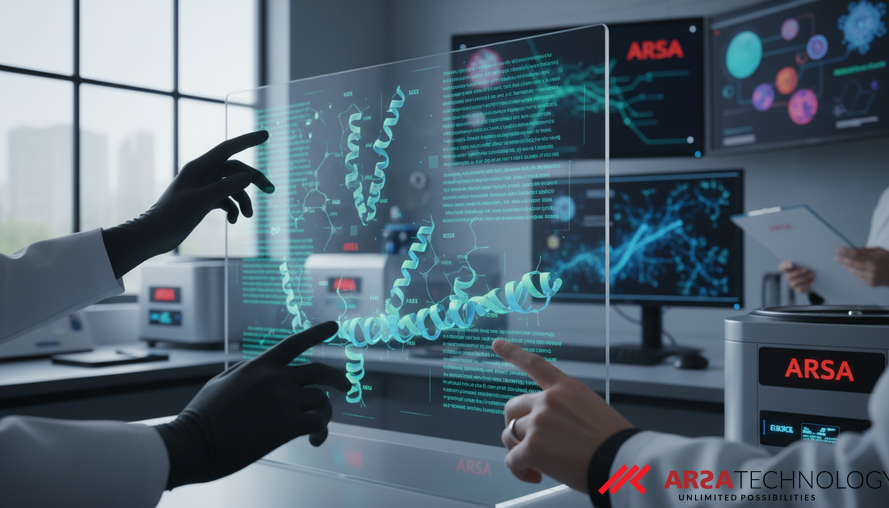
Revolutionizing Protein Design with AI Reasoning
Deep learning has profoundly transformed the landscape of molecular design, pushing the boundaries of what’s possible in creating novel proteins. Modern AI models can now achieve atomic-level fidelity, meaning they can design structures with precision down to individual atoms. This capability is rapidly accelerating discovery pipelines in fields ranging from drug development to biomaterial engineering, which were traditionally reliant on human intuition and exhaustive experimental cycles.
However, a key limitation of many existing generative AI models in this domain is their non-deliberative nature. They often synthesize molecular geometries directly without explicitly reasoning about which specific residues (the building blocks of proteins) or molecular interactions are functionally critical. This entanglement of the ‘what’ (the critical features) and the ‘how’ (the geometric generation) can make designs harder to interpret, control, and systematically refine or adapt for new tasks.
Introducing Proteo-R1, a groundbreaking reasoning-guided protein design framework that explicitly separates the intricate processes of molecular understanding from geometric generation. This innovative approach promises to enhance interpretability, controllability, and the reuse of vital biochemical knowledge, moving protein design towards a more intelligent and human-aligned methodology.
The Proteo-R1 Dual-Expert Framework: Mimicking Human Intelligence
Proteo-R1 adopts a sophisticated dual-expert architecture to achieve its advanced capabilities. At its core, it features a multimodal large language model (MLLM) that acts as an "understanding expert." This MLLM meticulously analyzes various forms of information, including protein sequences, intricate 3D structures, and relevant textual contexts (like scientific literature). Its primary role is to identify key functional residues that are essential for specific biological functions, such as binding or specificity. These critical decisions are then translated into explicit, hard constraints.
These residue-level constraints are subsequently passed to a separate "generation expert," which is a diffusion-based generative model akin to advanced platforms like AlphaFold3. This generation expert is tasked with performing conditional co-design, meaning it generates both the protein sequence and its 3D structure while strictly adhering to the identified functional interaction anchors. This methodical factorization mirrors the approach of seasoned human molecular engineers, who first conceptualize critical interactions and then meticulously optimize the geometry around those established constraints.
This innovative separation ensures that the reasoning process—determining what matters—is distinct from the geometric optimization—determining how it is realized. For more details on this pioneering work, you can refer to the original research paper: Proteo-R1: Reasoning Foundation Models for De Novo Protein Design.
Decoupling Understanding from Generation: The Core Innovation
The deliberate decoupling of molecular understanding from geometric generation within Proteo-R1 offers several profound advantages. Firstly, it establishes a clear and interpretable interface between the reasoning and generation components. This means that the decisions made by the understanding expert can be easily inspected, modified, and reused independently of the intricate diffusion model responsible for generating the molecular structures. This transparency is crucial for scientific validation and iterative design.
Secondly, this framework enables the explicit integration of vast human prior knowledge. By pretraining the MLLM on extensive scientific corpora, such as biomedical literature, it can absorb and leverage existing biochemical insights and rules. This contrasts with traditional models where design intent is often implicitly embedded within complex parameters, making it difficult to extract or modify. Finally, Proteo-R1 maintains the stability and robust inductive biases of cutting-edge geometric generative models. It avoids the direct injection of noisy textual or symbolic representations into continuous dynamic processes, thereby ensuring high-quality and reliable outputs. This modularity also means the same powerful reasoning expert can guide a diverse range of generative backends, making the framework highly flexible and future-proof.
Practical Implications for Molecular Engineering
The innovations presented by Proteo-R1 have significant practical implications, particularly in areas demanding precise molecular engineering. One prominent application is in antibody complementarity-determining region (CDR) co-design. Antibodies are crucial for treating diseases, and designing their CDRs – the parts that specifically bind to targets – with improved binding affinity and specificity is vital. Proteo-R1 demonstrates that explicitly reasoning about key residues before generation leads to enhanced structural realism, more rational binding, and greater control over the design process compared to purely generative approaches. This capability can dramatically accelerate the discovery and optimization of novel therapeutics.
Beyond antibodies, this paradigm has the potential to revolutionize the accelerated discovery of new drug candidates, advanced vaccine components, and optimized enzymes for industrial applications. By empowering large language models to act as sophisticated "molecular strategists" rather than just "noisy conditioners," AI can guide the design process through explicit, biologically grounded decisions. For enterprises in biotechnology and pharmaceuticals, deploying such advanced AI requires robust and flexible infrastructure, often tailored through custom AI solutions to meet specific needs and data security requirements.
ARSA Technology's Role in Deploying Advanced AI Solutions
While Proteo-R1 represents a cutting-edge development in academic research, its principles of specialized AI experts and controlled, high-fidelity generation resonate with the practical challenges faced by enterprises across various industries. At ARSA Technology, we specialize in delivering enterprise-grade AI and IoT solutions that transform complex operational data into actionable intelligence. Our AI Video Analytics systems, for instance, deploy sophisticated computer vision to monitor safety, manage traffic, or optimize retail operations with similar levels of precision and interpretability as Proteo-R1 brings to molecular design.
For organizations requiring specialized AI capabilities, ARSA provides custom AI solutions tailored to unique business challenges, emphasizing accuracy, scalability, and operational reliability. Whether it's developing specific predictive analytics models or deploying edge AI systems for real-time processing without cloud dependency, ARSA’s approach aligns with the need for transparent, controllable, and high-impact AI. We build systems that work in the real world, addressing critical interactions and optimizing performance subject to enterprise constraints, mirroring the deliberate design philosophy of Proteo-R1.
The Future of AI-Driven Molecular Discovery
Proteo-R1 marks a significant stride in the integration of AI reasoning with advanced generative models, providing a blueprint for more interpretable and controllable design processes. By disentangling the "what" from the "how" in molecular engineering, it paves the way for a new era of accelerated discovery across various scientific and industrial domains. This paradigm shift will not only enhance our ability to design complex biological molecules but also foster deeper understanding and collaboration between AI systems and human experts. As AI continues to evolve, its application in foundational sciences will undoubtedly lead to breakthroughs previously thought impossible, ultimately benefiting a wide array of industries from healthcare to materials science.
To learn more about how advanced AI solutions can transform your enterprise operations or to discuss your specific technology needs, we invite you to contact ARSA for a free consultation.