Advancing Earth Observation: The Evolution of Remote Sensing Scene Classification with AI
Explore the transformative journey of remote sensing scene classification, from traditional methods to advanced deep learning, foundation models, and generative AI, enhancing Earth observation for critical applications.

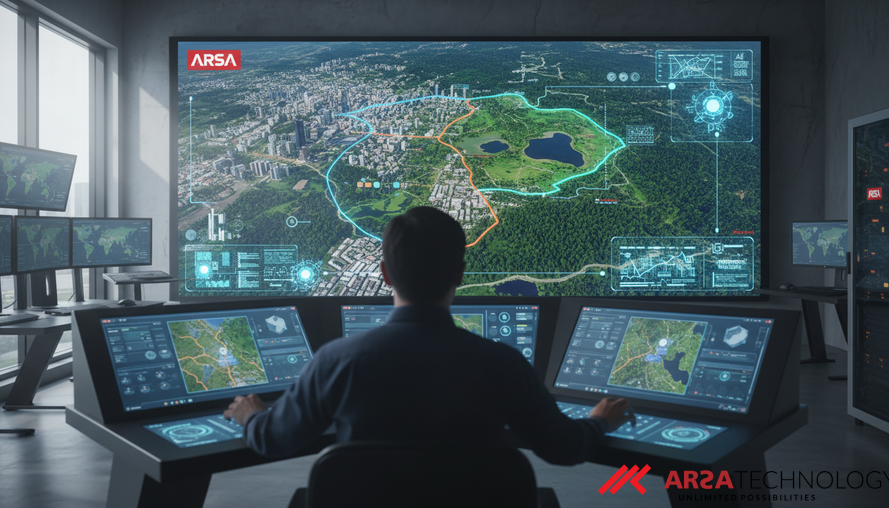
Introduction: Navigating the Evolution of Earth Observation with AI
Remote sensing (RS) scene classification has emerged as a critical capability in understanding our planet, allowing for the precise categorization of satellite and aerial imagery. This fundamental task transforms raw visual data into actionable intelligence, supporting everything from urban planning and disaster management to environmental monitoring. Over the past decades, the methodologies behind RS scene classification have undergone a profound transformation, moving from rudimentary manual techniques to sophisticated artificial intelligence systems that now underpin modern Earth observation applications.
This comprehensive overview delves into the complete evolution of RS scene classification, systematically tracing its development from traditional methods like texture descriptors and classical machine learning algorithms to the revolutionary impact of deep learning. We also explore the cutting-edge of foundation models and generative AI approaches, highlighting how these advancements address persistent challenges and open new frontiers in geospatial analysis, as detailed in the comprehensive survey by Huang and Hu (2026).
The Foundational Shift: From Manual to Automated Feature Engineering
Early approaches to remote sensing scene classification relied heavily on human expertise to design specific "handcrafted features." These features were essentially predefined rules or characteristics, such as texture patterns (e.g., smoothness, roughness), shape characteristics (e.g., straight lines for roads, irregular shapes for natural landscapes), and spectral signatures (how different materials reflect light across various wavelengths). Machine learning algorithms like Support Vector Machines (SVMs) and Random Forests were then trained on these manually extracted features to classify scenes into categories like "forest," "city," or "water." While these methods provided foundational insights, their performance was limited by the manual effort required for feature engineering and their inability to adapt to complex, high-dimensional data.
The advent of deep learning marked a pivotal shift. Instead of relying on human-designed features, deep learning models, particularly Convolutional Neural Networks (CNNs), learned hierarchical representations directly from the raw imagery. CNNs automatically identify relevant patterns—from simple edges and corners in initial layers to complex objects and structures in deeper layers—eliminating the need for manual feature engineering. This breakthrough vastly improved accuracy and efficiency, handling the exponential growth in remote sensing data from advanced multispectral, hyperspectral, SAR (Synthetic Aperture Radar), and LiDAR systems.
Deep Learning's Revolution: CNNs, Transformers, and Beyond
Deep learning architectures have revolutionized how we interpret satellite imagery. Convolutional Neural Networks (CNNs) became the workhorse, excelling at capturing local spatial patterns within images. Their ability to learn intricate feature hierarchies directly from pixels led to significant advancements in accuracy for scene classification. Beyond standard CNNs, innovative architectures like Graph Neural Networks (GNNs) emerged, which are adept at processing non-Euclidean data structures, such as relationships between objects or regions in a scene.
The introduction of Vision Transformers (ViTs) further pushed the boundaries. Unlike CNNs that focus on local features, ViTs process images by dividing them into patches and applying self-attention mechanisms, allowing them to capture global contextual relationships across an entire scene. This global understanding proves crucial for classifying complex scenes with high intra-class variability or subtle contextual cues. Techniques like transfer learning, where models pre-trained on vast general image datasets are fine-tuned for specific remote sensing tasks, have also become standard, significantly reducing training time and annotation costs. For organizations deploying these sophisticated systems, solutions like ARSA AI Video Analytics can transform raw video streams into real-time operational intelligence.
The Era of Large Models: Foundation AI and Vision-Language Systems
The most recent advancements involve large-scale pre-trained models, often referred to as "foundation models" or "Remote Sensing Foundation Models (RSFMs)." These models are trained on massive, diverse datasets, allowing them to develop a broad understanding of visual and even linguistic concepts. Key innovations include self-supervised learning and contrastive learning strategies, which enable these models to learn powerful representations from unlabeled or minimally labeled data, a crucial advantage given the high cost of manual annotation for remote sensing imagery.
Examples like SkySense and RingMo demonstrate exceptional performance in scenarios like zero-shot learning (classifying new categories without any prior examples) and few-shot learning (classifying with only a handful of examples). Furthermore, Vision-Language Models (VLMs), such as RemoteCLIP and GeoRSCLIP, integrate both visual and textual information, allowing users to query images using natural language descriptions. This multimodal capability enhances interpretability and flexibility, enabling users to adapt models to new tasks or domains with unprecedented ease.
Generative AI: Creating New Possibilities for Remote Sensing
Generative Artificial Intelligence (AI) models are changing the game by enabling the creation of new, realistic data. Technologies like Generative Adversarial Networks (GANs), Variational Autoencoders (VAEs), and Diffusion Models are being harnessed to tackle persistent challenges in remote sensing, particularly data scarcity and imbalance. By synthesizing high-quality, diverse data, generative AI can augment limited datasets, improving the robustness and generalization capabilities of classification models.
This ability to generate synthetic imagery is particularly valuable for cross-domain adaptation, where a model trained on one geographical area or sensor type needs to perform well in another. Generative models can bridge these domain gaps by creating intermediate data, making AI solutions more adaptable and reducing the need for extensive, new real-world data collection in every deployment scenario. ARSA's AI Box Series, for instance, provides pre-configured edge AI systems that can rapidly deploy and process real-time video streams, delivering instant insights without cloud dependency. This demonstrates how advanced AI can be brought directly to the source of data for efficient, on-premise operations.
Practical Deployments and Overcoming Operational Challenges
The journey of remote sensing AI extends beyond model development to practical deployment and addressing real-world operational constraints. Challenges like high annotation costs, the complexities of fusing multimodal data (e.g., optical, SAR, LiDAR), demands for model interpretability (explaining why an AI made a certain classification), and ethical considerations (data privacy, biased outcomes) remain at the forefront.
To overcome these, trends are emphasizing edge computing, where AI processing occurs directly on devices closer to the data source—like UAVs or ground stations—minimizing latency and bandwidth usage. Federated learning frameworks allow models to be trained collaboratively across decentralized datasets without centralizing raw data, addressing privacy and data sovereignty concerns, especially relevant for government and defense applications. ARSA Technology is experienced since 2018 in developing and deploying practical AI and IoT solutions across various industries, ensuring operational reliability, privacy-by-design, and regulatory compliance. Such real-world applications underscore the need for robust, deployable AI that works effectively under diverse conditions.
The Future Horizon: Key Research Priorities and Sustainable AI
Looking ahead, the field of remote sensing scene classification is focused on several key research priorities. Advancing hyperspectral and multi-temporal analysis capabilities will unlock richer insights from data, allowing for more detailed material identification and monitoring of dynamic changes over time. Developing robust cross-domain generalization methods is crucial for creating AI models that perform consistently well across different geographic regions, sensor types, and environmental conditions without extensive re-training.
Finally, establishing standardized evaluation protocols is essential to accelerate scientific progress, ensuring that new models can be objectively compared and validated. As AI systems become more powerful and pervasive, fostering sustainable AI practices—minimizing energy consumption, promoting fair and transparent algorithms, and addressing the full lifecycle impact of AI—will be paramount for ethical and responsible innovation.
Conclusion
The evolution of remote sensing scene classification, from traditional handcrafted feature methods to the sophistication of large generative AI models, reflects a dynamic and rapidly advancing field. Deep learning, especially with Vision Transformers and foundation models, has dramatically improved our ability to extract meaningful insights from Earth observation data, enabling applications critical for environmental protection, urban resilience, and global security. Generative AI offers powerful new tools for data augmentation and adaptation, further pushing the boundaries of what's possible. As technology continues to mature, addressing interpretability, ethical implications, and real-world deployment challenges will ensure that these powerful AI tools contribute positively to a more informed and sustainable future.
To learn how ARSA Technology can assist your enterprise in leveraging advanced AI and IoT solutions for mission-critical Earth observation and beyond, we invite you to explore our solutions and contact ARSA for a free consultation.
**Source:** Huang, Q., & Hu, C. (2026). Survey on Remote Sensing Scene Classification: From Traditional Methods to Large Generative AI Models. arXiv:2603.26751.