Advancing Medical AI: Training Agents for Complex Clinical Reasoning
Explore the HEALTHCARE AI GYM, a breakthrough environment for training medical AI agents using reinforcement learning, overcoming challenges in multi-turn clinical reasoning and tool use.

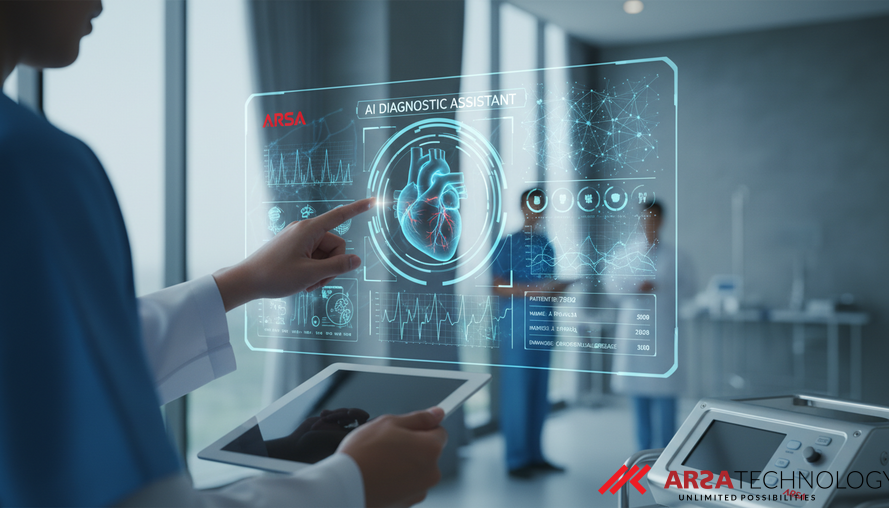
The Evolution of AI in Clinical Reasoning
Recent advancements have propelled medical Large Language Models (LLMs) beyond simple knowledge retrieval towards more sophisticated clinical reasoning. While current models often excel at passing medical board exams, their performance largely remains confined to passive, single-turn interactions. True clinical practice, however, demands an iterative, multi-turn approach: gathering patient history, ordering diagnostic tests, interpreting results, and continuously adjusting treatment plans based on evolving contexts. This gap between AI's analytical strength and its operational fluidity in dynamic clinical settings is a significant challenge.
The shift towards agentic reinforcement learning (RL) is crucial to bridge this "action gap." This approach enables AI models to learn by interacting with environments and receiving feedback, mimicking how humans learn through experience. The goal is to develop AI agents capable of navigating the complex, high-stakes uncertainties inherent in multi-step medical decision-making, moving beyond merely verbalizing medical logic to maintaining stable, tool-augmented decision pathways. This paradigm promises to transform how medical AI can support healthcare professionals.
Introducing HEALTHCARE AI GYM: A Unified Training Environment
To address the limitations of existing medical agent environments, researchers have developed HEALTHCARE AI GYM, a novel, Gymnasium-compatible platform (Source: "HEALTHCARE AI GYM for Medical Agents"). This comprehensive environment is designed to train generalizable medical AI agents through multi-turn reinforcement learning. It spans 10 diverse clinical domains, encompasses over 3,600 tasks, integrates 135 domain-specific tools, and is supported by a knowledge base containing more than 828,000 medical passages. The environment’s design specifically focuses on creating an ecologically valid training ground, providing tools that are clinically grounded—such as ordering laboratory tests or performing severity scoring—rather than relying on generic code-centric tools.
Previous medical agent environments often address only fragments of the clinical reasoning challenge. Some simulate diagnostic dialogues without tool-use integration or RL frameworks, while others focus on multi-agent workflows without explicit policy optimization. Critically, studies have shown that simply providing AI with professional tools can degrade performance if not accompanied by proper reinforcement learning. This underscores the necessity for environments like HEALTHCARE AI GYM, which offers broad multi-domain clinical coverage, an authentic tool ecosystem, and seamless compatibility with modern RL frameworks, all while emphasizing safety-critical evaluation.
Overcoming Challenges in Multi-Turn Agentic RL
Training AI agents in multi-turn environments like HEALTHCARE AI GYM reveals several inherent pathologies that are less apparent in single-turn settings. One significant issue is "Response Explosion," where AI outputs become excessively long and verbose, often growing monotonically to their maximum length. Without intermediate feedback, the AI tends to equate token-level coverage with task completion, producing a flood of text in an attempt to "capture" the correct answer amidst potential incoherence.
This verbose output often leads to a "Multi-turn Collapse," where the AI's agentic structure, meant for coordinated tool-use dialogues, degrades into lengthy single-turn monologues. The AI finds it easier to generate long, singular responses than to execute the complex turn-taking policies required for sequential reasoning and effective tool utilization. This creates a self-reinforcing loop: longer responses compensate for abandoned tool calls, which in turn discourages further multi-turn interaction and tool usage. Furthermore, "Distillation Instability" arises with standard on-policy distillation methods, as the vast complexity of trajectory space in agentic settings causes teacher policies to become stale too quickly, hindering stable learning.
These problems share a common root: the misalignment between sparse terminal rewards and the sequential nature of agentic trajectories. Traditional reinforcement learning algorithms, such as Group Relative Policy Optimization (GRPO), often assign uniform advantage estimates to all tokens in a multi-turn sequence. This makes it difficult for the AI to discern which specific turns or actions contributed positively to the outcome, leading to unstable convergence and the aforementioned issues. Companies like ARSA, which are experienced since 2018 in developing and deploying complex AI solutions, understand that the practical success of such systems hinges on addressing these foundational training challenges.
Introducing Turn-level Truncated On-Policy Distillation (TT-OPD)
To enhance training efficiency and stability in multi-turn agentic reinforcement learning, researchers propose Turn-level Truncated On-Policy Distillation (TT-OPD). This innovative self-distillation framework stabilizes training through several key mechanisms: first, it employs a gradient-free Exponential Moving Average (EMA) teacher, which is a more stable version of the AI model that provides consistent guidance. Second, it uses "outcome-conditioned privileged hints," where this teacher model leverages a glimpse of the correct outcome to provide dense, outcome-aware KL regularization at every conversation turn. This means the AI receives specific, continuous feedback on its performance at each step, rather than just at the very end.
Finally, TT-OPD incorporates length-controlled reward shaping, incentivizing the AI to produce concise and effective responses. This combination helps to counteract the "response explosion" and "multi-turn collapse." The framework ensures that the AI's procedural competence improves, leading to sustained multi-turn tool use (7.0–7.4 turns per task) and controlled response lengths (5.7–9.3K tokens). This method has demonstrated superior performance, achieving the best results on 10 of 18 benchmarks, with an average of +3.9 percentage points improvement over non-RL baselines, including significant gains in MedQA (+16.4 pp) and strong scores in MedMCQA and MIMIC-III datasets.
Significance for Enterprise AI and Healthcare
The findings from the HEALTHCARE AI GYM research hold immense significance for enterprises looking to deploy sophisticated AI solutions, particularly in healthcare. The ability to train AI agents that can engage in stable, multi-turn clinical reasoning, accurately utilize domain-specific tools, and maintain concise communication is critical for real-world applications. This research demonstrates a pathway to developing more reliable and effective medical AI assistants that can reduce costs, increase security, and create new revenue streams for healthcare providers.
For example, implementing robust AI Video Analytics or an advanced Self-Check Health Kiosk requires AI that can interpret complex data and interact intelligently. Similarly, the development of Custom AI Solutions for specialized medical tasks would greatly benefit from these advanced training methodologies. While the research highlights an "agentic-textual transfer gap"—meaning RL improvements in procedural competence don't always directly translate to text-based QA benchmarks due to format-reward dilution—it confirms that these methods are highly effective for improving the practical, interactive capabilities of AI agents in clinical settings. The public availability of the HEALTHCARE AI GYM environment and its experimental artifacts also fosters further innovation in this critical area.
For organizations seeking to implement cutting-edge AI and IoT solutions that transform operational challenges into intelligent advantages, understanding these advancements in AI training is key.
**Source:** Jeong, M. (2026). HEALTHCARE AI GYM for Medical Agents. arXiv preprint arXiv:2605.02943. Available at: https://arxiv.org/abs/2605.02943
Ready to explore how advanced AI can transform your enterprise operations? Discover ARSA Technology’s practical AI and IoT solutions and contact ARSA for a free consultation.