Advancing Thermal Energy Systems: The Power of Physics-Based Digital Twins with Active Learning
Explore how active learning and hybrid AI models create efficient, accurate, and uncertainty-aware digital twins for real-time control of complex thermal energy distribution systems.

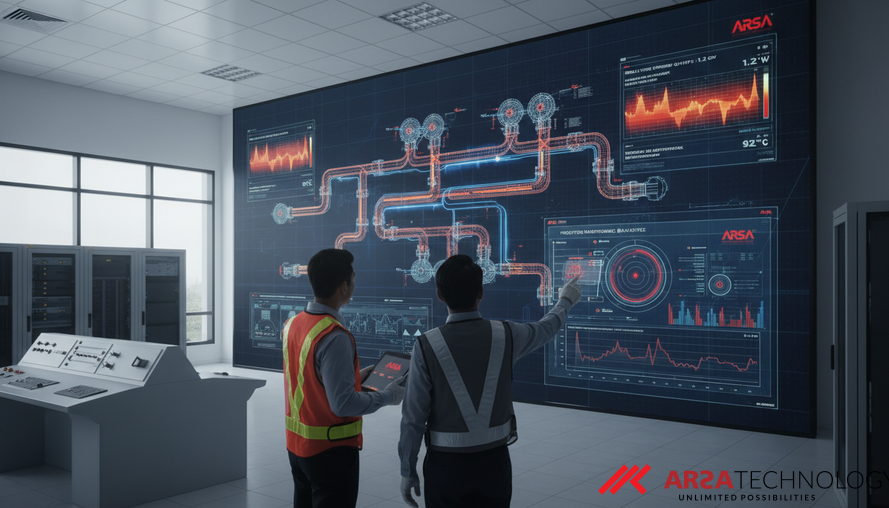
Thermal energy distribution systems (TEDS) are the backbone of modern industrial and energy infrastructures, managing the storage, transport, and delivery of heat across interconnected components. These complex networks, which integrate elements like thermal energy storage (TES) units, heat exchangers, pumps, and valves, are crucial for enhancing thermal flexibility, balancing loads, and boosting overall system efficiency. However, their intricate thermal-hydraulic behaviors, nonlinear responses, and dynamic interactions present significant challenges for real-time monitoring, prediction, and control.
The Challenge of Managing Complex Thermal Networks
In advanced integrated energy systems (IES), TEDS connect heat sources, storage, and downstream processes, providing essential thermal transport and management. This role is especially vital in sectors leveraging nuclear energy, where precise thermal energy distribution can improve operational adaptability and expand non-electric applications. Despite their importance, the inherent complexity of TEDS means that traditional control methods often fall short. Decentralized proportional-integral (PI) controllers, for instance, struggle to account for the deep interdependencies and system-wide constraints present in these dynamic environments. This limitation highlights a critical need for more sophisticated, adaptive, and computationally efficient modeling frameworks to ensure accurate real-time operation and supervisory control.
Bridging the Gap: Digital Twins and Model Predictive Control
To address the gap between long-term planning frameworks and the demands of real-time operations, digital twins (DTs) have emerged as a powerful solution. A digital twin is essentially a virtual replica of a physical system, continuously updated with operational data, offering a high-resolution, dynamic representation. These twins do not replace strategic optimization but rather complement it by translating high-level decisions into actionable, real-time guidance. When paired with advanced control strategies like Model Predictive Control (MPC), digital twins become indispensable. MPC utilizes a simplified system model to forecast future behavior and optimize control actions over a short time horizon, ensuring the system operates efficiently and within constraints. This receding-horizon strategy allows for adaptive, real-time adjustments, making MPC particularly suitable for managing multi-input and multi-output systems like TEDS, which can be monitored and controlled using advanced AI video analytics platforms.
While highly accurate physics-based models provide deep insights, their computational demands often render them too slow for real-time MPC applications. This has driven the development of surrogate models—simplified models that approximate complex system dynamics. These surrogates leverage data from high-fidelity simulations to enable significantly faster predictions without sacrificing essential accuracy, crucial for timely control decisions.
Introducing Active Learning for Smarter AI Models
The effectiveness of surrogate models heavily depends on the quality and relevance of their training data. Traditional approaches often rely on random sampling, which can be inefficient and require vast amounts of data to achieve sufficient accuracy. This is where Active Learning (AL) comes in. Active learning is an advanced machine learning technique where the AI model intelligently selects the most informative data points (or "trajectories" in this context) to learn from. Instead of passively accepting randomly provided data, an active learning framework actively queries for specific simulations that promise the greatest gain in knowledge, thereby optimizing the training process.
A recent study, "Physics-based Digital Twins for Integrated Thermal Energy Systems Using Active Learning" by Umme Mahbuba Nabila et al. (Source: arXiv:2605.06756), proposed an active learning framework designed to couple high-fidelity Modelica simulations with various surrogate modeling approaches. This framework employs model-specific AL query strategies, such as Mahalanobis-distance sampling for probabilistic models and error-based sampling for others, allowing the learning process to prioritize dynamically rich data. This intelligent sampling drastically reduces the amount of simulation data required for training, making the development of accurate digital twins far more efficient.
Hybrid AI: Combining Physics and Data for Robustness
The research explored four types of surrogate models within the active learning framework, each offering unique advantages:
- Sparse Identification of Nonlinear Dynamics with Control (SINDyC): This is a physics-informed model that excels at discovering the underlying governing equations (mathematical rules) directly from system data. Its deterministic nature provides highly interpretable models, offering clear physical insights into the system's behavior, which is invaluable for engineers.
- Multivariate Gaussian SINDyC (MvG-SINDyC): An extension of SINDyC, this probabilistic model is designed to quantify uncertainty in its predictions. For robust control systems, understanding the certainty (or uncertainty) of a prediction is critical, and MvG-SINDyC provides this essential layer of information.
- Feedforward Neural Network (FNN): A standard data-driven neural network architecture where information flows in one direction, primarily used for pattern recognition and mapping inputs to outputs.
- Gated Recurrent Unit (GRU) Network: A sophisticated type of recurrent neural network (RNN) particularly adept at processing sequential data, such as the time-series data generated by dynamic thermal systems. GRU networks possess an internal "memory" that helps them understand temporal dependencies, making them powerful for predictive tasks in dynamic environments.
By integrating both physics-informed and purely data-driven models, this hybrid approach aims to combine the interpretability and robustness of physics-based understanding with the predictive power of machine learning, allowing for comprehensive custom AI solutions.
Real-World Impact: Insights from the Glycol Heat Exchanger Study
The proposed active learning framework was rigorously tested on the glycol heat exchanger (GHX) subsystem, a critical component of the Thermal Energy Distribution System (TEDS) at Idaho National Laboratory. The results were compelling:
- Data Efficiency: The active learning framework achieved comparable predictive accuracy using as little as one-fifth of the simulation trajectories that would typically be required by random sampling methods. This significant reduction in data volume translates directly into substantial savings in computational time and resources—a key factor for enterprises developing production-ready systems.
- Predictive Fidelity: Among the evaluated surrogate models, the GRU network demonstrated the highest predictive fidelity for key GHX outputs, such as bypass mass flow rate and heat transfer rate. This highlights the power of advanced neural networks in capturing complex, time-dependent system dynamics.
- Computational Efficiency and Interpretability: SINDyC proved to be the most computationally efficient and interpretable model. Its ability to reveal underlying physical equations provides engineers with clear insights, fostering trust and enabling better decision-making.
- Uncertainty Quantification: The probabilistic MvG-SINDyC surrogate stood out for its ability to enable reliable uncertainty quantification, a crucial feature for mission-critical applications where risk assessment is paramount. Furthermore, it showed the largest computational gains when integrated with active learning.
Overall, the study underscores that active learning offers a systematic and intelligent mechanism for identifying the most informative training data. This enables the creation of scalable, adaptive, and uncertainty-aware digital twins that are essential for the real-time supervisory control of complex thermal energy distribution systems, particularly in large-scale industrial settings where edge AI systems can process data locally.
The Future of Thermal Energy Management
The implications of this research extend far beyond the laboratory. For industries managing vast thermal networks—from manufacturing and energy generation to smart cities and data centers—these advancements promise more efficient operations, reduced downtime, and enhanced safety. By leveraging physics-based digital twins powered by active learning, enterprises can move beyond reactive maintenance to proactive, predictive control. This not only minimizes operational costs but also unlocks new levels of system performance and reliability, ensuring robust control strategies in the face of dynamic operating conditions. As an AI & IoT solutions provider, ARSA Technology is committed to bringing such innovations to global enterprises, delivering practical AI that is deployed, proven, and profitable.
To explore how advanced AI and IoT solutions can transform your operational efficiency and security, we invite you to contact ARSA for a free consultation.
Source: Umme Mahbuba Nabila, Paul Seurin, Linyu Lin, Majdi I. Radaideh. "Physics-based Digital Twins for Integrated Thermal Energy Systems Using Active Learning." arXiv preprint arXiv:2605.06756, 2026.