Agentic AI and Cyber Offense: The Industrialization of Advanced Attacks and Enterprise Defense
Agentic AI is compressing cyberattack lifecycles, lowering costs and increasing speed for adversaries. Understand the three channels of risk, the attack compression model, and crucial defensive strategies for enterprises.

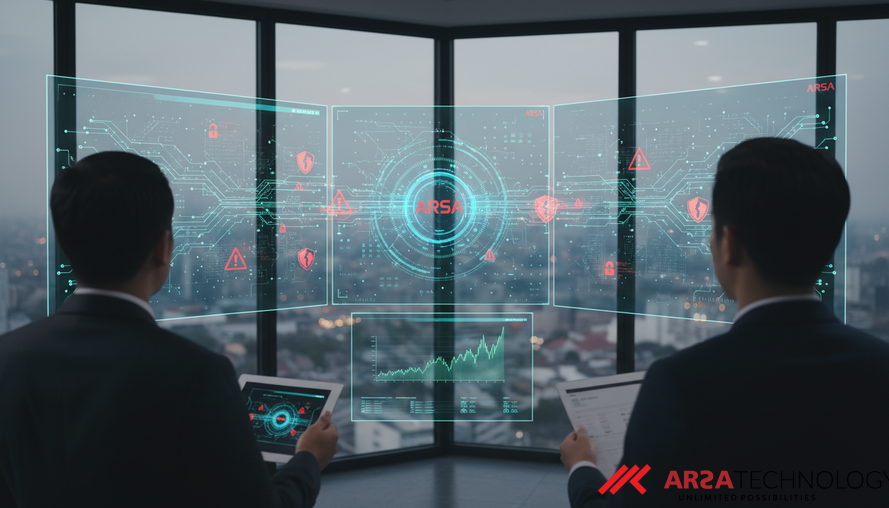
Agentic AI marks a significant evolution in artificial intelligence, moving beyond simple content generation to goal-directed, autonomous action. These sophisticated AI systems can interpret complex instructions, retrieve relevant data, interact with various tools and APIs, write and inspect code, and iterate on tasks to achieve predefined objectives. While these capabilities promise substantial productivity gains across various industries—from software development and customer service to advanced analytics and security operations—they also introduce a formidable new dimension to the cybersecurity threat landscape.
The core concern isn't that every low-skill criminal will immediately transform into a frontier exploit researcher. Instead, the immediate and profound risk is how agentic AI dramatically compresses the attack lifecycle. By automating and streamlining traditionally labor-intensive and skill-dependent phases of a cyberattack, agentic AI significantly lowers the cost and increases the speed of adversarial operations. This includes automating reconnaissance, crafting highly personalized phishing campaigns, facilitating credential abuse, accelerating vulnerability triage, adapting exploits, and providing sophisticated post-compromise decision support. The consensus among cybersecurity agencies and industry threat reports is clear: agentic AI is poised to make cyber intrusion operations more effective and efficient, leading to increased frequency and intensity of threats.
The Rise of Agentic AI: Beyond Generative Capabilities
Traditional generative AI excels at creating text, images, or code based on prompts. Agentic AI, however, introduces a layer of operational intelligence by adding three crucial capabilities that are highly relevant to security:
- Tool Use: Agents can invoke a wide array of tools, including network scanners, web browsers, command-line shells, enterprise APIs, ticketing systems, code repositories, and cloud services. This allows them to interact with target environments much like a human operator would.
- Stateful Planning: These systems can break down complex objectives into smaller, manageable steps. They maintain a memory of their progress, learn from failures by retrying strategies, and adapt their approach over multiple steps, mimicking human problem-solving.
Autonomous Action: Agentic AI can execute actions that directly affect systems, user identities, data, or critical business processes without constant human intervention. This shift from generating ideas to executing actions* is what fundamentally changes the risk profile.
This newfound autonomy is why security experts are treating agentic AI as a distinct new risk boundary. Joint cybersecurity guidance from leading agencies emphasizes the need to adapt existing cybersecurity principles to address the unique challenges posed by these interconnected and evolving autonomous systems. Risks include those related to excessive privileges, design and configuration flaws, unexpected behaviors, structural weaknesses, accountability gaps, and supply-chain vulnerabilities associated with agents. Consequently, incremental adoption, continuous assessment, robust monitoring, strict governance, clear accountability frameworks, and strong human oversight are all recommended for organizations deploying agentic AI.
The Agentic Attack Compression Model (AACM): Accelerating Cyber Threats
The Agentic Attack Compression Model illustrates how AI doesn't necessarily need to invent entirely new attack classes to escalate risk; rather, it drastically reduces the time, skill, and cost required to execute existing attack methodologies. This "compression" means that defenders have less time to detect and respond, and a wider range of attackers can launch sophisticated assaults.
The phases of an attack compressed by agentic AI include:
- Reconnaissance and OSINT Summarization: Agents can rapidly gather and summarize vast amounts of open-source intelligence (OSINT) about targets, identifying potential vulnerabilities, employee data, and network configurations far faster than human analysts.
- Phishing and Impersonation: AI can generate highly localized and personalized phishing lures, making them far more convincing and increasing the likelihood of successful credential compromise.
- Credential Abuse: Agents can automate the exploitation of stolen session tokens or weak credentials, navigating helpdesk systems or SaaS platforms with efficiency.
- Vulnerability Matching and Triage: AI can quickly match known vulnerabilities (CVEs) against target systems, identify patch gaps, and prioritize the most exploitable weaknesses.
- Exploit Adaptation: Even when a specific exploit isn't immediately available, agents can debug, test, and iterate on exploit code to adapt it to specific target environments.
- Post-Compromise Planning: Once a system is breached, AI can assist with planning for persistence, lateral movement within a network, and achieving the attacker's ultimate objective.
As noted by the UK National Cyber Security Centre (NCSC), AI is expected to significantly enhance the effectiveness and efficiency of cyber intrusion operations through 2027. Microsoft echoes this, forecasting AI-automated phishing and faster exploitation of known security gaps as part of the 2025 threat landscape. This emphasizes that the automation provided by agentic AI makes existing threats more potent and scalable, transforming how AI Video Analytics can be used for defense.
Understanding the Three Channels of Agentic Cyber Risk
Agentic AI introduces cyber risk through distinct, yet interconnected, channels, demanding a comprehensive defense strategy. Organizations must consider all three to build resilient security postures.
1. Attacker-Side Augmentation: This is perhaps the most immediate and widely discussed risk. Adversaries leverage agentic AI to enhance their offensive capabilities. This includes accelerating attack planning, automating social engineering tactics, and enabling rapid exploit development and deployment. The impact is a rise in the volume, sophistication, and speed of attacks. For instance, AI can churn out hyper-realistic deepfakes for impersonation or generate thousands of unique, context-aware phishing emails, making traditional defenses against broad-stroke attacks less effective.
2. Agentic Systems as Targets: As enterprises adopt agentic AI for legitimate purposes—such as automated customer service bots, intelligent software development assistants, or operational control agents—these systems themselves become attractive targets for attackers. Compromising an agentic system could grant an adversary access to the tools, data, and permissions that the agent possesses, effectively turning the organization's own AI against itself. This introduces new attack vectors, where vulnerabilities in the agent's design, its underlying large language model (LLM), or its tool integrations can be exploited.
3. Internal Autonomous Agents as Risky Actors: Even well-intentioned, legitimate agentic systems deployed within an organization can pose risks. Due to misconfiguration, unforeseen interactions, or simply excessive autonomy, an agent could inadvertently cause harm. Imagine an agent tasked with optimizing cloud resource usage that, due to an error, accidentally deletes critical data or grants unintended access permissions. This highlights the need for stringent agent governance, continuous monitoring, and robust safeguards to prevent legitimate agents from becoming internal sources of uncontrolled or malicious actions. ARSA Technology, an AI & IoT solutions provider experienced since 2018, emphasizes careful deployment and governance for AI systems to mitigate such risks.
Case Study: The Linux Kernel "Copy Fail" Vulnerability (CVE-2026-31431)
The Linux kernel "Copy Fail" vulnerability (CVE-2026-31431) serves as a stark example of how agentic AI accelerates the latter stages of a cyberattack. This particular flaw is a local privilege-escalation vulnerability. This means it cannot be used by an attacker to gain initial access to a system from a remote location. However, once an attacker has any local code execution on a target system – perhaps through compromised credentials, a malicious continuous integration (CI) job, or a container foothold – this vulnerability becomes highly consequential.
Exploiting such a vulnerability allows an attacker to elevate their privileges, moving from a low-level user account to a higher-level, more powerful account (like root in Linux systems). In environments like cloud infrastructure, CI/CD pipelines, and Kubernetes clusters, where gaining initial, limited access can be relatively common, a vulnerability like "Copy Fail" provides a rapid path to full system control. The UK NCSC, Microsoft, and Ubuntu have all highlighted its severity, with CISA even adding it to its Known Exploited Vulnerabilities catalog. The crucial takeaway is that as initial access methods become cheaper and more easily automated by agentic AI, the ability to operationalize privilege escalation quickly means the time from an initial foothold to achieving full impact (e.g., data exfiltration, system destruction) will shrink dramatically. This intensifies the need for robust identity management and verification systems, such as those leveraging the ARSA AI API for secure authentication and access control.
Strategic Defense Priorities in the Agentic AI Era
Given the evolving threat landscape driven by agentic AI, enterprises must prioritize and strengthen their defensive capabilities now. A reactive approach will be insufficient against the speed and scale of AI-augmented attacks. The defense roadmap requires a multi-faceted approach focusing on foundational security hygiene and advanced threat detection.
1. Identity and Phishing-Resistant Authentication: Strong, multi-factor authentication (MFA) that is inherently resistant to phishing attacks is paramount. This means moving beyond SMS-based MFA to methods like FIDO2/WebAuthn, which cryptographically verify user presence and origin. Agentic AI makes traditional phishing so effective that only truly phishing-resistant methods will withstand its automation.
2. Patch Velocity: The speed at which an organization identifies, tests, and deploys security patches for known vulnerabilities will be a critical differentiator. As seen with the "Copy Fail" incident, agentic AI can rapidly match vulnerabilities to systems and adapt exploits. A slow patch cycle leaves organizations exposed for longer durations.
3. CI/CD and Linux/Container Hardening: Given the prevalence of cloud-native environments, securing continuous integration/continuous delivery (CI/CD) pipelines, Linux systems, and containerized applications is non-negotiable. Agentic AI can exploit misconfigurations or unpatched vulnerabilities in these environments to achieve rapid privilege escalation or lateral movement. Implementing strict security policies, regular audits, and least privilege access is essential.
4. Agent Governance and Lifecycle Management: For organizations deploying their own agentic AI systems, robust governance is critical. This includes defining clear policies for agent development, deployment, operation, and retirement. Agents should operate with the principle of least privilege, their actions must be logged and monitored, and human oversight points should be embedded at critical decision stages. Regular security audits of agent code and configurations are also vital.
5. Enhanced Telemetry and Anomaly Detection: The sheer volume and speed of AI-augmented attacks necessitate advanced security operations center (SOC) capabilities. Organizations need comprehensive telemetry across their networks, endpoints, and cloud environments to feed into AI-powered anomaly detection systems. These systems can identify subtle, machine-speed deviations that might indicate an agentic attack in progress, such as unusual API calls, rapid command execution sequences, or anomalous data access patterns.
6. Recovery Readiness: Despite best efforts, breaches can occur. Organizations must invest in robust backup and recovery strategies, regularly test their incident response plans, and ensure business continuity measures are in place. The goal is to minimize the impact and downtime in the event of a successful attack, preparing for a future where attacks are faster and potentially more destructive.
Proactive Security for Enterprises
The industrialization of cyber offense by agentic AI is not a distant future scenario; it is an immediate operational challenge. National cybersecurity agencies and industry leaders confirm that the threat is already evolving, demanding urgent and decisive action from enterprises and small to medium-sized businesses alike. Investing in strong identity management, implementing phishing-resistant authentication, accelerating patch management, hardening critical infrastructure, establishing comprehensive agent governance, bolstering SOC telemetry, and ensuring robust recovery readiness are no longer optional but fundamental requirements for resilience in the age of agentic AI.
For further insights into the complexities of agentic AI in cybersecurity, refer to the original research paper: Koch, C. (2026). Agentic AI and the Industrialization of Cyber Offense: Forecast, Consequences, and Defensive Priorities for Enterprises and the Mittelstand. arXiv:2605.06713.
Explore how ARSA's advanced AI and IoT solutions can help fortify your organization's defenses against these evolving threats. For a free consultation to discuss your specific cybersecurity needs, contact ARSA today.