AI Agents for Sustainable SMEs: A Framework for Green ESG Assessment
Explore an innovative AI-driven framework for assessing and enhancing ESG performance in SMEs. Discover how AI agents and LLMs drive sustainability, compliance, and strategic growth for European businesses.

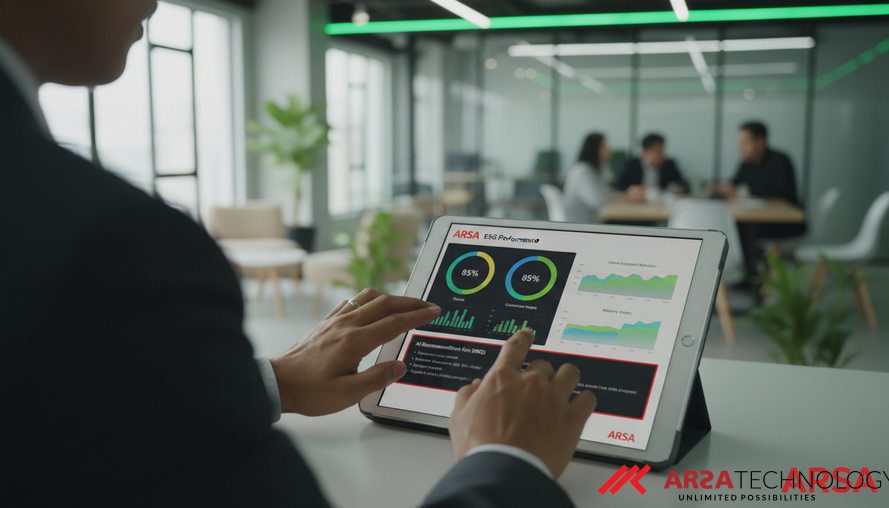
The Dual Imperative: Green & Digital Transformation for SMEs
Small and medium-sized enterprises (SMEs) form the economic backbone of the European Union, representing over 99% of all businesses and playing a vital role in sustainable growth, innovation, and job creation. As the EU pushes for a "twin transition"—embracing both green and digital transformations—SMEs face a crucial challenge: aligning with ambitious Environmental, Social, and Governance (ESG) standards while often contending with limited technical resources and complex policy guidance. This creates a pressing need for scalable, intelligent frameworks to evaluate and improve their green performance, a priority recognized by both policymakers and researchers.
Past research consistently highlights the struggles SMEs face in adopting sustainable practices. For instance, studies have pointed to internal capacity limitations and inadequate access to green finance as significant barriers to implementing circular business models. Conversely, evidence suggests that robust ESG implementation, particularly in labor practices, can enhance financial performance and bolster resilience during economic downturns. The advent of digital technologies, including Artificial Intelligence (AI), Machine Learning (ML), and blockchain, offers a promising path forward, capable of automating data collection, improving consistency, and reducing the risk of "greenwashing" in ESG reporting.
Bridging the Gap: The Need for Scalable ESG Assessment
Despite the potential of digital tools, many existing ESG solutions are often designed with large corporations in mind. They tend to be top-down, lack customization for the specific realities of SMEs, and frequently fall short in providing real-time, actionable recommendations based on structured data. The absence of common ESG standards further complicates matters, leading to heterogeneous reporting structures and inconsistencies that hinder meaningful comparison and prioritization of critical performance areas. This fragmented landscape makes it difficult for SMEs to navigate the complexities of ESG compliance and strategic improvement.
Addressing these limitations is crucial for SMEs to not only comply with the European Green Deal but also to unlock new opportunities for growth and efficiency. There’s a clear demand for frameworks that can offer transparent benchmarking and adaptive decision support. This new approach should leverage advanced AI capabilities to translate complex ESG data into practical, context-specific insights for businesses that may not have dedicated sustainability teams or extensive data analysis resources.
A Novel Approach: AI-Powered ESG Evaluation
A groundbreaking study, "AI Agents for Sustainable SMEs: A Green ESG Assessment Framework" by Viet Trinh et al. (Source: arxiv.org/abs/2605.00841), introduces a novel, AI-driven framework specifically designed to assess and enhance the ESG performance of European SMEs. This innovative framework employs a two-stage methodology, treating each country as a representative of a compounded SME ecosystem, and leveraging both human expertise and advanced AI.
The initial phase establishes expert-validated ESG baseline scores by manually processing a subset of data from the Flash Eurobarometer FL549 survey. This human-curated baseline provides a critical normative reference. In the second phase, a scalable AI agent system, built on the n8n automation platform, takes over. This system applies the established baselines to perform automated ESG classification and generate contextual recommendations. The use of Large Language Models (LLMs) is key here, enabling the AI to produce interpretive narratives on score distributions, benchmarking context, and emerging trend signals. The results impressively demonstrate the AI system's high consistency with human-derived outputs, signifying its reliability and potential to support more effective monitoring and intervention strategies for sustainability.
Real-World Applications and Business Impact
This AI-driven framework offers significant practical applications for enterprises and governments aiming to foster sustainable practices within their SME ecosystems. By automating ESG assessment and recommendation generation, organizations can achieve several key benefits:
- Enhanced Compliance: SMEs can more easily understand and adhere to evolving ESG regulations, reducing compliance risk and avoiding potential penalties. This is especially relevant given the EU's stringent environmental policies.
- Operational Optimization: The framework identifies areas for improvement in resource efficiency, circular energy adoption, climate strategy, and green product offerings. This leads to tangible operational benefits, such as cost reductions through improved energy use or waste management. For instance, solutions like ARSA AI Video Analytics can monitor resource consumption patterns or waste sorting compliance in industrial settings, feeding data into such an ESG framework.
- Strategic Decision-Making: With real-time insights and contextual recommendations, business leaders can make more informed decisions about green investments, supply chain adjustments, and product development, fostering long-term sustainable growth. This moves beyond basic reporting to actionable intelligence.
- Competitive Advantage: Proactive ESG management and transparent reporting can enhance an SME's reputation, attract green investors, and appeal to environmentally conscious consumers, thereby strengthening its market position.
- Scalability and Efficiency: The automated nature of the AI agent system allows for the assessment of a large number of SMEs efficiently, something that would be impractical or cost-prohibitive with purely manual methods. This scalability is vital for driving widespread sustainable change across diverse economies.
Ensuring Accuracy, Privacy, and Scalability in AI-Driven ESG
The framework's success hinges on its ability to deliver accurate and reliable assessments while maintaining data integrity and privacy. The initial human-curated baseline ensures domain expertise is embedded, and the AI’s consistent performance against human benchmarks validates its efficacy. For organizations operating with sensitive data, deploying such AI solutions on-premise offers full data ownership and control.
For example, edge AI systems like ARSA’s AI Box Series can process video streams locally, ensuring that data is analyzed on-device without leaving the network unless explicitly configured. This local processing capability is critical for sectors like public safety, defense, and manufacturing, where data sovereignty and low latency are non-negotiable. For enterprises requiring highly tailored solutions to integrate specific ESG metrics or operational data, a Custom AI Solution can be engineered to fit unique architectural and compliance needs. ARSA Technology has been experienced since 2018 in developing production-ready AI and IoT systems, ensuring solutions are robust, scalable, and privacy-compliant.
The Future of Sustainable Enterprise Management
The integration of AI agents and large language models into ESG assessment frameworks marks a significant leap forward for small and medium-sized enterprises. By offering automated, consistent, and context-aware insights, such frameworks empower SMEs to navigate the complexities of sustainability, transforming regulatory challenges into opportunities for innovation and growth. This innovative blend of human expertise and advanced AI not only supports compliance with crucial initiatives like the European Green Deal but also sets a new standard for intelligent, data-driven sustainable business practices globally.
To learn how ARSA Technology can help your enterprise leverage advanced AI and IoT for sustainable operations and compliance, we invite you to explore our solutions and contact ARSA for a free consultation.