AI and Radiomics: Enhancing Early Breast Cancer Diagnosis with Ensemble Methods
Discover how combining AI deep learning with radiomics significantly boosts early breast cancer detection. Learn about the ensemble approach and its potential for more accurate, life-saving diagnoses.

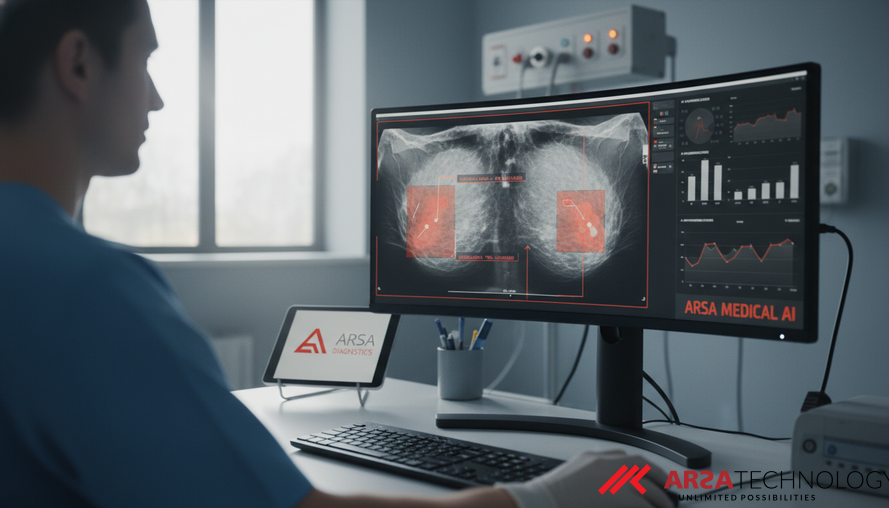
Revolutionizing Early Detection: The Power of AI and Radiomics in Breast Cancer Diagnosis
Breast cancer remains a critical global health concern for women, with millions of new cases and hundreds of thousands of deaths reported annually. A key factor in improving patient outcomes and survival rates is early diagnosis, yet the disease's complexity and variability often lead to delayed detection. Traditional screening methods, like mammography, while standard, can have limitations, particularly for women with dense breast tissue, where abnormalities can be harder to identify. This challenge underscores the urgent need for advanced diagnostic tools that can assist medical professionals in detecting cancer sooner and with greater accuracy.
The emergence of Artificial Intelligence (AI), specifically deep learning, and advanced image analysis techniques like radiomics, offers promising avenues to overcome these limitations. These technologies can augment the capabilities of radiologists, providing new insights from medical images that might otherwise be missed. By transforming medical imaging from a qualitative assessment into a quantitative, data-driven process, AI and radiomics are poised to revolutionize early breast cancer detection, leading to more timely interventions and ultimately, saving lives.
Understanding Radiomics and Deep Learning in Healthcare
At the heart of this diagnostic revolution are two distinct yet complementary technologies: radiomics and deep learning. Radiomics involves extracting a vast array of quantitative features from medical images, such as mammograms. These features, which can describe everything from the shape and texture of tissues to their intensity variations, often reveal patterns invisible to the human eye. By analyzing these subtle characteristics, radiomics can enhance cancer detection, aid in prognosis, and even assess individual patient risk. When these extracted features are fed into machine learning models, they can further refine classification accuracy.
Deep learning, a powerful subset of AI, operates differently. Instead of explicitly extracting features, deep learning models learn directly from raw image data, identifying complex patterns and representations autonomously. For instance, models like ConvNeXtV1-small are specifically designed for advanced image analysis, mimicking aspects of human visual processing but with unparalleled speed and consistency. These models are trained on vast datasets of medical images, enabling them to recognize nuanced indicators of disease that might escape conventional detection methods. Both radiomics and deep learning have demonstrated significant potential individually, but their combined strength offers an even greater leap forward. Many organizations, including ARSA Technology, leverage such advanced AI Video Analytics to derive critical insights from visual data across various sectors.
The Synergistic Advantage of Ensemble AI Methods
While both radiomics and deep learning offer powerful diagnostic capabilities independently, the real breakthrough lies in combining their strengths through an "ensemble" approach. An ensemble method integrates predictions from multiple distinct AI models, much like gathering opinions from a panel of experts. Each model contributes its unique perspective, and by combining their outputs, the ensemble can make more robust and accurate predictions than any single model could achieve alone. This collaborative intelligence minimizes the weaknesses of individual models and capitalizes on their collective strengths.
A recent study rigorously assessed this ensemble methodology for breast cancer diagnosis using two independent and extensive datasets: the RSNA 2023 Breast Cancer Detection Challenge (over 11,900 patients) and a Mexican cohort from the TecSalud dataset (over 19,400 patients). The study trained a ConvNeXtV1-small deep learning model on the RSNA data and developed radiomics models using the TecSalud data. By calibrating and consistently combining the predictions from both methodologies, the ensemble method demonstrated superior performance. It achieved an impressive Area Under the Curve (AUC) of 0.87, significantly outperforming the ConvNeXtV1-small model alone (AUC of 0.83) and the radiomics-only approach (AUC of 0.80). AUC is a widely accepted metric for evaluating classification models, where a higher value indicates better overall diagnostic accuracy.
Real-World Impact on Healthcare and Beyond
The implications of such highly accurate ensemble AI methods in breast cancer diagnosis are profound. For patients, it means earlier, more reliable detection, potentially leading to less aggressive treatments and higher survival rates. For healthcare providers, it offers an intelligent assistant that can flag suspicious areas with high precision, reduce the burden of manual review, and improve the consistency of diagnoses across different practitioners. This shift from qualitative interpretation to data-driven insights enhances overall clinical workflow efficiency and patient care quality. The study employed robust validation strategies, like a "leave-one-year-out" approach, ensuring the models generalize well to new data over time and are not biased towards specific periods or variations in imaging equipment, where image preprocessing techniques like histogram matching help standardize data across different sources.
Beyond clinical diagnostics, the underlying principles of combining diverse AI approaches for enhanced detection hold significant promise across numerous industries. Whether it's defect detection in manufacturing, anomaly detection in critical infrastructure, or complex behavioral analysis in smart environments, the ensemble approach offers a blueprint for building more reliable and accurate intelligent systems. For example, similar AI-powered detection capabilities are crucial for Basic Safety Guard systems that monitor PPE compliance in industrial settings or Smart Retail Counter solutions that analyze customer behavior in stores.
Driving Innovation with AI-Powered Solutions
The success of ensemble methods in medical diagnostics underscores the broader potential of AI and IoT to drive transformative change across various sectors. By combining sophisticated data analysis with practical applications, businesses can achieve measurable improvements in efficiency, security, and operational intelligence. Companies specializing in AI and IoT solutions, such as ARSA Technology, are at the forefront of this digital transformation, developing and deploying innovative systems that address real-world challenges.
ARSA Technology, for example, leverages its expertise in AI Vision and Industrial IoT to provide solutions that span from enhancing workplace safety and optimizing operational processes to improving customer experiences. Their ARSA AI Box Series, for instance, offers plug-and-play AI analytics for various applications, demonstrating how complex AI capabilities can be made accessible and impactful. These solutions are built on a foundation of deep technical expertise and a commitment to delivering quantifiable results.
Ready to explore how AI and IoT can empower your organization with smarter, more accurate, and more efficient operations? Learn more about ARSA’s cutting-edge solutions and discover how they can be tailored to your specific industry needs. We invite you to a free consultation with our expert team today.