
PRODUCTS / AI BOX SERIES / BASIC SAFETY GUARD
Basic Safety Guard – PPE Detection Camera System for Industrial Sites
Mount it, point it at the cameras you already have at the gate and on the floor, and get an alert the moment someone enters a zone without the required equipment. Detection runs on the device.
3-camera and 25-camera appliances · Alerts on site · No footage leaves the network
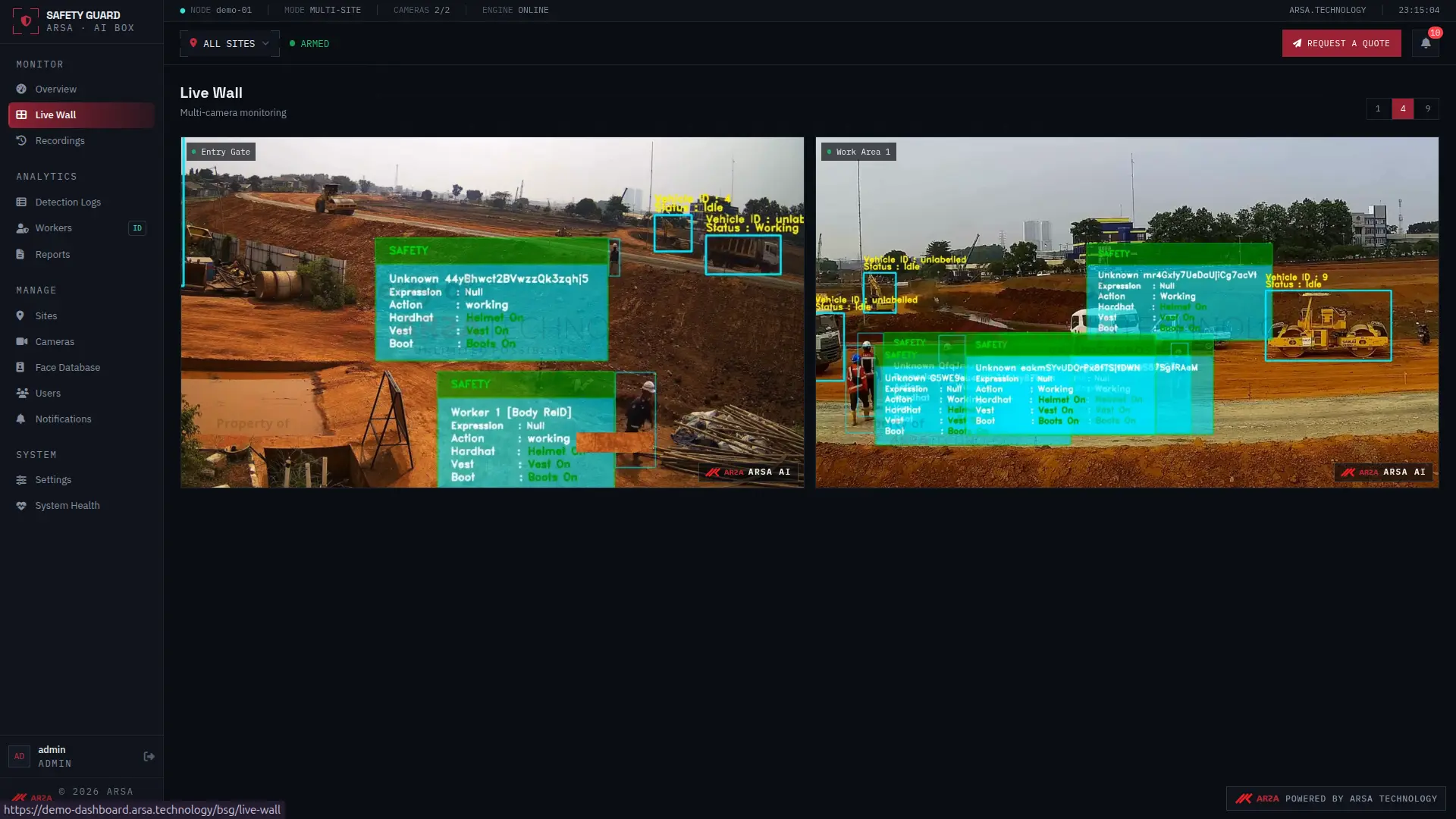
What It Detects
Helmet present or absent
High-visibility vest present or absent
Safety Boots present or absent
Hazard-zone entry alert
Facial Recognition for PPE evaluation
Custom Addon for other items detection
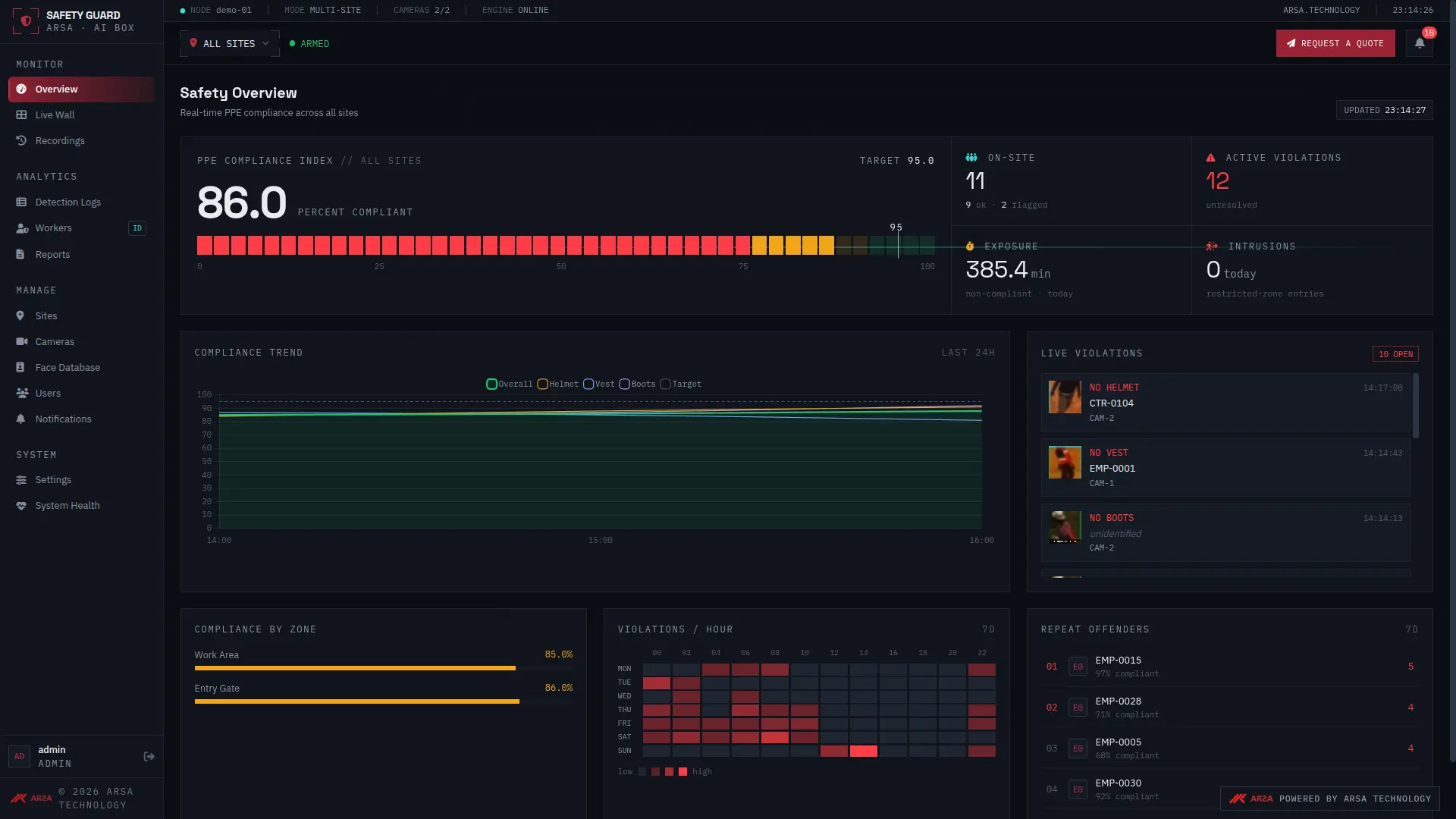
Built-In Safety Analytics
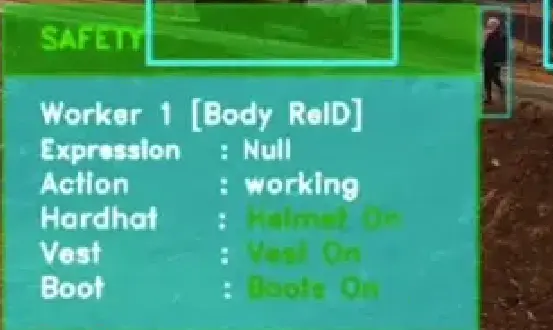
PPE Compliance Detection
- Helmet (Hard-hat) detection
- Safety vest detection
- Safety boot detection
Hazard Area Monitoring
- Zone-based area ROI
- Human entry detection
Reporting & Analytics
- Real-time dashboard access
- Daily/weekly reports
- Export capabilities (PDF, Excel)
Why Choose the AI Box Edition
Ideal for enterprises with established IT environments and centralized operations.
No existing servers required
Works directly with existing IP CCTV cameras
Edge processing with no cloud dependency
HOW IT WORKS
Deployment Steps
Mount and Connect
The unit sits in a cabinet at the gate or in the plant control room. Power and network in, existing camera streams out.
Draw The Zones
Mark the areas where each item of equipment is mandatory. Different rules for different zones on the same camera.
Alert on Breach
The moment someone enters a zone without required equipment, the event fires, dashboard, siren relay, webhook, or your existing alerting stack.
Flexible Hardware for Any Scale
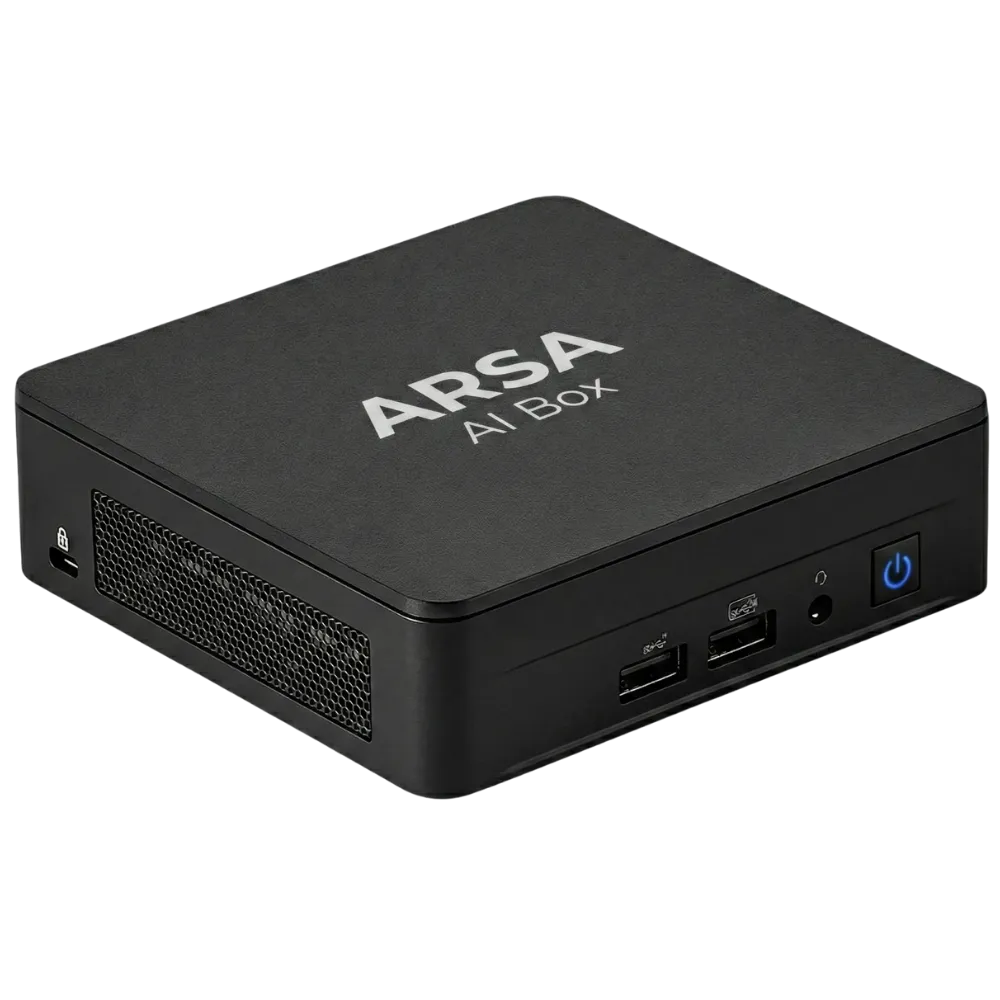
The ARSA AI Box is available in two distinct hardware configurations, allowing you to choose the architecture that best fits your facility’s infrastructure, whether distributed at the edge or centralized in the server room.
The Edge Model (Mini PC)
Process up to 3 Camera
Ideal for distributed deployments and space-constrained environments.
- Core Architecture: Built on the Intel® NUC platform.
- Form Factor: Compact, ultra-small footprint designed for easy mounting behind displays or in tight spaces.
- Performance: Optimized for low-power, continuously running 1-3 streams or low-density inference tasks.
- Deployment Strategy: Place one unit per location to keep processing localized and minimize bandwidth usage.
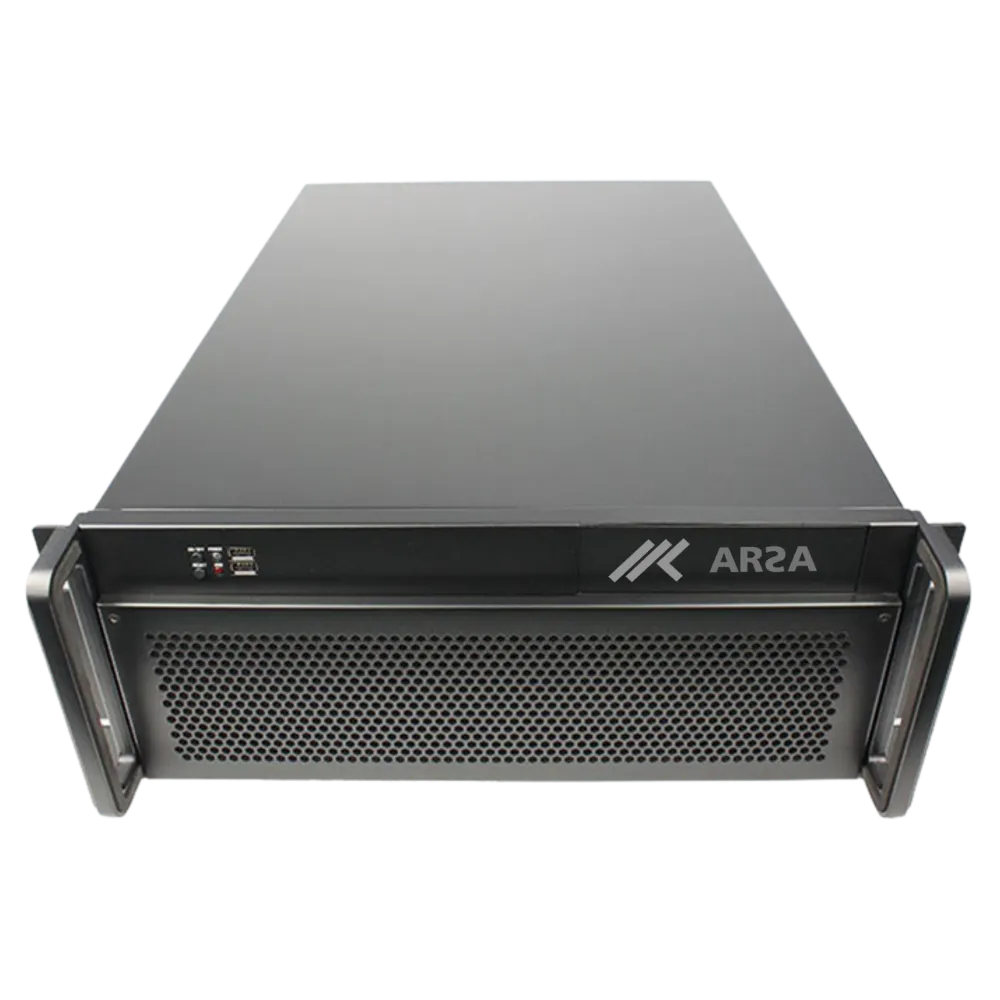
The Server Model (High-Density)
Process up to 25 Camera
Ideal for centralized monitoring and heavy workload consolidation.
- Core Architecture: Powered by Intel® Processors paired with dedicated NVIDIA® GPUs.
- Form Factor: Industrial rack-mount chassis for seamless integration into standard server cabinets.
- Performance: High-throughput processing capable of analyzing up to 25 camera streams simultaneously in real-time.
- Deployment Strategy: Route all camera feeds to a single, powerful central unit to simplify hardware management and maintenance.
TRANSPARENT
Pricing
One-time purchase, perpetual license
One price per unit. Hardware, perpetual analytics licences, local dashboard, remote setup, and 12 months of updates, support and warranty included.
| System | Camera Processing Capacity | Price |
|---|---|---|
| AI Box Mini | up to 3 | $5,190 |
| AI Box Server 12 | up to 12 | $19,900 |
| AI Box Server 25 | up to 25 | $39,900 |
Or the Subscription model
Buy the hardware once. Analytics are licensed per camera per month, billed annually, with model updates, support and hardware warranty included while the subscription is active.
| System | Camera Processing Capacity | Price |
|---|---|---|
| AI Box Mini | up to 3 | $1,890 |
| AI Box Server 12 | up to 12 | $5,900 |
| AI Box Server 25 | up to 25 | $10,900 |
AI PPE Detection Software Licence, per camera
| Module | Subscription |
|---|---|
| Safety Guard | $45 / month |
MINIMUM
Site Requirements
| Camera height and angle | Optimal 10° to 25° tilt. Max 35° for helmets, 40° for vests. >45° is prohibited. |
| Minimum resolution at detection distance | 262 PPM for helmets (max 6.3 m on 2 MP/60° lens), 153 PPM for vests (max 10.9 m). |
| Lighting tolerance | Minimum 50 lux at target. Vest detection requires white light at night; infrared is unsupported. |
| Environmental rating for cabinet mounting | IP66 ingress protection, −10°C to +50°C. IK08 recommended for outdoor cabinets. |
FAQ
Common Questions
What camera height and angle does PPE detection need?
The optimal angle is 10 to 25 degrees below horizontal. The maximum acceptable tilt is 35 degrees for helmets and 40 degrees for vests. Any angle steeper than 45 degrees is explicitly prohibited because the wearer’s own body occludes the equipment.
What is the minimum resolution for helmet detection at 15 metres?
A 2 MP camera with a standard 60-degree lens cannot reach 15 metres for helmet detection (its limit is 6.3 m). To achieve the required 262 PPM at 15 metres, you need a longer focal length lens. Even an 8 MP camera with a 60-degree lens only reaches 12.7 m for helmets.
Does it work in low light or at night?
Yes, provided there is a minimum of 50 lux at the target plane. However, hi-vis vest detection and any colour-coded rules will not work under infrared lighting because the camera produces a monochrome image. Night operation for vests requires white light.
Will a bandana or a cap be flagged as a helmet?
No. The model requires 262 pixels per metre specifically to resolve the structural differences between a hard hat and soft headwear. This high pixel density ensures it does not trigger false positives on caps or bandanas.
Can one system cover multiple gates?
The Mini covers up to three camera streams and the Server up to 25. A multi-gate site is usually one Server rather than several Minis, provided the cameras route back to one location.
Deploy Safety Monitoring in Days, Not Months
Upgrade CCTV systems into active safety enforcement tools.