
DOOH Audience Measurement System For Digital Signage
The unit mounts behind the display, in the same enclosure as the media player. No separate cabinet, no network run, no visible hardware. Measurement happens on the device.
Aggregate measurement only. No images are stored and no identity is created.
What It Measures
Opportunity to see (impressions)
Attention duration
Estimated age band and gender
Estate-wide aggregation
Real-Time Audience & Campaign Analytics
All processing occurs locally at the edge, minimizing latency and preserving privacy.
Audience & Engagement Measurement
- Real-time viewer detection
- Exposure counting per screen
- Engagement trend visualization
- Peak viewing period detection
Demographic Insights (Anonymous)
- Age group and gender estimation
- Aggregated demographic reporting
- Privacy-first analytics
Local Dashboard & Reporting
- Live audience statistics
- Exportable reports


Why Choose the AI Box Edition
Best suited for scenarios where simplicity, speed, and locality matter most. Measuring a network from servers you already run? See the DOOH audience measurement software.
No existing servers required
Works directly with existing IP CCTV cameras
Edge processing with no cloud dependency
HOW IT WORKS
Deployment Steps
Mount behind the screen
Same enclosure as the media player. Power from the existing supply. No new network runs.
Calibrate the viewing field
Set the measurement cone and the attention threshold for the screen’s position and height.
Report by campaign
Impressions and attention aggregated by time window and pushed to your reporting stack.
Flexible Hardware for Any Scale
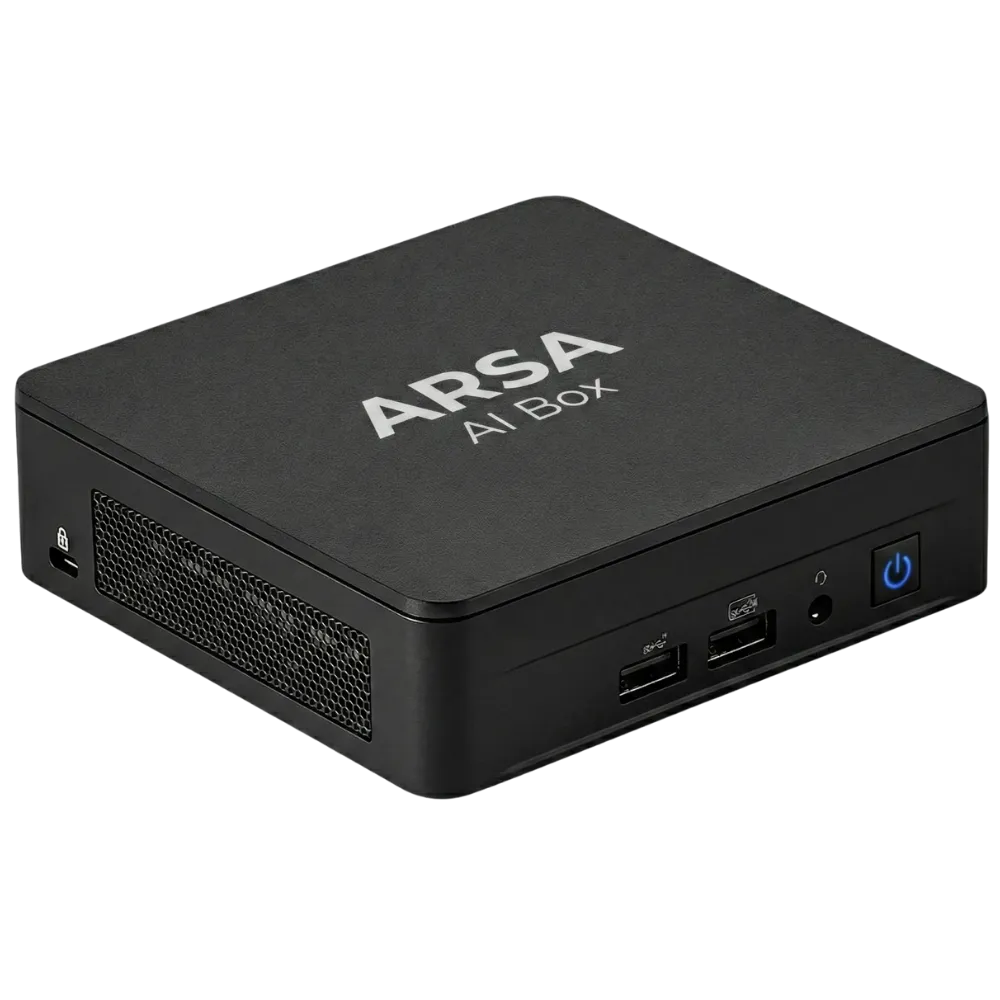
The ARSA AI Box is available in two distinct hardware configurations, allowing you to choose the architecture that best fits your facility’s infrastructure, whether distributed at the edge or centralized in the server room.
The Edge Model (Mini PC)
Process up to 3 Camera
Ideal for distributed deployments and space-constrained environments.
- Core Architecture: Built on the Intel® NUC platform.
- Form Factor: Compact, ultra-small footprint designed for easy mounting behind displays or in tight spaces.
- Performance: Optimized for low-power, continuously running 1-3 streams or low-density inference tasks.
- Deployment Strategy: Place one unit per location to keep processing localized and minimize bandwidth usage.
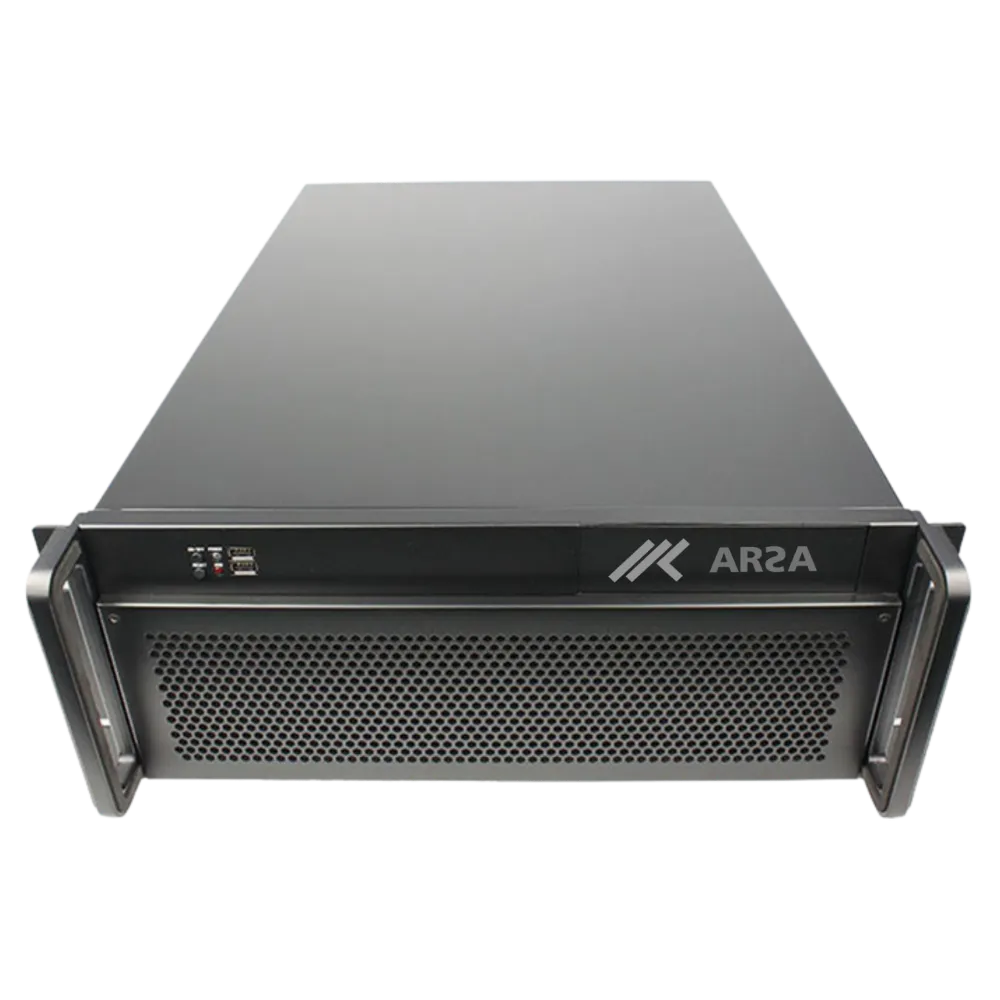
The Server Model (High-Density)
Process up to 12 or 25 Camera (depends on model)
Ideal for centralized monitoring and heavy workload consolidation.
- Core Architecture: Powered by Intel® Processors paired with dedicated NVIDIA® GPUs.
- Form Factor: Industrial rack-mount chassis for seamless integration into standard server cabinets.
- Performance: High-throughput processing capable of analyzing up to 12 or 25 camera streams, depending on the model, simultaneously in real-time.
- Deployment Strategy: Route all camera feeds to a single, powerful central unit to simplify hardware management and maintenance.
TRANSPARENT
Pricing
One-time purchase, perpetual license
One price per unit. Hardware, perpetual analytics licences, local dashboard, remote setup, and 12 months of updates, support and warranty included.
| System | Camera Processing Capacity | Price |
|---|---|---|
| DOOH Node | 1 Camera / Screen | $3,470 |
Or the Subscription model
Buy the hardware once. Analytics are licensed per camera per month, billed annually, with model updates, support and hardware warranty included while the subscription is active.
| System | Camera Processing Capacity | Price |
|---|---|---|
| DOOH Node | 1 Camera / Screen | $2,260 |
DOOH Audience Meter Licence, per screen
| Module | Subscription |
|---|---|
| DOOH Measurement | $25 / month |
MINIMUM
Site Requirements
| Minimum required resolution | 400 PPM is required at the far edge of the detection zone for accurate demographic estimation. |
| Viewing distance range | Up to 4.2 m on a standard 2 MP camera with a 60° lens. Extends to 8.3 m with an 8 MP sensor. |
| Mounting depth behind display | Minimum 60 mm clearance required to accommodate the DOOH Node chassis. |
| Ambient lighting tolerance | Minimum 30 lux at the face plane. WDR 120 dB required if the camera directly faces outdoor light. |
| Camera angle limits | Optimal 0° to 15° below horizontal. Maximum allowed is 25° to maintain face visibility. |
FAQ
Common Questions
Does it mount behind the screen?
Yes. The DOOH Node is sized for the media player enclosure. It requires a minimum depth clearance of 60 mm and operates within a fanless thermal envelope.
How is attention defined and measured?
Attention is defined as sustained frontal face orientation towards the display for more than a configured threshold (typically 1.0 to 1.5 seconds). Brief glances are logged as impressions, not attention.
How accurate is demographic estimation?
ARSA publishes no accuracy figure for age and gender estimation. Estimates are reported in age bands and are reliable when the viewer is inside the 400 PPM detection zone in standard ambient lighting. A free footage assessment shows the results on your own screens.
Do I need one on every screen?
No. Most networks instrument a representative sample (e.g., 10% to 15% of screens) across different environment types and extrapolate the data estate-wide.
How far from the screen does it measure viewers?
Counting audience exposure needs 400 pixels per metre at the viewer, which a 2 MP camera with a 60-degree lens reaches up to 4.2 m. The camera works best looking almost level, at 0 to 15 degrees of tilt and no more than 25, with at least 30 lux on the viewers.
Can it also count the traffic passing the screen?
Yes. Traffic counting is an add-on for the DOOH Node at $470, so a roadside screen can report passing vehicles alongside its audience.
How much does DOOH audience measurement cost?
A DOOH Node for one screen is $3,470 one-time, with perpetual analytics included. On subscription, the hardware is $2,260 plus $25 per screen per month.
Measure What Matters in DOOH Advertising
Turn audience presence into actionable campaign intelligence.