
Traffic Monitor: Vehicle Counting And Classification Camera System
A cabinet-mounted unit that turns existing road cameras into a counting and classification system. Counts, classes, and congestion state produced on site, at the pole.
Person and vehicle detection benchmarked on VisDrone, 93.4 mAP@0.5 · Runs offline
What It Detects
Vehicle count by direction
Vehicle class: Car, Truck, Bus, Motorcycle, Bicycle
Congestion state and estimated speed
Stopped vehicle detection
License Plate Recognition Add-On, at One Third of Camera Capacity
Real-Time Traffic Analytics at the Edge
Vehicle Detection & Classification
- Cars, motorcycles, buses, trucks
- Lane-level classification
- Direction and movement tracking
Traffic Flow Monitoring
- Real-time vehicle counts
- Lane utilization analysis
- Congestion detection
Live Dashboard & Alerts
- Live video with AI overlays
- Real-time traffic statistics
- Configurable alerts and reports


Why Choose the AI Box Edition
Ideal for roadside sites and organisations without servers of their own. Prefer to run the analytics on servers you already have? See the vehicle counting software.
No existing servers required
Works directly with existing IP CCTV cameras
Edge processing with no cloud dependency
HOW IT WORKS
Deployment Steps
Mount at The Pole
The unit sits in the roadside cabinet alongside existing camera infrastructure. No backhaul of video required.
Define The Counting Lines
Draw the lines and directions. Assign classes to count separately.
Report Locally or Upstream
Counts written locally and pushed to your traffic management platform via API.
Flexible Hardware for Any Scale
The ARSA AI Box is available in two distinct hardware configurations, allowing you to choose the architecture that best fits your facility’s infrastructure, whether distributed at the edge or centralized in the server room.
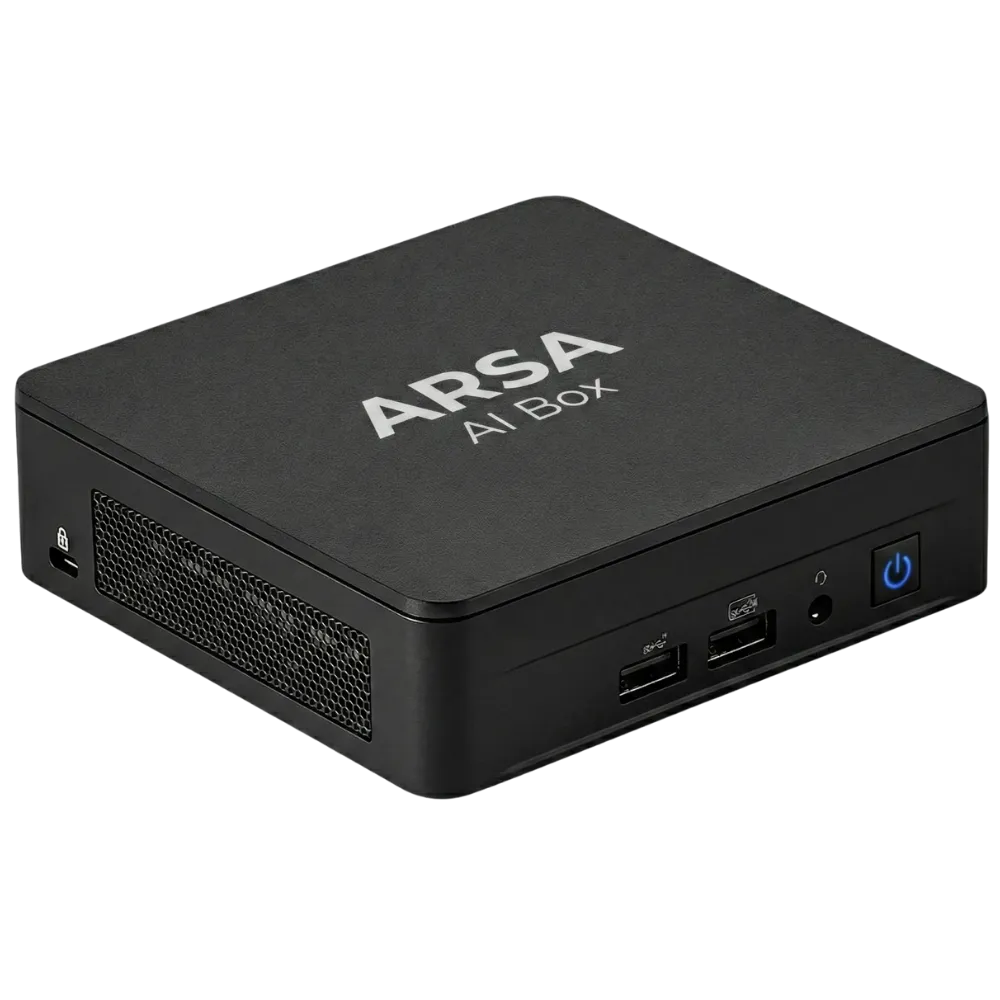
The Edge Model (Mini PC)
Process up to 3 Camera
Ideal for distributed deployments and space-constrained environments.
- Core Architecture: Built on the Intel® NUC platform.
- Form Factor: Compact, ultra-small footprint designed for easy mounting behind displays or in tight spaces.
- Performance: Optimized for low-power, continuously running 1-3 streams or low-density inference tasks.
- Deployment Strategy: Place one unit per location to keep processing localized and minimize bandwidth usage.
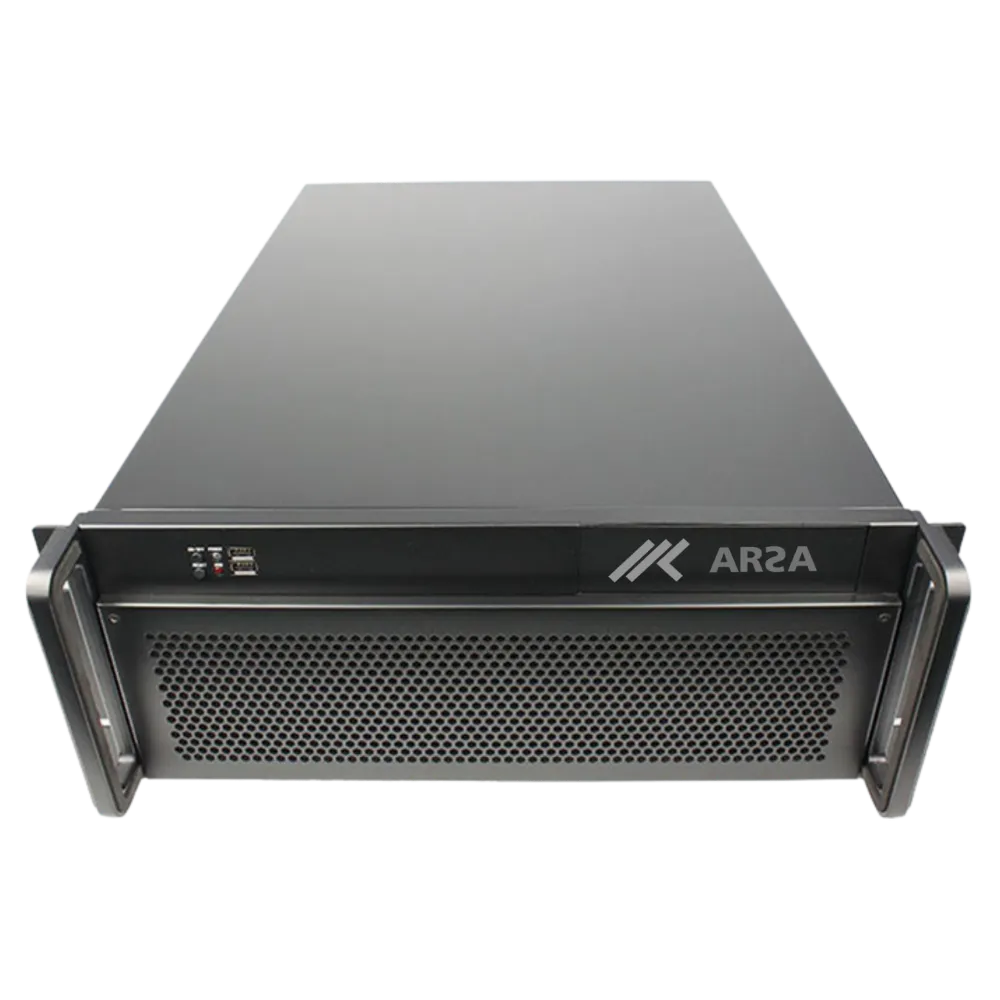
The Server Model (High-Density)
Process up to 12 or 25 Camera (depends on model)
Ideal for centralized monitoring and heavy workload consolidation.
- Core Architecture: Powered by Intel® Processors paired with dedicated NVIDIA® GPUs.
- Form Factor: Industrial rack-mount chassis for seamless integration into standard server cabinets.
- Performance: High-throughput processing capable of analyzing up to 12 or 25 camera streams, depending on the model, simultaneously in real-time.
- Deployment Strategy: Route all camera feeds to a single, powerful central unit to simplify hardware management and maintenance.
TRANSPARENT
Pricing
One-time purchase, perpetual license
One price per unit. Hardware, perpetual analytics licences, local dashboard, remote setup, and 12 months of updates, support and warranty included.
| System | Camera Processing Capacity | Price |
|---|---|---|
| AI Box Mini | up to 3 | $5,020 |
| AI Box Server 12 | up to 12 | $23,520 |
| AI Box Server 25 | up to 25 | $43,860 |
Or the Subscription model
Buy the hardware once. Analytics are licensed per camera per month, billed annually, with model updates, support and hardware warranty included while the subscription is active.
| System | Camera Processing Capacity | Price |
|---|---|---|
| AI Box Mini | up to 3 | $2,260 |
| AI Box Server 12 | up to 12 | $12,600 |
| AI Box Server 25 | up to 25 | $25,540 |
Traffic Monitor Licence, per camera
| Module | Subscription |
|---|---|
| Traffic Monitor | $39 / month |
MINIMUM
Site Requirements
| Mounting height and camera angle | Optimal 15° to 35° tilt. Max 45° for counting, 40° for classification. |
| Minimum resolution at detection distance | 67 PPM for counting (max 24.9 m on 2 MP/60° lens), 107 PPM for classification (max 15.6 m). |
| Night-time performance | Minimum 10 lux at target for counting, 20 lux for classification. Minimum WDR 120 dB recommended for headlight glare. |
| Environmental rating for cabinet mounting | IP66 ingress protection, −10°C to +60°C. IK08 recommended for outdoor cabinets. |
FAQ
Common Questions
How many lanes can one camera cover?
It depends on distance and sensor resolution. A standard 2 MP camera with a 60-degree lens covers a footprint roughly 11 metres wide at the 15.6 m classification limit, safely covering 3 lanes. Wider roads require a higher resolution sensor or multiple cameras.
How accurate is counting at night?
Accuracy is maintained provided there is at least 10 lux at the target plane for counting, and 20 lux for classification. Extreme low light or heavy rain will degrade classification before it degrades basic counting.
Can the unit mount in an existing roadside cabinet?
Yes. The Mini is designed for cabinet mounting. Power, network, and environmental rating requirements: an IP66 equivalent cabinet and -10°C to +60°C operating temperature.
Can one system count across multiple intersections?
The Server handles up to 25 camera streams, so a single unit can cover several intersections if the streams route back to one location. Distributed intersections without backhaul use one Mini each.
How far can one camera count vehicles?
Counting needs 67 pixels per metre at the vehicle, which a 2 MP camera with a 60-degree lens reaches up to 24.9 m. Classification needs 107 pixels per metre, up to 15.6 m, and licence plate reading needs 325, up to 5.1 m. Beyond those distances, use a higher resolution sensor or a narrower lens.
Which vehicle classes does it count?
Car, truck, bus, motorcycle and bicycle, each counted by direction. The same unit reports the congestion state, an estimated speed and stopped vehicles.
Can it read licence plates?
Yes, as an add-on. Plate reading needs 325 pixels per metre at the plate, up to 5.1 m on a 2 MP camera, and runs at one third of the unit's camera capacity. Units with plate recognition are on the pricing page, and on subscription the add-on is $20 per lane per month. ARSA publishes no plate-reading accuracy figure.
How much does a vehicle counting system cost?
An AI Box Mini for up to 3 cameras is $5,020 one-time, with perpetual analytics included. On subscription, the hardware is $2,260 plus $39 per camera per month. Server units for 12 and 25 cameras are in the pricing table above.
Deploy Traffic Analytics Where It Matters
Turn CCTV cameras into real-time traffic intelligence tools.