
Smart Retail Counter: People Counting And Queue Analytics Camera System
A compact unit in the back office that turns existing store cameras into footfall, queue, and dwell measurement. One unit per store, no server, no IT visit.
Counts people. Does not identify them. No face templates are created by this module.
What It Measures
Entry and exit counts
Demographics: Gender and Age Estimation
Queue length and wait time
Dwell time by zone
Heatmaps of floor movement
Real-Time In-Store Analytics
People Counting
- Accurate entry and exit counting
- Live visitor statistics
- Daily and hourly summaries
Queue & Congestion Monitoring
- Queue length detection
- Wait-time alerts
- Congestion hotspots
Heatmap Visualization
- Customer movement heatmaps
- High-traffic zone identification


Why Choose the AI Box Edition
Best suited for retailers who want immediate insights without IT complexity. Counting a whole chain from servers you already run? See the people counting software.
No existing servers required
Works directly with existing IP CCTV cameras
Edge processing with no cloud dependency
HOW IT WORKS
Deployment Steps
One Unit per Store
Sits in the back office. Connects to the cameras already covering the entrance and the floor.
Draw Lines and Zones
Counting lines at entrances, zones on the floor, queue areas at the till.
Read The Numbers
Local dashboard per store. Export or push upstream for chain-level reporting.
Flexible Hardware for Any Scale
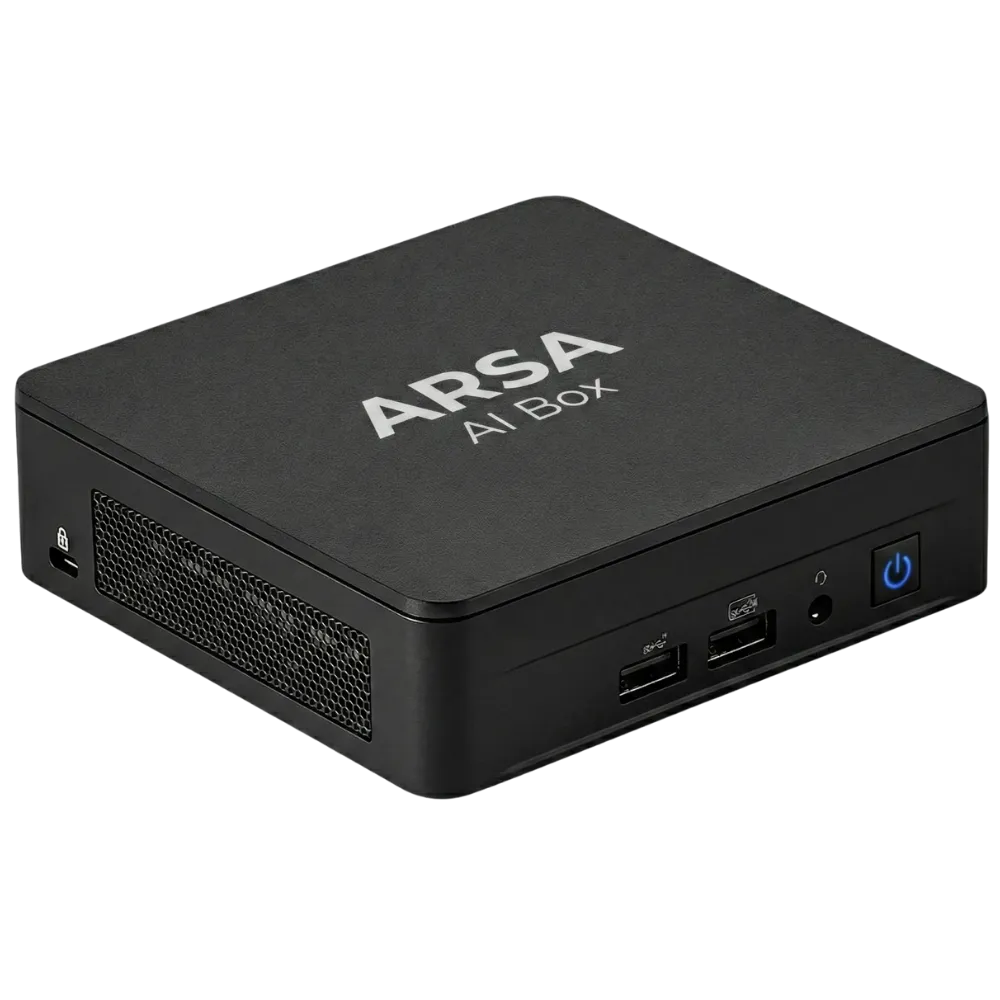
The ARSA AI Box is available in two distinct hardware configurations, allowing you to choose the architecture that best fits your facility’s infrastructure, whether distributed at the edge or centralized in the server room.
The Edge Model (Mini PC)
Process up to 3 Camera
Ideal for distributed deployments and space-constrained environments.
- Core Architecture: Built on the Intel® NUC platform.
- Form Factor: Compact, ultra-small footprint designed for easy mounting behind displays or in tight spaces.
- Performance: Optimized for low-power, continuously running 1-3 streams or low-density inference tasks.
- Deployment Strategy: Place one unit per location to keep processing localized and minimize bandwidth usage.
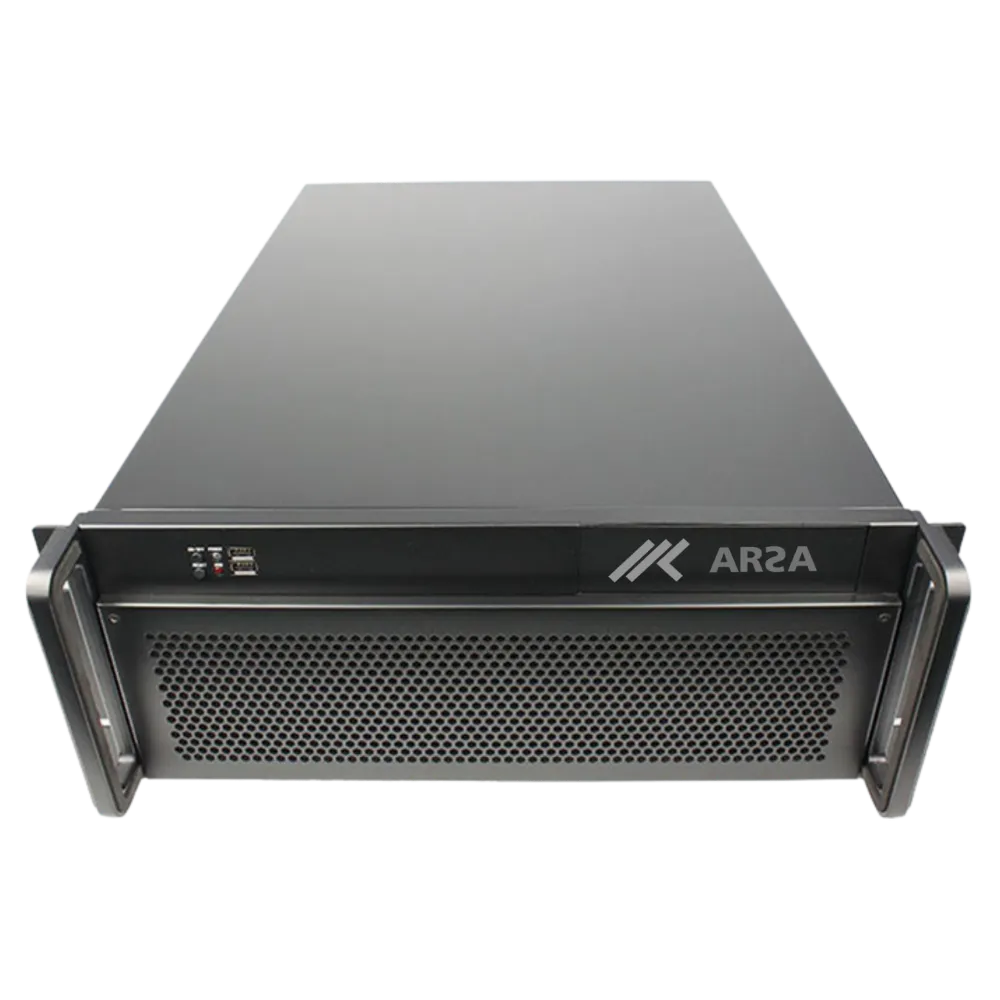
The Server Model (High-Density)
Process up to 12 or 25 Camera (depends on model)
Ideal for centralized monitoring and heavy workload consolidation.
- Core Architecture: Powered by Intel® Processors paired with dedicated NVIDIA® GPUs.
- Form Factor: Industrial rack-mount chassis for seamless integration into standard server cabinets.
- Performance: High-throughput processing capable of analyzing up to 12 or 25 camera streams, depending on the model, simultaneously in real-time.
- Deployment Strategy: Route all camera feeds to a single, powerful central unit to simplify hardware management and maintenance.
TRANSPARENT
Pricing
One-time purchase, perpetual license
One price per unit. Hardware, perpetual analytics licences, local dashboard, remote setup, and 12 months of updates, support and warranty included.
| System | Camera Processing Capacity | Price |
|---|---|---|
| AI Box Mini | up to 3 | $3,760 |
| AI Box Server 12 | up to 12 | $19,390 |
| AI Box Server 25 | up to 25 | $39,280 |
Or the Subscription model
Buy the hardware once. Analytics are licensed per camera per month, billed annually, with model updates, support and hardware warranty included while the subscription is active.
| System | Camera Processing Capacity | Price |
|---|---|---|
| AI Box Mini | up to 3 | $2,260 |
| AI Box Server 12 | up to 12 | $12,600 |
| AI Box Server 25 | up to 25 | $25,540 |
Retail Counter Licence, per camera
| Module | Subscription |
|---|---|
| Retail Counter | $29 / month |
MINIMUM
Site Requirements
| Overhead versus angled mounting | Line counting is optimal at 60° to 90° (near-nadir). Queue and dwell require 30° to 50° oblique mounting for occlusion control. |
| Minimum resolution at measurement distance | 113 PPM for entry/exit line counting. 99 PPM for queue length and dwell measurement. |
| Accuracy in dense crowds | High at near-nadir angles for entry counting. Oblique angles below 30° result in under-counting due to occlusion. |
| Lighting tolerance | Minimum 50 lux at target. Consistent indoor lighting without harsh dynamic shadows recommended. |
FAQ
Common Questions
Should cameras be overhead or angled?
Overhead (60 to 90 degrees) is optimal for entry and exit line counting to prevent occlusion. Angled or oblique (30 to 50 degrees) is required for queue and dwell measurement so the camera can see individual heads separated in the queue.
How accurate is counting in dense crowds?
Accuracy is maintained if the camera is mounted steeply overhead (near-nadir) for counting. At shallower angles (below 30 degrees), the queue collapses into a single blob in the image, causing under-counting.
Can one unit cover multiple entrances?
The Mini covers up to three camera streams, enough for most single-store deployments with a main and a service entrance. Larger stores or supermarkets use the Server.
Does it identify individual shoppers?
No. This module counts and tracks anonymous shapes. It does not create face templates and cannot recognise a returning individual. Aggregate data is entirely anonymous.
How do I roll this out across 40 stores?
One Mini per store on subscription, shipped configured. Rollout is a courier delivery and a 15-minute connection per site, not an engineering visit. The units will immediately begin reporting into a single chain-level dashboard.
How far can one camera count people?
Line counting needs 113 pixels per metre at the person, which a 2 MP camera with a 60-degree lens reaches up to 14.7 m; queue length needs 99, up to 16.8 m. The camera works best at 10 to 25 degrees of tilt for counting and 30 to 50 for queues.
Does it work with our existing store cameras?
Yes, with IP cameras that stream over RTSP or ONVIF at 2 MP and 15 fps or better; 4 MP at 25 fps is recommended. Counting runs on the unit in the store, and only the counts leave it.
How much does people counting cost?
An AI Box Mini for up to 3 cameras is $3,760 one-time, with perpetual analytics included. On subscription, the hardware is $2,260 plus $29 per camera per month. Server units for 12 and 25 cameras are in the pricing table above.
Turn Store Footage into Retail Intelligence
Understand customer behavior and optimize store performance in real time.