AI and Social Robots: Revolutionizing ASD Diagnosis and Therapy Through Deep Learning
Explore how deep neural networks and virtual social robots are transforming Autism Spectrum Disorder (ASD) diagnosis, therapist training, and intervention through advanced behavioral modeling.

The Growing Need for Innovative ASD Interventions
Autism Spectrum Disorder (ASD) is a complex neurodevelopmental condition affecting social communication, interaction, and behavior. It often manifests in early childhood, with symptoms varying widely in severity. Early diagnosis and timely intervention are paramount, as they significantly improve a child's developmental trajectory and overall quality of life. The global prevalence of ASD continues to rise, highlighting an urgent need for advanced tools that can support early screening, effective therapy, and a deeper understanding of the disorder. Traditional diagnostic methods, while gold standard, rely heavily on human observation and specialized expertise, which can be prone to inconsistencies and resource limitations.
This growing challenge has spurred innovation in technology, particularly in artificial intelligence (AI) and robotics. Intelligent systems that can identify intricate behavioral patterns—often too subtle for human observers—offer a promising frontier. These systems can not only streamline the diagnostic process for clinicians but also provide unique opportunities to simulate behaviors of individuals with ASD. Such simulations create a safe, controlled, and effective training ground for new therapists, allowing them to gain invaluable experience and refine intervention strategies without the need for a real child’s presence.
Bridging Music Education and Virtual Reality for Behavioral Insight
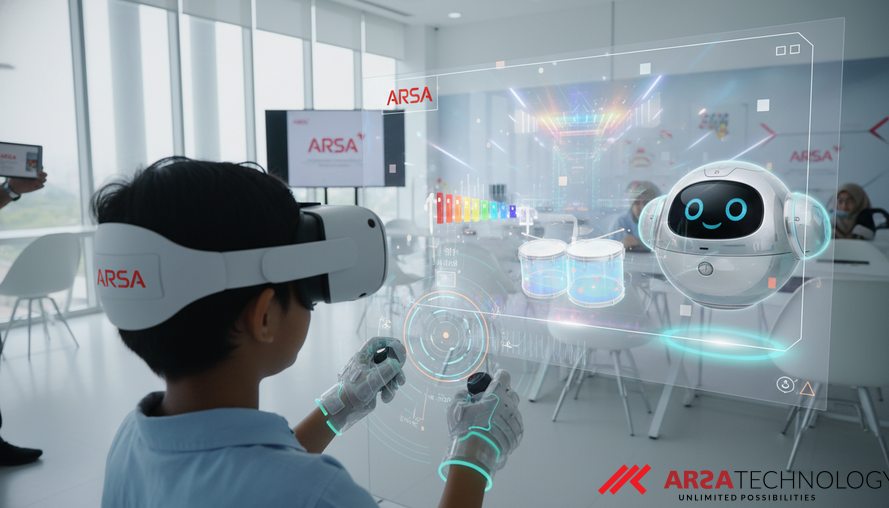
Music has long been recognized as a powerful tool in education and therapy, especially for children with ASD. It offers a unique medium to enhance social communication, emotional regulation, and sensory integration, fostering engagement and development. When combined with virtual reality (VR) technology, music-based games transform into immersive, multisensory experiences. This allows children with ASD to explore and interact within a safe, controlled digital environment, removing many of the real-world anxieties and distractions.
A recent study aimed to leverage this innovative approach by developing an intelligent system designed to evaluate children's performance and extract sophisticated behavioral models. This system focused on children with ASD and neurotypical (TD) children as they interacted with a virtual social robot in a music education program. The core objective was twofold: first, to accurately differentiate between neurotypical children and those with ASD based on their behavioral patterns; and second, to generate realistic, synthetic behaviors for both groups that closely resemble real-world interactions. This research paves the way for advanced tools that could aid in diagnosis, therapist training, and ultimately, a more profound understanding of ASD (Source: Modeling of ASD/TD Children’s Behaviors in Interaction with a Virtual Social Robot During a Music Education Program Using Deep Neural Networks).
Deep Neural Networks: The Engine for Behavioral Modeling
The intelligent system at the heart of this research utilizes deep neural networks (DNNs), a class of artificial intelligence algorithms particularly adept at learning complex patterns from vast datasets. Think of DNNs as highly sophisticated pattern recognizers that can process layers of information, much like the human brain, to make sense of complex inputs. In this context, DNNs were trained on two crucial types of data captured during the VR music game: "impact data" and "motion signals."
Impact data refers to quantifiable interactions, such as how hard a child hits a virtual drum or xylophone. Motion signals capture the nuances of their body movements and gestures within the virtual environment. By analyzing these streams of data, the deep neural networks learned to distinguish between the behavioral signatures of children with ASD and their neurotypical counterparts. This capability moves beyond simple observation, allowing for the detection of subtle, underlying patterns that characterize each group's interaction style. For enterprises looking to build similar specialized platforms, ARSA Technology offers custom AI solutions tailored to specific needs and data types, ensuring precision and scalability.
Accuracy in Differentiation and Realism in Simulation
The system's performance in differentiating between the two groups was notable. Utilizing data from a previous study, which included 9 ASD and 21 TD participants, the deep neural network achieved an impressive accuracy of 81% and a high sensitivity of 96% in distinguishing neurotypical children from those with ASD. This level of accuracy suggests a powerful new avenue for complementing existing diagnostic tools, potentially enabling earlier and more consistent identification of ASD.
Beyond classification, a key innovation of this research involved the use of a transformer-based network to reproduce children's behaviors. A transformer network is a specific type of deep neural network that excels at processing sequential data, often used in areas like natural language processing. Here, it was applied to generate sequences of actions that mimic human behavior. The success of this simulation was put to the test: experts in the field were challenged to differentiate between real and reproduced behaviors. They struggled significantly, achieving only 53.5% accuracy and 68% agreement, indicating the model's remarkable success in simulating highly realistic and indistinguishable child behaviors. This breakthrough has profound implications for training and research.
Practical Applications and Business Implications
The findings of this research open several practical applications across various sectors, demonstrating how AI and VR can deliver tangible business outcomes and societal benefits:
- Enhanced Diagnosis and Screening: The high accuracy in differentiating ASD from TD behaviors suggests that AI models can serve as powerful complementary tools for early screening. This can reduce diagnostic delays, which are critical for early intervention. For healthcare providers, this translates to improved patient outcomes and more efficient allocation of specialized resources.
- Therapist Training and Development: The ability to simulate realistic child behaviors provides an unprecedented training environment for therapists. Instead of relying solely on limited interactions with real children, new therapists can practice intervention strategies, observe a wide range of simulated ASD behaviors, and receive instant feedback in a safe, repeatable virtual setting. This can significantly reduce training costs and accelerate the development of highly skilled professionals.
- Personalized Interventions and Education: By understanding individual behavioral patterns, future systems could tailor music education and therapeutic programs more precisely to each child's needs. This personalization can lead to more effective interventions, improving engagement and developmental progress.
- Research and Understanding: Behavioral modeling offers researchers a robust platform to investigate the underlying mechanisms of ASD, test hypotheses, and develop new therapeutic approaches. The ability to generate and manipulate behaviors in a controlled environment accelerates the pace of discovery.
- Operational Efficiency and Privacy: Deploying such AI systems, perhaps via edge devices or on-premise solutions, ensures data privacy and low latency. For instance, solutions similar to ARSA's AI Box Series or AI Video Analytics could process behavioral data locally, offering full data ownership and compliance, especially crucial in sensitive environments like healthcare and education. ARSA Technology, experienced since 2018, is adept at providing secure, high-performance AI deployments.
The Future of AI in Social and Educational Programs
This research underscores the transformative potential of AI and social robotics in addressing complex neurodevelopmental conditions like ASD. By combining the therapeutic benefits of music education with the immersive capabilities of VR and the analytical power of deep neural networks, we can create more effective, accessible, and personalized interventions. The ability to accurately distinguish behaviors and, critically, to realistically simulate them, represents a significant leap forward.
As AI technology continues to evolve, its application in social and educational programs will undoubtedly expand. From aiding in early diagnosis and refining therapeutic techniques to fostering a deeper scientific understanding of neurological conditions, AI-powered systems are poised to revolutionize how we support individuals and empower professionals. The demand for robust, reliable, and privacy-preserving AI solutions will only grow as these applications move from research labs to real-world deployment.
Ready to explore how AI and IoT solutions can transform your operations or specialized programs? Discover ARSA Technology's capabilities in custom AI development, video analytics, and edge AI systems. We invite you to contact ARSA to discuss your specific needs.