AI Anomaly Detection: Navigating Industrial Challenges with Imbalanced Data
Discover how AI anomaly detection tackles rare faults in industrial settings. Learn optimal strategies for deploying unsupervised, semi-supervised, and supervised methods.

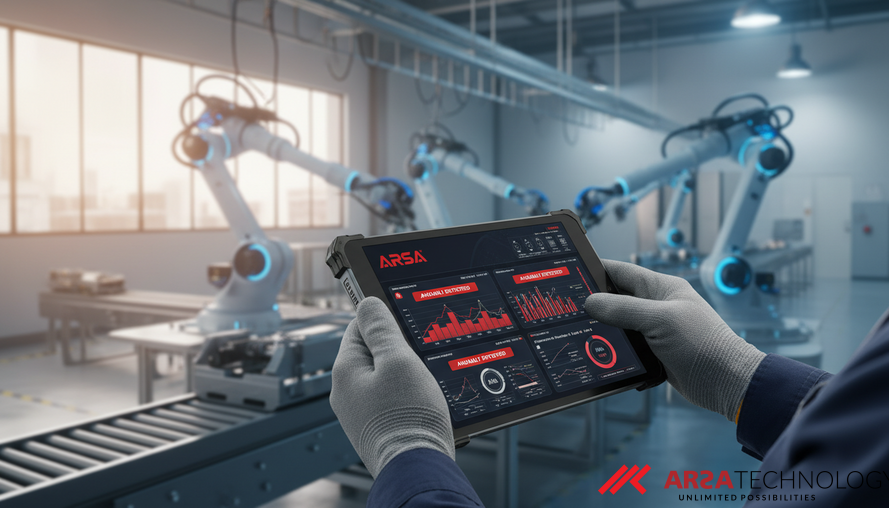
The Critical Role of AI Anomaly Detection in Modern Industry
In the rapidly evolving landscape of Industry 4.0, machine learning offers transformative solutions for long-standing industrial challenges, from quality control and process monitoring to predictive maintenance. These data-driven methods hold immense promise for automating inspection points, minimizing equipment failures, and significantly boosting overall operational efficiency. However, industrial applications also present unique hurdles that differentiate them from other AI deployments. One of the most significant and persistent challenges is extreme class imbalance, where data representing normal operations vastly outnumbers data on faults, defects, or anomalies. This scarcity of "bad" examples can severely hinder the effective training of machine learning models.
Traditional classifiers often falter when faced with such skewed datasets. This is precisely where anomaly detection techniques shine. Designed specifically to identify rare deviations from normal behavior, these methods are crucial for industrial environments where defects are inherently uncommon but costly. Understanding how these detectors perform under real-world constraints is vital for successful implementation. This article explores the findings of a recent evaluation of various anomaly detection algorithms, providing practical insights for businesses looking to leverage AI in their industrial operations.
Understanding the Industrial Data Dilemma: Why Faults are Rare
The extreme rarity of faulty or defective data in industrial settings stems from several factors. In mass manufacturing, for example, the anomaly rate can easily fall below 1%. This means that for every thousand products, fewer than ten might be defective. Such low numbers pose a significant barrier to training robust AI models. Companies strive for high product quality, making defect data naturally scarce. Furthermore, acquiring labeled data for faults can be expensive and labor-intensive, sometimes even requiring destructive testing. It's also challenging to predict and capture data for novel or previously unseen anomalies.
The location of data collection within a production line further complicates matters. End-of-line (EOL) testing, while critical, is inherently designed to catch only the highest quality products, making it the hardest point to gather defect data. Ideally, data collection occurs as close to where defects are introduced as possible, but this isn't always practical or feasible. These realities underscore the need for anomaly detection methods that can learn effectively from predominantly healthy data, identifying aberrations without needing extensive examples of every possible fault.
Benchmarking Anomaly Detectors: What the Study Revealed
To address the complexities of industrial data, a comprehensive study evaluated 14 anomaly detection algorithms using a simulated dataset. This dataset was designed to reflect real-world engineering constraints, including a non-linear problem and a "hyper-spherical" anomaly distribution in both 2D (simpler data) and 10D (more complex, high-dimensional data). This allowed researchers to rigorously test the detectors' performance across various training conditions, with anomaly rates ranging from a critically low 0.05% to 20%, and training sizes from 1,000 to 10,000 examples.
The evaluation focused on metrics like overall accuracy (Area Under the Receiver-Operator Curve, or AUCROC), the false negative rate (missing real problems), and the false positive rate (flagging too many false alarms). A crucial aspect of the study was assessing the models' ability to generalize, meaning how well they performed on unseen data after training. The findings provide critical guidance for selecting the right anomaly detection strategy, revealing that optimal detector choice is highly dependent on the number of faulty examples available during training.
Optimizing Algorithm Choice: Unsupervised vs. Semi-Supervised vs. Supervised
The study delivered clear recommendations based on the quantity of faulty examples available:
- When Faulty Examples are Extremely Limited (Less than 20): In scenarios with fewer than 20 faulty examples, unsupervised methods consistently outperformed others. These algorithms, such as k-Nearest Neighbors (kNN) and Local Outlier Factor (LOF), are designed to learn the "normal" patterns of data and identify anything that deviates significantly, without needing prior examples of anomalies. This is particularly valuable in early deployment stages or for detecting completely novel defect types. For businesses implementing initial fault detection systems or monitoring new processes, these methods offer a robust starting point.
- With a Moderate Number of Faulty Examples (30-50): As the number of faulty examples increased to between 30 and 50, a significant shift occurred. Semi-supervised methods like XGBOD and supervised techniques such as Support Vector Machines (SVM) and CatBoost showed substantial performance improvements. Supervised methods require labeled examples of both normal and faulty conditions, while semi-supervised methods bridge the gap, leveraging both. The performance leap for semi-supervised methods was especially pronounced when dealing with more complex, higher-dimensional data (10 features), highlighting their strength in richer industrial datasets. This suggests that as more defect data becomes available, transitioning to these more advanced methods can unlock greater accuracy and reliability. ARSA Technology, for instance, offers AI Box Series solutions that integrate these sophisticated analytics, turning existing CCTV infrastructure into powerful monitoring systems.
- Generalization Performance: The research also underscored a critical concern: the performance of anomaly detection methods tends to drop on new, unseen data, especially when trained on smaller datasets. This highlights the importance of robust testing and validation to ensure that models can reliably generalize to real-world operational conditions beyond the training environment.
Practical Applications in Industry
The insights from this research directly inform the deployment of AI-powered solutions in various industrial sectors:
- Manufacturing Quality Control: For manufacturers, detecting subtle defects on a fast-moving production line is paramount. Anomaly detection systems can continuously monitor product output, identifying deviations that human eyes might miss. With limited defect samples, starting with unsupervised methods and gradually upgrading to semi-supervised or supervised ones as more data is collected can be a viable strategy. ARSA's solutions for Heavy Equipment Monitoring & Product Defect Detection exemplify this, using AI Vision to automatically inspect products for cracks, color inconsistencies, or incorrect dimensions, crucial for industries like automotive or electronics.
- Predictive Maintenance: Industrial IoT sensors generate vast amounts of data from machinery. Anomaly detection can identify unusual vibration patterns, temperature spikes, or power consumption anomalies that signal impending equipment failure. By catching these issues early, businesses can schedule proactive maintenance, minimize downtime, and reduce costly emergency repairs.
- Worker Safety and Compliance: Ensuring adherence to safety protocols, such as the use of Personal Protective Equipment (PPE), is critical on industrial sites. AI video analytics can automatically detect if workers are wearing required gear (helmets, vests, masks) or if they enter restricted areas. In situations where compliance violations are rare, an unsupervised or semi-supervised approach can effectively flag deviations. ARSA provides the AI BOX - Basic Safety Guard, designed to monitor PPE usage and ensure security compliance in real-time.
- Smart Surveillance and Operations: Beyond just safety, anomaly detection can enhance overall surveillance. It can identify suspicious behavior, unauthorized access, or unusual traffic patterns in large industrial complexes, logistics hubs, or public spaces. This transforms passive CCTV footage into actionable security and operational insights. ARSA’s AI Video Analytics leverages computer vision for applications ranging from face recognition to crowd analytics and anomaly detection.
The ARSA Approach to Real-World AI Deployment
ARSA Technology, a company experienced since 2018 in AI and IoT solutions, understands these industrial complexities. Our approach prioritizes delivering measurable Return on Investment (ROI) by building solutions that enhance efficiency, productivity, and security. We combine deep technical expertise in computer vision, industrial IoT, and data analysis with a strong understanding of business needs.
Our solutions are designed for flexibility and scalability, whether it’s deploying edge computing devices for local processing or integrating AI APIs into existing systems. We focus on practical, ready-to-deploy products that minimize implementation time and maximize impact. By understanding the nuances of class imbalance and the optimal application of different anomaly detection algorithms, ARSA empowers businesses to make informed decisions and achieve tangible benefits.
Ready to transform your industrial operations with intelligent anomaly detection? Explore our range of AI and IoT solutions and discover how ARSA Technology can help you build smarter, safer, and more efficient systems.
Contact ARSA today for a free consultation and to schedule a demo tailored to your specific industry challenges.