AI at GDC 2026: The Paradox of Innovation Pitches Versus Developer Adoption in Gaming
Explore the disconnect at GDC 2026 where AI tools were heavily promoted for game development, yet game creators largely rejected their use in actual games, prioritizing human creativity and addressing ethical concerns.

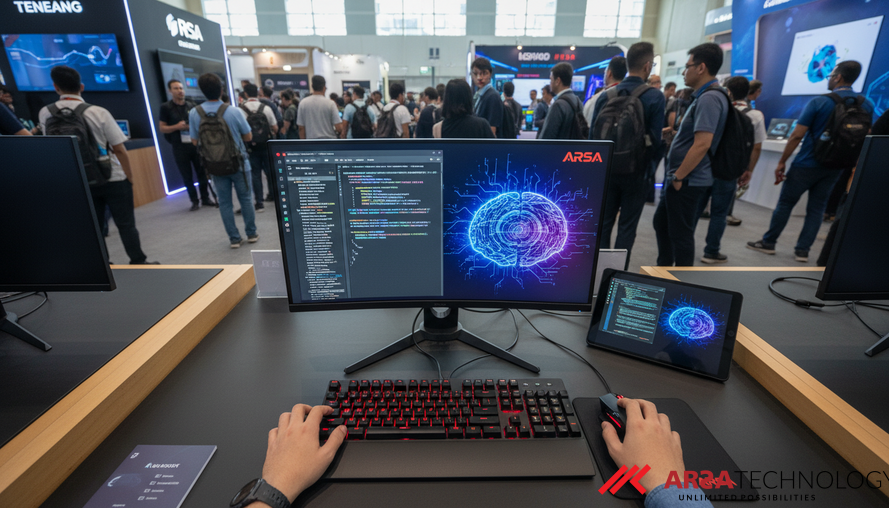
The annual Game Developers Conference (GDC) is a premier event for the gaming industry, where new technologies, design philosophies, and business strategies converge. At GDC 2026, Artificial Intelligence (AI) was unequivocally a dominant topic among vendors and presenters. Companies showcased a myriad of generative AI tools designed to streamline game development, from creating dynamic non-player characters (NPCs) and crafting entire virtual worlds through simple text prompts to automating quality assurance (QA) and debugging processes. Despite this pervasive presence in presentations and on exhibition floors, a striking paradox emerged: the very game developers attending the conference largely expressed a strong aversion to incorporating AI into their actual game projects.
The Vendor Vision vs. Developer Reality
The optimistic vision presented by AI proponents at GDC 2026 painted a picture of enhanced efficiency and creativity. Attendees saw demonstrations of pixel-art fantasy worlds instantaneously generated by AI, witnessed AI assistants automatically logging issues in shooter games during QA, and packed standing-room-only sessions on playable AI-generated spaces presented by research giants like Google DeepMind. Industry leaders, such as Google Cloud executive Jack Buser, who has a nearly 30-year career spanning major gaming platforms, even hailed generative AI as the "largest transformation" in the industry he had ever witnessed. From this perspective, AI offers substantial benefits for developers by assisting with tedious tasks like debugging, accelerating idea generation, and potentially allowing players to tailor games to their individual preferences.
However, this enthusiastic outlook sharply contrasted with the sentiment of many developers on the ground. The majority, particularly independent creators, expressed significant reservations, if not outright opposition, to integrating generative AI into their games. This resistance highlights a fundamental difference in priorities and values between technology providers and the creative community. For enterprises seeking to optimize workflows and generate real-time operational intelligence across various sectors, AI solutions can be transformative. For instance, in areas like industrial safety, real-time insights derived from video streams can significantly enhance operational safety, much like ARSA AI Video Analytics can monitor for PPE compliance and restricted area breaches, contributing to measurable safety improvements. Yet, this efficiency-driven paradigm clashes with the artistic ethos of game development.
Preserving the Human Element and Creative Craft
A central theme in developers' reluctance was the preservation of the "human element" and "craft" in game creation. Many indie developers emphasized that their works are defined by a unique, "human-made" quality, often characterized by the distinct "fingerprints" of a specific person or team. This approach embraces elements of surprise and unexpected artistry that they feel are inherently lost with AI generation. As Gabriel Paquette, developer of The Melty Way, eloquently put it, "I feel like the human mind is so beautiful. Why not use it?" This sentiment was echoed by a recent GDC survey, which reported a significant increase in developers viewing generative AI as having a "negative impact" on the industry, rising from 18% in 2024 to 52% in 2026.
Developers articulated that, currently, AI-generated content often appears "generic" or "cheap," lacking the depth, nuance, and humor that human creators bring. Matthew Jackson, working on the comedy game My Arms Are Longer Now, bluntly stated that "AI is so not funny." The negative public reception to early AI applications, such as the "AI slop-like faces" seen in a publicly shown example of Nvidia's DLSS 5, further fueled this skepticism. For many, the joy and challenge of game development lie in the "intense concentration of a career of applied craft," as described by Tony Howard-Arias from Black Tabby Games. This intensive process, including the intricacies of writing code, often pushes the boundaries of game design and leads to innovative solutions that are intrinsically tied to human problem-solving. This commitment to human-centric design is also why companies like ARSA focus on Custom AI Solutions that address specific client needs rather than generic, off-the-shelf applications.
Legal, Ethical, and Practical Barriers to AI Adoption
Beyond the philosophical objections, developers also highlighted significant practical and legal hurdles. The current legal landscape for generative AI output remains largely undefined, particularly concerning intellectual property and copyright. With AI-generated art notably lacking copyright protection, the commercial viability of AI-created games is questionable. Publishers like Finji, Panic, and BigMode have already signaled their disinterest or outright rejection of games incorporating generative AI, with some even requiring developers to confirm their games are "human-made." Even major players like Hasbro have confirmed they are not using AI in their video game development pipelines.
Ethical considerations also play a crucial role. Concerns about the environmental impact of training large AI models and the origin of the data used for training—often scraped without consent or fair compensation—are significant. These issues directly affect the integrity and public perception of a game. Furthermore, fears of job displacement within an industry already experiencing frequent layoffs contribute to the negative sentiment. Developers questioned the long-term sustainability of an industry that replaces human talent with AI, posing the critical question: "Where do you get new talent in the future?" These concerns underscore the need for responsible AI development and deployment, prioritizing human value and ethical frameworks. The development of privacy-centric AI systems, such as ARSA's Face Recognition & Liveness SDK which allows for on-premise deployment with full data ownership and no external network dependency, offers a model for addressing data privacy and control concerns in sensitive applications.
The Future of AI in Game Development: A Cautious Outlook
While the immediate outlook for widespread AI adoption in creative game content remains cautious, some developers acknowledge the technology's potential for future utility. Parallels are drawn to the film and TV industry, where bespoke AI models are emerging to assist with production tasks, suggesting a possible path for game development tools. Over time, as AI technology matures and legal and ethical frameworks become clearer, the acceptance of AI tools for specific, non-creative tasks—such as advanced debugging or content iteration—might increase.
For now, the deep-seated value placed on human connection and the craft of game-making prevails. Developers emphasize that the ultimate goal is to tell human stories and create experiences that resonate personally with players. The thousands of hours poured into considering and perfecting a game are driven by a desire to connect with a person they may never meet. This profound connection is, for many, the very reason they create games. ARSA Technology, with its expertise in deploying practical AI solutions for critical operations, understands that technology must align with human intent and provide measurable impact, a philosophy honed through its work since being experienced since 2018.
The article draws insights from a report published by The Verge on March 22, 2026.
Ready to explore how practical AI and IoT solutions can transform your enterprise operations? Discover ARSA’s intelligent technologies and contact ARSA for a free consultation.