AI-Driven Cloud Security: Transforming Threat Detection and Response for Enterprises
Explore how AI, machine learning, and deep learning are revolutionizing cloud security, enabling autonomous threat detection, real-time response, and adaptive defense for modern businesses.

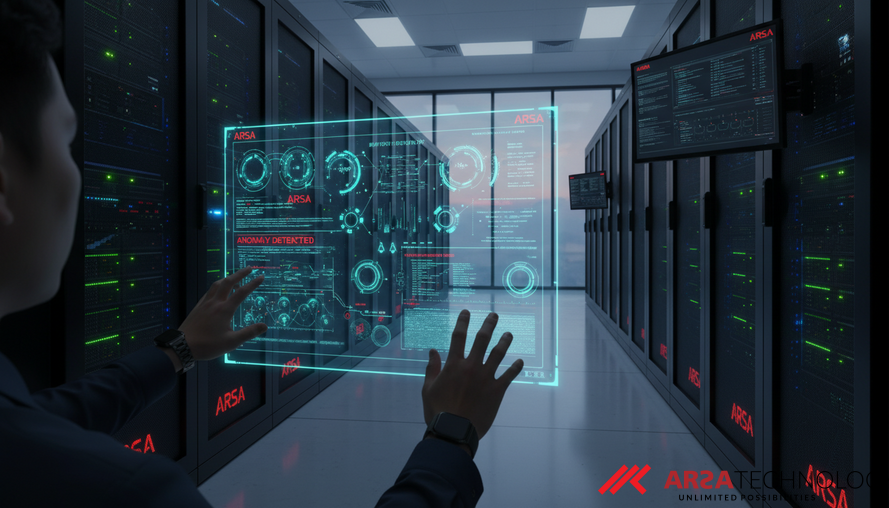
The Evolving Landscape of Cloud Security
Cloud computing has fundamentally reshaped how businesses operate, offering unparalleled scalability, adaptability, and significant reductions in operational overhead. Enterprises globally, including those in Indonesia, are increasingly migrating critical data and services to the cloud, leveraging its inherent flexibility and cost-effectiveness. However, this transformative shift introduces a complex array of security challenges, largely stemming from the cloud's distributed and multi-tenant architecture, which creates more entry points and vulnerabilities for cyberattacks.
Traditional security measures, heavily reliant on fixed signatures, predefined rules, and manual human intervention, are proving increasingly inadequate against the sophisticated and rapidly evolving nature of modern cyber threats targeting cloud infrastructure. These conventional approaches struggle to keep pace with the dynamic cloud environment, leading to delayed threat identification, high false positive rates, and resource-intensive manual monitoring. This gap underscores the urgent need for more advanced, intelligent security paradigms.
Limitations of Conventional Cloud Security
The inherent characteristics of cloud environments—such as rapid elasticity, broad network access, and resource pooling—while beneficial for operations, also present unique security vulnerabilities. Manual supervision of vast and diverse cloud traffic is not only resource-intensive but also highly prone to human error and fatigue, making it challenging to maintain continuous vigilance over dozens or even hundreds of virtualized instances. This dependency on manual processes significantly slows down threat identification and response, making organizations susceptible to advanced persistent threats (APTs) and zero-day exploits.
Furthermore, traditional incident response models typically involve substantial human intervention, which is inherently slower and less efficient when dealing with large-scale or real-time attacks. The time it takes for a human operator to detect, analyze, and implement countermeasures can be critical, allowing breaches to escalate and cause greater damage. Without an automated, adaptive defense mechanism, organizations face an uphill battle in maintaining the integrity, confidentiality, and availability of their cloud-hosted data and applications.
AI-Powered Threat Detection: A Proactive Defense
Artificial Intelligence (AI) has emerged as a crucial pillar in bolstering cloud security capabilities, shifting the paradigm from reactive to proactive defense. AI-based systems leverage advanced techniques such as Machine Learning (ML), Deep Learning (DL), and Reinforcement Learning (RL) to process vast quantities of heterogeneous data, including logs, user actions, and network traffic. This enables the detection of novel attack vectors and anomalies that would typically bypass traditional signature-based systems.
By continuously learning from data patterns and adapting to new threats, AI enhances the accuracy of intrusion detection systems, significantly reducing false positives and providing real-time situational awareness. This adaptive and predictive security posture allows organizations to anticipate and neutralize threats before they cause significant harm. For instance, AI Video Analytics can transform passive video feeds into intelligent security insights, identifying suspicious behaviors or compliance violations in real-time within data centers or access points connected to cloud infrastructure.
Autonomous Incident Response for Speed and Precision
Beyond detection, AI is revolutionizing the speed and precision of incident response. In the event of a detected threat, AI-driven systems can autonomously trigger defensive reactions, orchestrating countermeasures in real-time without requiring human intervention. This capability is critical for containing fast-moving cyberattacks and minimizing their impact. Examples include automatically isolating affected resources, dynamically introducing new security rules, and preventing lateral movement of threats across the network.
This level of automation enables faster responses, reduces damage, and can even facilitate self-healing networks and policy-based defense mechanisms. For environments requiring rapid, on-site processing of security data before it reaches the cloud, solutions like the ARSA AI Box Series offer edge computing power. These devices can analyze data locally, providing instant insights and alerts, which is vital for quick threat containment and ensuring maximum data privacy as no sensitive information needs to leave the premises.
Business Impact and Navigating Implementation
The adoption of AI in cloud security offers significant business advantages, translating directly into measurable return on investment (ROI). By enabling early detection and rapid response, businesses can dramatically reduce potential financial losses from data breaches, minimize operational downtime, and bolster their overall security posture. Furthermore, automated compliance monitoring—for instance, ensuring physical security protocols in facilities that access cloud data through AI BOX - Basic Safety Guard—can streamline auditing processes and reduce regulatory risks.
While the benefits are clear, implementing AI-driven cloud security also presents challenges, including concerns around data privacy, the threat of adversarial machine learning (where attackers try to trick AI models), and the complexity of integrating new AI systems with existing infrastructure. Addressing these requires a privacy-by-design approach, robust and continuously updated AI models, and flexible solutions designed for seamless integration. ARSA Technology, with its team experienced since 2018 in AI and IoT, emphasizes practical deployment realities and offers modular solutions that can be customized to fit diverse organizational needs and integrate with legacy systems.
The Future of Cloud Security: Scalable, Adaptive, and Intelligent
The trajectory of cloud security is undeniably towards more autonomous, scalable, and actively predictive systems, with AI at its core. As cloud environments continue to grow in complexity and distributed nature, the ability of AI to provide continuous self-learning, adaptive policy enforcement, and predictive analytics will become indispensable. This future vision emphasizes resilience, agile defense infrastructures, and the transformation of security from a bottleneck to an enabler of business growth.
For businesses looking to future-proof their cloud operations and enhance their digital transformation journey, embracing AI-driven security strategies is no longer optional but a necessity.
Ready to empower your cloud infrastructure with advanced AI security? Explore ARSA's intelligent solutions and request a free consultation today.