AI for Unusual Behavior: Revolutionizing Care with Privacy-First Monitoring
Explore how AI-powered pose estimation is transforming unusual activity recognition for developmental disability support, ensuring safety and privacy in healthcare environments.

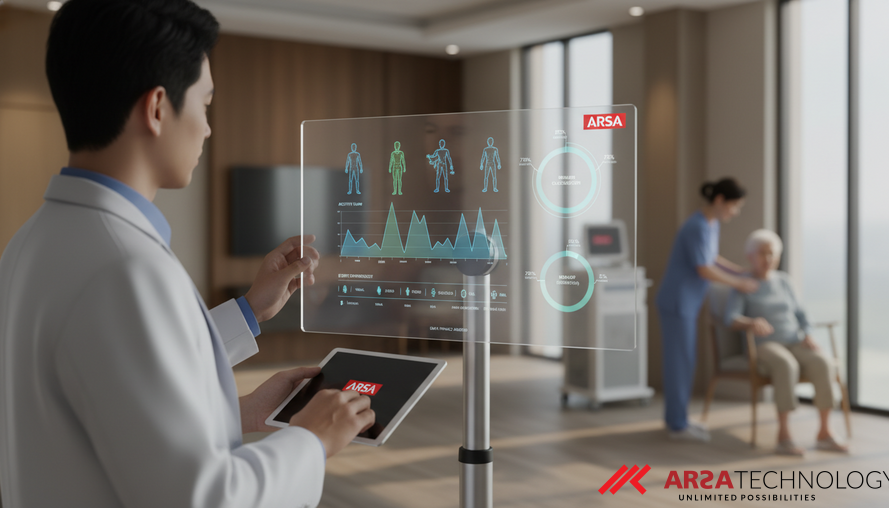
Bridging the Care Gap with AI-Powered Monitoring
The safety and well-being of individuals with developmental disabilities often depend on continuous, timely monitoring to identify unusual or atypical behaviors. These behaviors, ranging from self-stimulating actions like head banging to more critical incidents such as striking others, present significant challenges for caregivers and support facilities. Early and accurate recognition of such activities is paramount to providing appropriate interventions and preventing potential harm to both the individual and their care providers. Traditional observation methods, relying heavily on human vigilance, are often time-consuming, prone to error, and simply insufficient for the real-time intervention these situations demand.
This critical need has spurred a wave of innovation in Human Activity Recognition (HAR) systems, particularly those leveraging Artificial Intelligence (AI). The "Recognize the Unseen: Unusual Behavior Recognition from Pose Data" Challenge, hosted at ISAS 2025, represents a significant step forward in this domain. It specifically targeted the development of automated solutions that can distinguish between normal and unusual activities using non-invasive pose estimation data, addressing a vital gap in current care provision strategies. This challenge underscores the potential for AI to transform care environments, offering a path to enhanced safety and improved quality of life. The article is inspired by the "Summary of the Unusual Activity Recognition Challenge for Developmental Disability Support" by Christina Garcia et al., presented at ISAS 2025. arxiv.org/abs/2601.17049
The Unseen Challenge: Defining Atypical Behaviors for AI
For individuals with developmental disabilities, "unusual activity" encompasses a spectrum of behaviors that deviate from typical patterns. These can include repetitive movements, self-injurious actions, or sudden changes in posture, all of which often serve as early indicators for necessary interventions. The irregular, unpredictable, and sometimes abrupt nature of these actions makes them incredibly difficult to monitor effectively through manual means, especially in facilities with limited staffing. This creates a critical care gap where timely detection can prevent escalation and ensure prompt medical or behavioral support.
Beyond immediate safety, continuous monitoring offers profound insights into individual behavior patterns, enabling the optimization of treatment strategies and supporting vital research into developmental conditions. However, existing HAR datasets primarily focus on common daily activities and lack the specialized, expertly annotated data required for these specific "unusual" behaviors. The challenges of data scarcity, combined with the high cost and time involved in expert annotation, have historically posed significant barriers to developing robust recognition systems for this sensitive context. Addressing these limitations became a primary motivation for the ISAS 2025 Challenge.
AI and the Power of Pose Data: Privacy-First Monitoring
The ISAS 2025 Challenge sought to bridge these gaps by introducing a benchmark task focused on distinguishing typical daily activities from unusual behaviors using pose estimation data. Pose estimation, in essence, creates a digital "stick figure" of a person's movements by extracting "skeleton keypoints" (coordinates of major body joints) from video recordings. This innovative approach preserves individual anonymity, a critical privacy consideration in healthcare settings, while still capturing essential structural and temporal motion cues. This shift from raw video to anonymized pose data is a cornerstone of socially responsible AI in sensitive environments.
The dataset, designed in consultation with staff from actual treatment facilities, simulated eight activities: four normal (e.g., sitting, eating) and four unusual (e.g., head banging, attacking others). It deliberately incorporated real-world complexities, including:
- Class imbalance: Normal behaviors occur far more frequently than unusual ones.
- Temporal irregularities: Abnormal actions can be abrupt or sustained.
- Subject variability: Differences in body size, posture, and movement execution across individuals.
These elements pushed participating teams to develop highly sophisticated AI models capable of discerning subtle, yet critical, behavioral nuances. ARSA Technology, for instance, leverages similar principles in its AI Video Analytics solutions, which are customized to detect specific anomalies and behaviors in various industrial and commercial environments, showcasing the versatility of such vision AI applications.
Navigating the Complexities: Evaluation and Key Learnings
To ensure the developed AI models were truly adaptable and not just memorizing specific individuals, the challenge adopted a rigorous "Leave-One-Subject-Out (LOSO)" evaluation strategy. This meant that the models were tested on data from participants they had never encountered during training, emphasizing generalization to unseen individuals—a critical requirement for practical deployment in diverse care environments. Submissions were primarily assessed using macro-averaged F1 scores, a metric chosen specifically to account for class imbalance by giving equal weight to both frequently occurring normal behaviors and the rare, yet critical, unusual activities.
The challenge attracted forty teams, applying a diverse array of AI approaches, from classical machine learning to advanced deep learning architectures. These included sophisticated models like Spatial-Temporal Graph Convolutional Networks (ST-GCN) which excel at understanding the intricate relationships between human joints over time, and transformer-based models that capture long-range temporal dependencies. The results highlighted the significant difficulty in accurately modeling rare and abrupt actions, especially when relying on noisy, low-dimensional pose data. A key insight was the paramount importance of AI models capturing both temporal (the sequence and timing of movements) and contextual (the surrounding environment and prior actions) nuances for effective behavior modeling. This underscores that understanding how a movement unfolds and why it might be considered unusual is as important as merely detecting its presence.
Real-World Impact and the Future of Socially Responsible AI
The insights gleaned from this challenge are instrumental for the future development of socially responsible AI applications in healthcare and behavior monitoring. By demonstrating the feasibility and challenges of automated unusual activity recognition using privacy-preserving pose data, the challenge paves the way for solutions that can significantly enhance safety, reduce caregiver burden, and improve intervention timeliness. Such systems can enable a proactive approach to care, where anomalies are detected promptly, allowing for faster response and personalized support. For organizations aiming to implement cutting-edge solutions, companies like ARSA Technology, which has been experienced since 2018 in developing AI & IoT systems, offer practical pathways.
ARSA’s dedication to leveraging AI and IoT for societal benefit is exemplified through various solutions. For instance, the Self-Check Health Kiosk demonstrates the power of automated, non-invasive health data collection for corporate wellness and public health initiatives. Similarly, the AI BOX - Basic Safety Guard, while designed for industrial safety and PPE compliance, showcases ARSA’s capability in real-time behavior analysis and immediate alerting for critical events, principles directly transferable to unusual activity recognition in care facilities. These technologies offer measurable business outcomes, from reduced operational costs and improved efficiency to enhanced security and employee welfare.
Conclusion: Advancing Care with Intelligent Behavior Recognition
The "Unusual Activity Recognition Challenge" has not only pushed the boundaries of Human Activity Recognition but has also underscored the critical role of AI in creating more compassionate and effective care environments. By focusing on privacy-first approaches and the complexities of real-world behaviors, it has laid a foundational roadmap for developing robust, scalable, and deployable AI systems that directly impact vulnerable populations. The journey towards fully autonomous and ethically sound behavior monitoring is ongoing, but the challenge provides invaluable guidance for researchers, developers, and solution providers committed to building a safer, smarter future through technology.
To explore how ARSA Technology's AI and IoT solutions can address your specific operational challenges and contribute to a safer, more efficient environment, we invite you to contact ARSA for a free consultation.