AI & Geopolitical Conflict: Bolstering National Security and Intelligence with Advanced Technology
Explore how AI and IoT solutions are crucial for real-time threat detection, critical infrastructure protection, and maintaining information integrity amidst complex global conflicts and evolving threats.

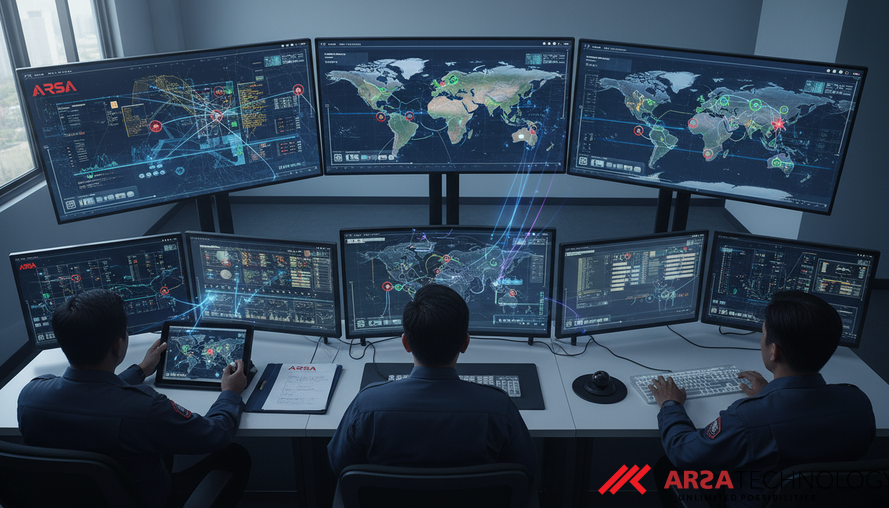
Modern geopolitical landscapes are characterized by an unprecedented level of complexity and volatility. Rapidly escalating conflicts, the emergence of novel threat vectors, and the pervasive challenge of information control demand advanced technological solutions to ensure national security and operational resilience. In such high-stakes environments, the ability to gather, process, and act upon intelligence in real time becomes paramount.
This article draws insights from a speculative journalistic piece titled 'I went to the Pentagon to watch Pete Hegseth scold war reporters' by Tina Nguyen, which portrays a future geopolitical conflict and its implications for information control and national security. While the scenario is fictional, it vividly illustrates the critical challenges facing governments and enterprises today, underscoring the indispensable role of Artificial Intelligence (AI) and the Internet of Things (IoT) in navigating these turbulent times.
The Evolving Landscape of National Security Threats
The hypothetical scenario described highlights a world where surprise conflicts can erupt and rapidly intensify, presenting diverse and escalating threats. From two US planes crashing to Iranian missile attacks on critical targets like Bahrain, drone incursions into regions such as Lebanon, and threats against urban centers, the pace and nature of conflict have fundamentally shifted. Traditional intelligence gathering and defense mechanisms often struggle to keep pace with these multi-faceted, often asymmetrical challenges. The incident of Iran allegedly placing mines and assaulting ships in a crucial energy shipping lane, driving oil prices up by 40% in just two weeks, underscores how quickly geopolitical tensions can translate into profound economic and operational impacts.
These examples illustrate a clear need for systems that can detect and analyze threats from multiple domains – aerial, land-based, and maritime – with speed and precision. The ability to anticipate actions, monitor restricted zones, and protect vital assets is no longer a luxury but a necessity for maintaining stability and minimizing catastrophic outcomes in a globally interconnected world.
AI for Real-time Threat Detection and Situational Awareness
In response to such dynamic threats, AI-powered surveillance and threat detection systems offer a crucial layer of defense. AI video analytics can transform passive CCTV networks into intelligent monitoring systems, providing real-time operational intelligence across vast areas. For instance, in critical infrastructure or border security scenarios, AI can automatically detect unauthorized intrusions, classify suspicious objects (e.g., drones, vehicles), and identify anomalous behaviors that might indicate an impending threat. This capability extends to monitoring compliance in sensitive areas, ensuring that safety protocols are followed and alerting personnel to potential breaches instantly.
ARSA Technology develops advanced solutions like ARSA AI Video Analytics software that processes multiple concurrent video streams, detecting faces, behaviors, and threat patterns in real-time. This can be deployed to monitor restricted areas, providing millisecond-speed detection and alerts. Such systems significantly reduce manual monitoring workloads, allowing human operators to focus on strategic responses rather than constant vigilance.
Protecting Critical Infrastructure and Global Supply Chains with IoT
The economic fallout from the Strait of Hormuz incident in the fictional scenario—a critical chokepoint for global energy—exemplifies the vulnerability of critical infrastructure and supply chains. Modern conflicts extend beyond battlefields, directly impacting global commerce and national economies. Here, IoT plays a transformative role by deploying ruggedized sensors and monitoring equipment in strategic locations. These sensors, coupled with AI analytics, can provide real-time data on everything from maritime traffic and environmental conditions to equipment health and security breaches.
For instance, intelligent systems can track vessels, detect anomalies in shipping patterns, and identify suspicious objects or activities in real-time, helping to prevent assaults or blockades. AI can also predict potential disruptions, allowing for proactive rerouting or stockpiling strategies. Solutions such as the AI BOX - Traffic Monitor, designed for smart infrastructure, could be adapted to provide critical insights into maritime traffic flow, congestion, and incident detection, enabling authorities to optimize management and respond swiftly to threats. Protecting these vital arteries is essential not only for national security but also for global economic stability.
The Imperative of Data Integrity and Intelligence in Decision-Making
The political undercurrents of the Pentagon briefing, with accusations of "fake news" and discussions around "unverified" reports, underscore a profound challenge: ensuring information integrity in an era rife with disinformation. When critical decisions hang in the balance, relying on objective, verified intelligence is non-negotiable. AI systems can play a pivotal role in this domain by processing vast quantities of unstructured data – from news reports and social media to classified documents – to identify patterns, cross-reference facts, and flag inconsistencies. This capability helps cut through noise and propaganda, providing decision-makers with a clearer, more factual understanding of the operational reality.
The Wall Street Journal reporter’s question regarding Iran’s highly enriched uranium highlights the need for precise, verifiable intelligence on sensitive issues. AI-powered document intelligence and data extraction tools can analyze complex reports and provide crucial insights, ensuring that policymakers are fully aware of all relevant factors, irrespective of political narratives. ARSA offers custom AI solutions tailored to process and analyze diverse data types, transforming passive data into predictive intelligence for mission-critical operations.
Strategic Deployment of AI and Edge Systems for Resilient Defense
For governments, defense agencies, and critical infrastructure operators, the deployment model of AI solutions is as crucial as the technology itself. Concerns about data sovereignty, latency, and regulatory compliance often make cloud-only solutions impractical for highly sensitive environments. This is where on-premise and edge AI systems become indispensable. By processing data at the source, these solutions minimize latency, ensure that sensitive information never leaves the organization's controlled infrastructure, and support operations even in air-gapped or restricted environments.
ARSA Technology has been experienced since 2018 in delivering production-ready AI and IoT systems designed for such demanding environments. Our offerings include on-premise ARSA AI Video Analytics Software, which allows organizations to deploy AI on existing servers, and the ARSA AI Box Series, pre-configured edge AI systems for rapid, plug-and-play deployment. These flexible deployment options provide full control over data, privacy, and performance, aligning with stringent security and compliance requirements inherent in national security operations.
In the face of an increasingly unpredictable global landscape, the strategic integration of AI and IoT is no longer an option but a strategic imperative. These technologies offer the precision, speed, and reliability necessary to enhance threat detection, protect vital assets, and empower decision-makers with accurate intelligence.
To explore how ARSA Technology can help your organization implement robust, AI-powered security and intelligence solutions, we invite you to contact ARSA for a free consultation.