AI in Journalism: How Tech Reporters are Leveraging AI for Enhanced Efficiency and Insight
Explore how leading tech reporters use AI tools like Claude for drafting, editing, and data processing, boosting efficiency and raising key questions for enterprise content strategies.

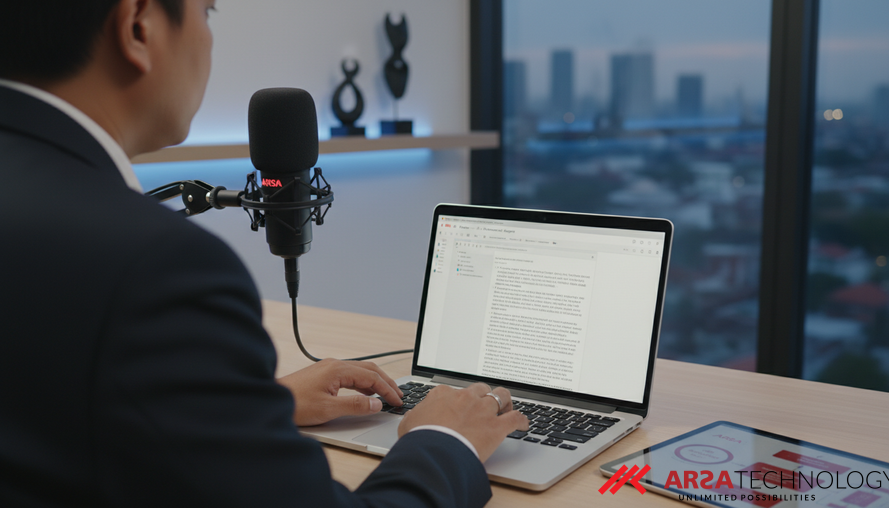
In the fast-paced world of digital content and journalism, a growing number of tech reporters are turning to artificial intelligence (AI) tools to revolutionize their workflows, moving beyond simple research to automating significant portions of their writing and editing processes. This trend highlights AI's potential to enhance efficiency, reduce costs, and even redefine roles within creative industries, offering valuable lessons for enterprises considering similar integrations.
Automating the Creative Process for Enhanced Productivity
One notable example is independent journalist Alex Heath, who utilizes AI to generate first drafts of his articles. Through an AI-powered voice-to-text service, Heath articulates his initial thoughts, which an AI agent then transforms into a complete draft. His system, built around Anthropic’s Claude Cowork, is intricately linked to his communication and organizational tools like Gmail, Google Calendar, and Notion notes, and further enhanced by a transcription service. Critically, Heath has meticulously designed a "skill" – a custom set of instructions and a library of his past work – to ensure the AI mimics his distinctive writing style and preferred newsletter structure.
This sophisticated setup allows the AI to manage the challenging "zero-to-one" drafting phase that many writers find daunting. Heath estimates this workflow saves him numerous hours weekly, reducing writing time by 30 to 40 percent. For enterprises, this demonstrates how custom AI solutions can be tailored to specific organizational styles and requirements, automating initial content creation and freeing up human talent for more strategic, value-added tasks.
Recreating Critical Resources in Independent Journalism
The adoption of AI is particularly appealing to independent journalists who operate without the traditional newsroom resources such as dedicated editors and fact-checkers. Instead of merely using generic prompts for general-purpose AI models, these reporters are actively configuring AI agents to act as bespoke editorial and research support. This approach mirrors how businesses can deploy specialized AI functionalities to augment their teams and fill resource gaps, especially in lean or rapidly expanding operations.
However, this raises pertinent questions about the fundamental value proposition of human journalists. If AI can assist with writing, editing, and even preliminary fact-checking, what distinct contributions do human professionals bring? A study by Google DeepMind researchers suggests that the uncritical use of AI can lead to homogenized, less creative, and more neutral content. To counter this, journalists emphasize that effective AI integration requires a clear understanding of their unique human value – whether it’s groundbreaking scoops, incisive analysis, or a distinctive voice.
AI as a Strategic Editor: Elevating Human Work, Not Replacing It
While some, like Alex Heath, leverage AI for initial drafting, others, such as AI and Silicon Valley culture reporter Jasmine Sun, see its greatest value in the editing process. Sun, who deliberately avoids using AI for writing due to concerns about creativity degradation in post-training models, employs Claude as a rigorous editor. Her instructions to the AI are clear: "You are not a co-writer. You cannot perceive—you don’t have experiences, sources, scenes, or emotions to draw from. Your role is to help Jasmine write like the best version of herself."
Sun argues that her AI editor pushes her to refine her prose and reporting more rigorously than she might otherwise, akin to a human editor who "calls you on your bullshit." This highlights AI's potential as a demanding, unbiased review tool, capable of offering high-level feedback that goes beyond simple grammar checks. For businesses, implementing AI for quality assurance in content creation can ensure consistency, adherence to brand voice, and a higher standard of output, thereby strengthening content strategy and avoiding the common pitfalls of generic AI output.
Redefining Value: Information vs. Voice
The emergence of AI in content creation is prompting a re-evaluation of what constitutes value. Casey Newton, author of the Platformer newsletter, notes a critical distinction: if the core value lies purely in information dissemination, then the involvement of AI in writing might be less concerning. However, if the value resides in a unique voice, opinion, argument, or analysis, then relying entirely on AI could dilute that unique selling proposition. This perspective is driving Newton to shift his focus from news analysis to more original reporting, recognizing the enduring human edge in investigative journalism.
Similarly, though she uses AI for business operations like SEO optimization for video descriptions and data sifting, journalist Taylor Lorenz refrains from using it for her articles. She values the craft of writing and the human element of helping people understand complex issues. For enterprises, this emphasizes the importance of discerning which content tasks benefit from AI automation and which demand the irreplaceable touch of human expertise, particularly where brand voice, unique insights, or sensitive information are concerned. ARSA Technology, for instance, has been experienced since 2018 in developing and deploying practical AI solutions designed to augment human capabilities, not replace them entirely. Our approach focuses on leveraging AI for operational efficiency while recognizing the strategic importance of human oversight and decision-making.
AI as a Force Multiplier for Complex Projects
The application of AI extends beyond daily article production to more ambitious projects. Kevin Roose, a technology columnist at The New York Times, is utilizing a "team" of Claude agents, led by a "Master Editor," to assist with his book about the race to build artificial intelligence. These sub-agents handle tasks like fact-checking, style alignment, and providing constructive feedback, significantly accelerating the writing process – potentially by years. While Roose still retains ultimate writing authority and works with human editors, this illustrates AI's power as a force multiplier for large-scale content endeavors.
This integrated approach underscores that while AI models are continuously improving, human intuition, personal perspective, and the nuanced understanding of complex narratives still hold a crucial advantage. For businesses facing massive data analysis or content generation needs, integrating powerful AI platforms or leveraging ARSA AI API for specific data processing tasks can offer a competitive edge, enabling faster insights and more efficient operations.
Conclusion
The integration of AI into journalism, from drafting to editing and even business operations, offers a compelling blueprint for how enterprises can harness these technologies. It demonstrates AI's capacity to streamline workflows, enhance productivity, and provide sophisticated support, but also highlights the critical need for human-centered design, ethical considerations, and a clear understanding of where human creativity and judgment remain paramount. By strategically deploying AI, organizations can augment their capabilities, free up valuable human resources, and achieve unprecedented levels of efficiency and insight in their content creation and data management.
Originally reported by Maxwell Zeff in a Wired.com article titled 'Meet the Tech Reporters Using AI to Help Write and Edit Their Stories' (source).
To explore how ARSA Technology’s practical AI and IoT solutions can transform your enterprise operations and content strategies, we invite you to connect with our experts for a free consultation.