AI in Science Education: Navigating Transformation with Responsible Innovation
Explore how AI is reshaping science education, from personalized learning to ethical challenges. Discover the future of AI-driven classrooms and the role of responsible innovation in preparing students for an AI-powered world.

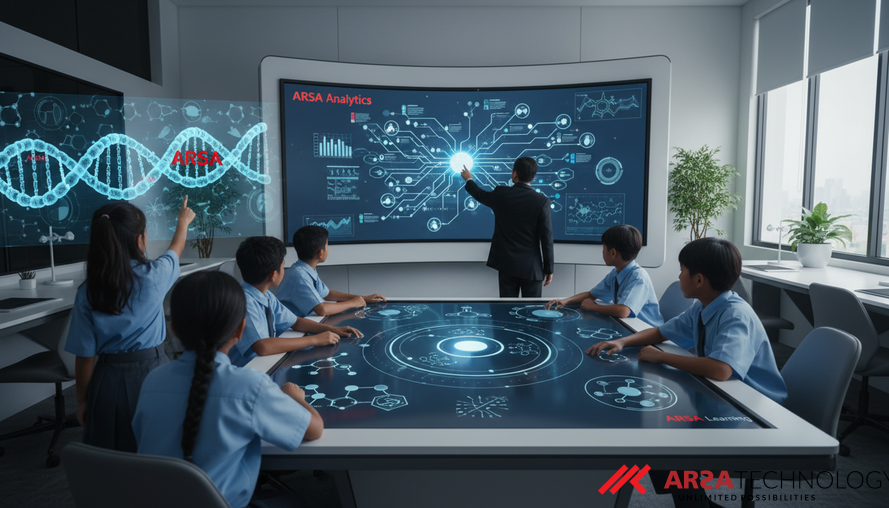
The Crossroads of Science Education and Artificial Intelligence
Science education is currently at a significant turning point, where established teaching methods are converging with the transformative power of artificial intelligence. AI is no longer a niche technology; its influence is rapidly expanding across sectors such as healthcare, finance, transportation, and manufacturing, inevitably extending into the realm of education. This widespread shift is fundamentally altering not only the nature of scientific work but also how knowledge is discovered, disseminated, and applied in the modern world (Zhai & Crippen, in press, Zhai & Crippen, in press).
This technological evolution demands new skill sets that go beyond traditional academic knowledge. Today's employers increasingly seek individuals with strong critical thinking abilities, data literacy, adaptability, and a knack for interdisciplinary collaboration. These competencies are often underdeveloped in conventional educational models. As society becomes more intertwined with AI capabilities, science education must evolve in parallel to ensure learners are prepared not just to participate, but to lead within this dynamic new landscape. ARSA Technology, with its expertise in delivering AI and IoT solutions across various industries, understands the imperative of adapting to these technological shifts.
The integration of AI into daily life highlights the shortcomings of educational systems still relying on standardized curricula and outdated assessment practices. For years, researchers have pointed to persistent issues like declining student engagement, limited personalized learning, and a disconnect between classroom learning and real-world applications. Furthermore, structural inequities persist, with significant achievement gaps linked to socioeconomic factors, often due to under-resourced schools lacking access to modern materials and interactive learning environments. In an AI-driven society, these deficiencies underscore an urgent need for systemic reform that prioritizes equity, responsiveness, and the cultivation of future-ready skills through science education.
Addressing Traditional Challenges with AI Solutions
AI is emerging as a powerful catalyst to bridge the gap between outdated science education models and the demands of contemporary society. By confronting long-standing challenges, AI introduces a suite of tools and frameworks designed to enhance learning experiences. These technologies include AI-supported platforms that can automatically score open-ended written explanations, arguments, or drawn models, providing rubric-aligned feedback at scale. This allows students to practice crucial scientific skills like modeling and argumentation, while educators can reliably track their progress.
Beyond assessment, AI empowers highly personalized learning experiences. Adaptive learning platforms dynamically tailor instruction to individual students' cognitive and emotional profiles, fostering deeper understanding through differentiated content and pacing. Intelligent Tutoring Systems (ITS) replicate aspects of one-on-one instruction, offering real-time, customized feedback that significantly boosts engagement and learning efficiency. Additionally, generative AI tools can automatically create instructional materials, such as lesson plans and assessments, reducing teachers' administrative workload and freeing them to focus on higher-order instructional tasks that directly support meaningful science learning. ARSA Technology regularly develops custom AI solutions that apply similar principles of intelligent automation and predictive analytics to solve complex challenges in other demanding environments.
Another critical application of AI in education is learning analytics. These systems provide educators with granular, real-time insights into student behavior, comprehension levels, and progression. This data-driven approach enables informed instructional decisions, helping to identify learning bottlenecks, predict students at risk of falling behind, and facilitate timely interventions. Empirical studies have shown that AI-supported platforms can significantly improve academic performance, particularly for students who benefit most from personalized pacing and targeted scaffolding. Through these capabilities, AI is not merely supporting existing pedagogical strategies but fundamentally re-engineering the teaching and learning process to align with the needs of a future-oriented, AI-driven society.
Redefining Educational Goals and Student Competencies
The transformative impact of AI extends beyond tools and platforms, fundamentally altering the very aims and structure of science education. Educational goals are shifting from an emphasis on rote memorization towards fostering essential 21st-century scientific competencies crucial for success in AI-rich environments. With AI-supported learning environments facilitating instructional activities, students can actively engage in science and engineering practices that cultivate deep disciplinary understanding and crosscutting concepts.
AI can significantly enhance the development of critical thinking and inquiry-based reasoning. This is achieved through adaptive simulations, intelligent tutoring, and real-time feedback mechanisms that personalize the exploration process. A key outcome of this transformation is the cultivation of AI literacy among students, empowering them to navigate, interpret, and critically assess AI-supported tools, algorithms, and data systems. These changes directly align with broader societal needs for a scientifically literate workforce capable of tackling complex, interdisciplinary challenges in fields like biotechnology, climate science, energy systems, and data-intensive research.
By aligning educational goals with the realities of an AI-driven society, science education is moving towards preparing students not just to understand scientific content, but to actively apply scientific knowledge to solve pressing global problems. This paradigm shift reflects a new understanding of scientific literacy, where success increasingly depends on higher-order thinking skills, the ability to interpret and analyze scientific data, and the capacity to innovate with new technologies.
The Responsible and Ethical AI Framework in Education
As AI becomes more integrated into science education, it also introduces a range of ethical, social, and pedagogical challenges that demand careful consideration. Issues such as fairness in algorithmic decision-making, transparency in AI operations, accountability for outcomes, privacy of student data, and the necessity of human oversight become paramount. To proactively address these tensions, a framework of Responsible and Ethical Principles (REP) is crucial. Such a framework provides essential guidance for aligning AI integration with core values of fairness, scientific integrity, and democratic participation, ensuring that technology serves human flourishing.
ARSA Technology, with a legacy experienced since 2018, understands that robust AI solutions must be built on principles of privacy-by-design and transparent operations, especially in sensitive contexts like education. This perspective asserts that AI should be viewed not as a replacement for human teachers and learners, but as a collaborative partner. In this partnership, AI supports inquiry, enriches assessment, and expands access to authentic scientific practices, ultimately enhancing human capabilities rather than diminishing them.
Crucially, the roles that remain uniquely human must stay central to education. These include engaging as moral and relational anchors in classrooms, bringing interpretive and ethical judgment to complex situations, fostering creativity, imagination, and curiosity, and co-constructing meaning through dialogue and community. By emphasizing these irreplaceable human qualities, AI can truly advance equity, integrity, and human flourishing in science education.
Practical Deployment and Future Implications
The integration of AI heralds a comprehensive transformation across all five key aspects of science education: goals, procedures, learning materials, assessment practices, and desired outcomes. This transformation is poised to redefine what it means to be scientifically literate and prepared for the future workforce. Organizations considering AI adoption in education must prioritize practical, production-ready systems that emphasize accuracy, scalability, privacy, and operational reliability – principles that ARSA Technology consistently applies in its enterprise AI deployments.
AI's potential to significantly advance equity, integrity, and human flourishing in science education is immense, provided it is deployed thoughtfully and ethically. From automating routine tasks to delivering hyper-personalized learning paths, AI can free up educators to focus on high-impact instructional strategies and deepen their connection with students. The future of science education will be a dynamic blend of advanced technology and essential human interaction, where AI acts as a powerful enabler for richer, more accessible, and more effective learning experiences.
Ready to explore how advanced AI and IoT solutions can transform your operational landscape, or address complex challenges in new frontiers? We specialize in delivering intelligent systems designed for real-world impact.
Contact ARSA today for a free consultation to discuss your specific needs.