AI-Powered Adaptive Learning: Personalizing Educational Games for Next-Gen Engagement
Explore how AI classifiers are revolutionizing game-based learning, enabling personalized educational content and enhancing engagement for students worldwide. Discover the technology transforming education.

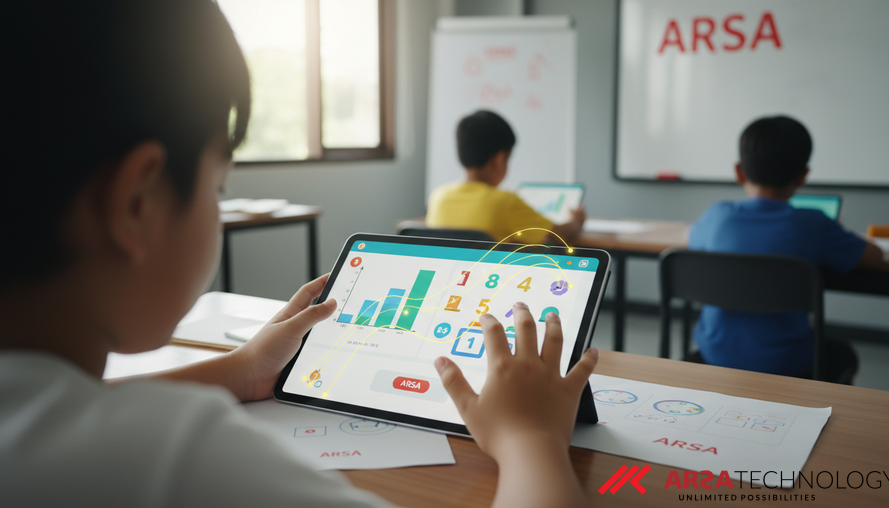
Game-based learning (GBL) has emerged as a powerful pedagogical tool, widely recognized for its ability to significantly enhance student engagement, critical thinking, and problem-solving skills in various subjects, particularly mathematics. By turning core educational skills into intrinsic game mechanics, GBL systems move beyond mere gamification, making the act of learning an inseparable part of gameplay. This approach, where learning is integral to the game itself, has proven far more effective than scenarios where educational content is merely an add-on to an unrelated game.
However, scaling the impact of GBL presents a considerable challenge. Creating dozens of high-quality, intrinsically mathematical game levels requires immense dedication and labor from expert designers. Even more complex is the task of dynamically delivering these levels to individual players in a way that perfectly matches their unique learning abilities and progress. As noted in a preliminary study by Jie Gao and Adam K. Dubé, effectively personalized GBL systems face a significant hurdle in managing the sheer volume of content and tailoring it for diverse learners (Jie Gao and Adam K. Dubé's preliminary study).
The Promise of Game-Based Learning in Mathematics
The effectiveness of game-based learning in mathematics stems from its capacity to offer multi-level behavioral, cognitive, and emotional interactions. Well-designed math games can concretize abstract concepts, provide low-stakes environments for experimentation, and deliver adaptive challenges tailored to a student's evolving abilities. This dynamic environment encourages students to try different strategies, receive immediate feedback, and refine their solutions, thereby honing their critical thinking skills.
Beyond merely playing, empowering students to become game-level creators significantly elevates their engagement. This transition pushes learners into higher-order thinking, as they grapple with the complex task of designing levels that strike a balance between entertainment and pedagogical effectiveness. This engagement is crucial for sustained learning and the mastery of mathematical concepts, which often requires cumulative practice across a multitude of levels.
Bridging the Content Gap with AI
Despite the clear benefits, the manual review and deployment of user-generated game levels are often impractical, especially in large-scale educational platforms. Imagine thousands of levels created by advanced players; relying solely on expert human review to identify suitable content for broader sharing is simply not scalable. Furthermore, manually ensuring that these levels align with individual learning needs is an even greater challenge. This is where artificial intelligence offers a transformative solution.
The preliminary study introduces an innovative framework that leverages AI techniques to address these challenges. By building a classifier for player-generated game levels, the system can automate the process of identifying and validating content. This not only streamlines the content curation pipeline but also opens the door to truly personalized learning experiences, delivering levels that genuinely adapt to each player's unique abilities and progress.
How AI Classifiers Personalize Learning Paths
The core of this AI framework lies in its ability to analyze and categorize game levels. In the study, a dataset of 206 distinct game levels, created by both experts and advanced players, was collected from a math game-based learning app's "Creative Mode." Each level was represented by a JSON file, which is a structured data format encoding all its features – from player character properties to the types and quantities of physics objects and obstacles. For instance, a level might contain multiple "Ice Blocks" or "Lava Blocks," each potentially carrying a specific mathematical value that interacts with the player's character.
The research classified these variables into four main groups: player character, goal, physics objects, and obstacles. These features then became the input for various machine learning classification models. The purpose of these classifiers is to learn patterns from the expert-validated levels and then apply this knowledge to predict the validity and suitability of new player-generated levels. Among the machine learning models tested – k-nearest neighbors, decision trees, support vector machines (SVMs), and random forests – the Random Forest model demonstrated optimal performance in predicting valid game levels. This means it was best at accurately identifying levels that met the quality and pedagogical standards for other students to play.
From Research to Real-World Impact
The insights from this preliminary study extend far beyond the realm of educational games. The application of AI to automatically classify and deliver personalized content holds immense potential across various sectors. For example, in corporate training and development, AI classifiers could dynamically generate or select training modules based on an employee's performance, learning style, and specific skill gaps, ensuring more effective and efficient upskilling. Companies can adopt custom AI solutions to develop similar sophisticated content classification and recommendation engines.
In fields like product design or engineering, where user-generated modifications or designs are common, AI could be employed to quickly assess the viability, safety, or quality of new iterations, drastically reducing manual review time and accelerating innovation. This method provides a clear path to improving operational efficiency and reducing costs associated with human resource allocation for content validation. Enterprises seeking to implement such intelligent systems for automating content validation or adaptive delivery can look to custom AI solutions tailored to their specific needs. ARSA Technology, for instance, has been experienced since 2018 in developing production-ready AI solutions for security, operations, and decision intelligence across various industries.
Choosing the Right AI Deployment for Adaptive Systems
The flexibility in deploying AI solutions is also a critical consideration for enterprises. Whether an organization requires a cloud-based API for quick integration or a fully on-premise SDK for stringent data control and privacy, the deployment model must align with operational realities and compliance needs. For instance, systems dealing with sensitive user data, like educational progress or biometric information, often benefit from on-premise deployments that offer complete data ownership and eliminate cloud dependencies.
Companies can opt for solutions like a comprehensive ARSA AI API for developing such personalized learning frameworks or similar applications that require flexible integration. The choice between cloud and on-premise deployment ensures organizations maintain full control over their data, privacy, and system performance, adapting the technology to their unique architectural, scale, and compliance requirements.
This preliminary study underscores the profound potential of integrating AI into the design and delivery of educational content. By automating level validation and enabling true personalization, AI can help unlock the full power of game-based learning, making education more engaging, effective, and accessible for the next generation of learners.
To explore how AI and IoT solutions can transform your operations and create intelligent systems tailored to your enterprise, please contact ARSA for a consultation.