AI-Powered Autonomous Buildings: Unlocking Decarbonization with Agentic AI and Digital Twins
Explore OptAgent, a groundbreaking Agentic AI framework for intelligent building operations. Learn how AI and Physics-Informed Machine Learning (PIML) drive efficiency, decarbonization, and smart energy management.

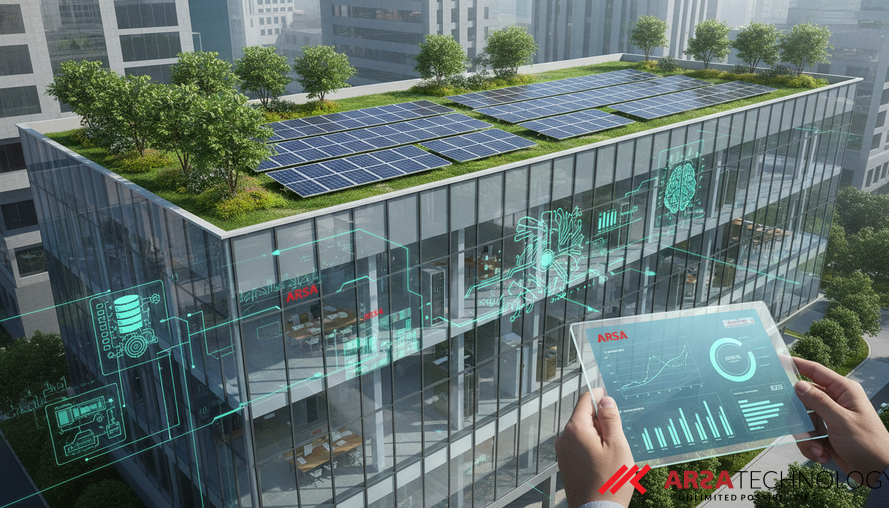
Buildings globally are colossal energy consumers, accounting for over a third of total energy use and playing a crucial role in achieving the ambitious 2050 net-zero emissions targets. Modern buildings have evolved into intricate ecosystems, integrating heating, ventilation, and air conditioning (HVAC) systems, distributed energy resources (DER), and complex interactions with the power grid and human activity. This inherent complexity presents significant hurdles for efficient modeling, control, diagnostics, and overall management. Traditionally, these tasks have been human-intensive, demanding expert knowledge, substantial time, and repetitive manual efforts Source.
However, the sheer scale of the decarbonization challenge—estimated to require retrofitting over 10,000 buildings daily in the United States alone for the next quarter-century—demands a radical shift. This urgency necessitates a unified, scalable, and robust framework that can support autonomous decision-making across diverse building applications, thereby drastically reducing human intervention and adapting to dynamic operating conditions. A new vision is emerging, built on two fundamental pillars: Agentic Artificial Intelligence as the "brain" for autonomous decision-making, and a Physics-Informed Machine Learning (PIML) environment as the "body" for realistic, physics-consistent simulation and interaction with building energy systems.
The Paradigm Shift: From Manual to Autonomous Buildings
The transition towards decarbonized buildings and grid-interactive energy management is creating an urgent need to rethink how buildings operate. The traditional approach, which relies heavily on manual engineering workflows, is simply not scalable enough to meet the ambitious climate goals. Imagine a future where buildings are not just passive structures but active, intelligent participants in the energy grid, autonomously optimizing their energy consumption, generation, and interaction with renewable sources. This shift is crucial for mitigating climate change and ensuring energy resilience.
Modern buildings are incredibly complex, juggling multiple systems, components, and stakeholders, all while trying to achieve diverse objectives like energy efficiency, occupant comfort, safety, and operational flexibility. Managing these competing demands traditionally involves extensive manual input from engineers, facility managers, and energy experts. This process is often slow, prone to human error, and struggles to adapt to real-time changes or unforeseen circumstances. The core challenge is to move away from these labor-intensive, reactive methods towards a proactive, intelligent system that can manage building operations with minimal human oversight. This transformation promises not only environmental benefits but also significant operational cost reductions and enhanced occupant well-being.
Understanding Agentic AI: Beyond Generative Models
Recent advancements in Artificial Intelligence, particularly Large Language Models (LLMs), have paved the way for a new class of systems known as Agentic AI. While often confused with Generative AI or simpler AI Agents, Agentic AI represents a significant leap forward in autonomous decision-making.
- Generative AI, like many popular chatbot models, excels at creating content—text, images, code—based on user prompts. However, its capabilities are generally confined to its training data, and it lacks the ability to interact with external tools, adapt to dynamic environments, or pursue long-term goals. It acts as a passive assistant, not an autonomous operator.
- AI Agents take a step further by integrating foundation models with specific tools (like APIs) and episodic memory to execute defined tasks. They can interpret context and perform short-horizon actions effectively. Yet, they are typically designed for isolated tasks, struggling with complex, multi-step workflows or coordinating with other agents.
- Agentic AI, in contrast, aims for end-to-end autonomy across complex workflows. It doesn't just generate responses; it perceives its environment, reasons about high-level goals, develops multi-step plans, executes actions through external tools, and can even revise its decisions based on feedback. Critically, modern Agentic AI architectures often involve an "orchestrator" that coordinates multiple "specialist agents." This allows complex objectives to be broken down into manageable subtasks, with each specialist agent contributing its unique expertise. This hierarchical, coordinated approach, combined with shared memory and persistent context, makes Agentic AI particularly well-suited for highly complex domains like intelligent building operations. It moves beyond fixed, rule-based automation to enable adaptive, goal-driven intelligence.
OptAgent's Core Components: Brain and Body of Autonomous Buildings
The OptAgent framework, developed to accelerate this paradigm shift, is designed with a clear distinction between its intelligence and its operational environment. It essentially comprises two critical layers:
The Physics-Informed Machine Learning (PIML) Digital Environment serves as the "body" – a scalable, physics-consistent digital twin where AI agents can learn, reason, and interact with the building's energy systems in a realistic manner. This environment is modular, meaning it can accurately model various aspects of a building, including the building structure itself, its HVAC systems, and distributed energy resources (DERs). By incorporating real-world physics into its machine learning models, this digital environment ensures that simulations are not only accurate but also respect the fundamental laws governing energy, thermodynamics, and fluid dynamics. This robustness is vital for supporting reliable grid-interactive energy management strategies. For example, ARSA Technology offers advanced AI Video Analytics solutions that can be integrated into such environments, providing real-time data from physical spaces to inform and validate digital models.
Above this robust digital body sits the Agentic AI Layer, which acts as the "brain." This layer is implemented with a sophisticated architecture involving 11 specialist agents and 72 Model Context Protocol (MCP) tools. These "specialist agents" are essentially highly focused AI programs, each tasked with a specific function within the building management workflow – such as optimizing HVAC, managing DERs, or analyzing energy consumption. The "MCP tools" are the capabilities or functionalities these agents can call upon, much like a human expert uses different software or instruments. This modular design allows for end-to-end execution of multi-step energy analytics, enabling the system to handle complex queries, like assessing the impact of system upgrades on various performance metrics. For instance, an agent might utilize a tool to access real-time energy data, another tool to run a simulation in the PIML environment, and yet another to generate a report, all coordinated seamlessly by an orchestrator agent.
Putting OptAgent to the Test: Real-World Applications and Benchmarks
To demonstrate the practical capabilities of the OptAgent framework, a representative case study was conducted. This study showcased the coordinated execution of multiple specialist agents across various domains to assess the impact of system and control upgrades on critical building performance indicators. These indicators included energy use, operating cost, thermal comfort for occupants, and overall system flexibility. The ability for various AI agents to work together to analyze such multi-faceted problems highlights the framework's power in providing holistic insights. For instance, solutions such as ARSA AI BOX - Traffic Monitor or ARSA AI BOX - Basic Safety Guard can be viewed as specialized agentic tools, providing real-time data that could feed into a broader intelligent building operation framework.
Furthermore, an extensive benchmark evaluation, comprising approximately 4,000 runs, was performed to systematically quantify the workflow performance of the Agentic AI system. This comprehensive testing focused on several key metrics:
- Accuracy: How accurately the system performed tasks such as planning the workflow, selecting the right specialist agents, choosing the appropriate tools, and extracting relevant parameters from various data sources.
- Token Consumption: An indicator of the computational resources (and thus cost) associated with running the large language models that power the agents.
- Execution Time: The speed at which the system could complete complex analytical tasks.
- Inference Cost: The financial cost associated with the AI's processing and decision-making.
The benchmark results provided crucial insights into how different design choices affect the overall performance of such agentic AI systems. Factors analyzed included the "intelligence mode design" (how the AI is structured to think and operate), "model-size configuration" (the complexity and capacity of the underlying AI models), "task complexity" (how challenging the analytical problem is), and "orchestrator–specialist coordination" (how effectively the main orchestrator agent directs and manages its specialist counterparts). These findings are invaluable for developing robust, efficient, and cost-effective AI solutions for real-world applications.
Key Insights for Future AI Building Systems
The extensive evaluation of the OptAgent framework yielded six critical "lessons learned" for designing and deploying future agentic AI systems in real-world building energy applications. These insights highlight the importance of careful consideration in architectural design, model selection, and coordination strategies to achieve optimal performance and reliability. By understanding the interplay between intelligence mode, model size, task complexity, and inter-agent communication, developers can build more adaptive and self-driving building intelligences. This research establishes a foundational understanding for implementing AI in complex, grid-interactive building operations, paving the way for systems that can autonomously manage energy, enhance security, and ensure occupant comfort. This rigorous approach underscores ARSA Technology's commitment to delivering practical, precise, and adaptive AI and IoT solutions, proven to provide measurable ROI across various industries.
In conclusion, the OptAgent framework marks a significant step towards fully autonomous and intelligent building operations. By combining the power of Agentic AI with physics-informed digital environments, it offers a scalable, efficient, and reliable path to decarbonize buildings and create smarter, more responsive urban infrastructures.
To explore how advanced AI and IoT solutions can transform your building operations, from enhanced energy management to improved safety and efficiency, we invite you to discuss your specific needs with our experts. Learn more about ARSA Technology's capabilities and how we can tailor solutions for your enterprise by requesting a free consultation.
Source: Jiang, Z., Xu, W., & Dong, B. (2026). OptAgent: an Agentic AI framework for Intelligent Building Operations. arXiv preprint arXiv:2601.20005.