AI-Powered Bridge Assessment: Enhancing Urban Resilience with Smart Infrastructure Analytics
Discover how AI, heterogeneous graph analysis, and LLMs are transforming urban bridge assessment, providing multi-dimensional insights for smarter infrastructure planning and enhanced city resilience.

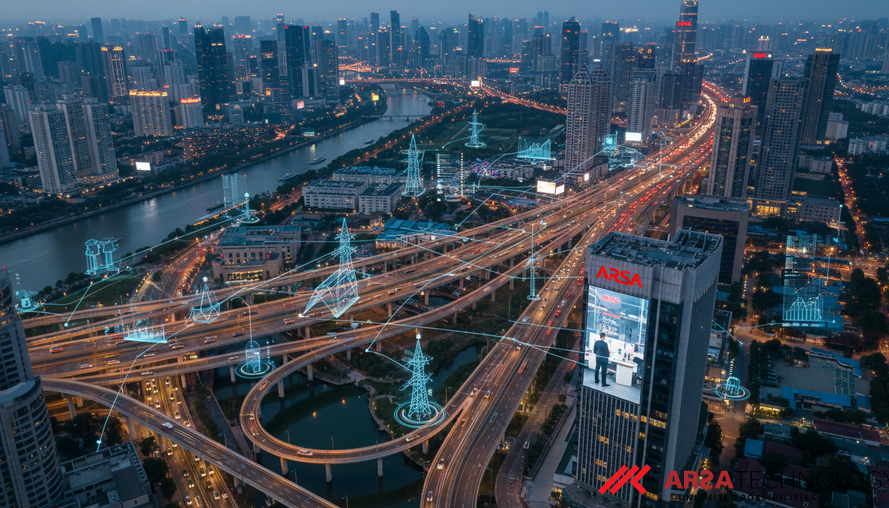
Urban bridge networks are the unsung heroes of modern cities, silently facilitating transportation, emergency services, and economic activity. However, assessing their true importance goes far beyond simply inspecting their structural condition. A critical bridge closure can cascade into severe disruptions, affecting everything from medical access and community isolation to vital supply chains and even environmental connectivity. This necessitates a more comprehensive approach to infrastructure management, moving beyond traditional methods to embrace advanced AI and data analytics.
Traditionally, bridge assessments have focused on tangible metrics like age, physical condition, and traffic volume. While crucial, these structural health indicators often overlook the systemic importance of a bridge within the broader urban ecosystem. The real challenge lies in understanding a bridge's multi-dimensional role – how its presence impacts healthcare accessibility, enables economic logistics, or contributes to environmental preservation. Furthermore, much of this assessment relies on proprietary municipal data, hindering reproducibility and cross-city comparisons. The sheer volume of data, even when available, often results in numerical rankings that lack the explanatory narratives needed for effective policy communication. This is where cutting-edge methodologies, combining heterogeneous graph analysis, unsupervised clustering, and automated interpretation via large language models (LLMs), are beginning to redefine urban infrastructure planning.
Beyond Structural Integrity: A Holistic View of Urban Infrastructure
To truly gauge a bridge's significance, we must consider its intricate connections within the urban fabric. This involves moving past isolated structural metrics to a holistic social impact assessment. Researchers have developed methodologies that construct what are known as "heterogeneous graphs" – complex networks that integrate various types of interconnected data. In the context of urban bridges, such a graph might include not just the bridges themselves, but also road networks, critical buildings like hospitals, and public facilities, all sourced from open-source platforms like OpenStreetMap (OSM).
From these rich datasets, five crucial social impact indicators can be computed for each bridge:
- Transit Desert Score: Quantifies how difficult it would be for people to access essential services or areas if the bridge were unavailable, essentially measuring reliance on the bridge for public and private transit.
- Hospital Access Score: Measures the impact on emergency services and healthcare accessibility, indicating how a bridge closure might delay reaching medical facilities.
- Isolation Risk Score: Assesses the potential for communities to become cut off or isolated from key resources if the bridge becomes impassable.
- Supply Chain Impact Score: Evaluates the ripple effect on goods and services movement, highlighting a bridge's role in economic logistics and supply routes.
- Green Space Access Score: Gauges the disruption to environmental connectivity and access to parks or natural areas.
These indicators provide a multi-faceted view of a bridge's importance, enabling urban planners to understand potential vulnerabilities and prioritize maintenance or emergency response strategies more effectively. Implementing such a comprehensive data collection and analysis framework can be streamlined with custom AI solutions tailored to specific city infrastructures.
Leveraging Open Data and Advanced Analytics for Strategic Insights
The power of this new methodology lies in its ability to leverage readily available open data, eliminating the reliance on often-inaccessible proprietary municipal records. By using OpenStreetMap data, the entire process becomes more transparent, reproducible, and scalable across different cities. The collected information, comprising a multi-dimensional feature vector for each bridge (e.g., a 52-dimensional vector combining all five indicators), then undergoes a sophisticated analytical pipeline.
Firstly, dimensionality reduction techniques like UMAP (Uniform Manifold Approximation and Projection) are applied. In simple terms, UMAP takes this complex, high-dimensional data and simplifies it, creating a more manageable, lower-dimensional representation that retains both the fine-grained local relationships and the broader global structure of the data. This makes it easier to visualize and identify patterns. Following this, density-based clustering algorithms such as HDBSCAN (Hierarchical Density-Based Spatial Clustering of Applications with Noise) are employed. HDBSCAN intelligently identifies natural groupings or "clusters" of bridges with similar functional characteristics, distinguishing them from statistical "noise" within the dataset. This allows urban planners to discover distinct "functional archetypes" of bridges—for example, bridges critical for transit vs. those vital for hospital access. For real-time monitoring and analysis of urban infrastructure, edge AI systems like the ARSA AI Box Series can be deployed to process video streams and other sensor data locally, providing immediate insights without cloud dependency. This is particularly useful in various industries including smart cities.
Automated Interpretation with LLMs: Bridging Data and Policy
Even with sophisticated data analysis, communicating complex findings to policymakers and stakeholders can be a bottleneck. This is where Large Language Models (LLMs) offer a revolutionary solution. Instead of relying on manual interpretation by domain experts, which is time-consuming and prone to inconsistencies, LLMs can be trained and optimized to generate policy-relevant narratives automatically. This capability transforms raw data and analytical results into understandable, actionable insights.
Research has shown that the "temperature" setting of an LLM plays a critical role in the quality of its output for infrastructure applications. The temperature parameter controls the randomness of an LLM's text generation: a lower temperature produces more deterministic, factual, and structured output, while a higher temperature allows for more creativity and variation. For infrastructure analysis, an optimal balance is key. Studies reveal that a temperature of 0.3 provides an ideal blend of structured output and factual grounding, making the interpretations reliable and useful for decision-making. In contrast, higher temperatures like 0.5 can lead to unexpected instability and significantly higher output variance, reducing trustworthiness. Furthermore, selecting an LLM specifically trained on relevant domains (e.g., urban functions and construction) significantly outperforms models focused solely on structural engineering for policy communication, ensuring the generated interpretations resonate with urban planning objectives. This intelligent summarization and communication capability highlights the transformative potential of AI in governance.
Real-World Impact and Scalability Across Cities
This advanced methodology has demonstrated impressive results in practical applications. When applied to 775 bridges across two Japanese cities, Tama (353 bridges) and Morioka (422 bridges), the pipeline swiftly identified 19 distinct functional bridge archetypes in just 2.5 minutes. This rapid analysis capability means that urban planners can quickly gain a deep understanding of their infrastructure's systemic importance. The methodology's "transferability" is another significant contribution, proving that the complete pipeline can be adapted to new cities with minimal configuration changes (e.g., updating bounding box and coordinate system settings). This high degree of transferability (achieving a 95/100 score in testing) makes it a scalable solution for urban infrastructure management worldwide.
Such a system offers tangible benefits for enterprises and governments, enabling proactive decision-making that enhances urban resilience. By identifying critical bridge archetypes and understanding their multi-dimensional impacts, authorities can:
- Prioritize maintenance based on social impact, not just structural decay.
- Develop more effective disaster response plans.
- Optimize urban development and resource allocation.
- Communicate risks and mitigation strategies more clearly to the public.
For organizations requiring real-time situational awareness and data analysis from complex environments, ARSA Technology offers sophisticated AI Video Analytics and edge computing solutions. With expertise developed since 2018, ARSA can help deploy systems that process and interpret vast amounts of data, converting it into actionable intelligence for improved operational efficiency and safety in urban settings.
The Future of Urban Resilience Planning
The integration of heterogeneous graph analysis, advanced clustering techniques, and intelligent LLM interpretation represents a significant leap forward in urban infrastructure management. By shifting from reactive maintenance to proactive, data-driven strategies, cities can build more resilient, safer, and more efficient environments for their inhabitants. The ability to assess infrastructure importance comprehensively, discover functional archetypes automatically, and generate policy-relevant interpretations through open-source data and AI empowers urban planners with unprecedented insights. This approach not only optimizes resource allocation but also fosters better communication and more informed decision-making, ultimately contributing to the sustainable development of smart cities globally.
Source: Takato Yasuno. "Heterogeneous Graph Importance Scoring and Clustering with Automated LLM-based Interpretation." arXiv:2605.02919v1 [cs.LG], 9 April 2026. https://arxiv.org/abs/2605.02919
Ready to enhance your city's resilience with advanced AI and IoT solutions? Explore ARSA Technology's offerings and contact ARSA for a free consultation to discuss your specific infrastructure challenges.