AI-Powered Fetal Monitoring: PRISM-CTG Unlocks Deep Insights from Cardiotocography
Discover PRISM-CTG, a breakthrough AI foundation model transforming CTG analysis. Learn how self-supervised learning and clinical context provide robust, transferable insights for fetal health.

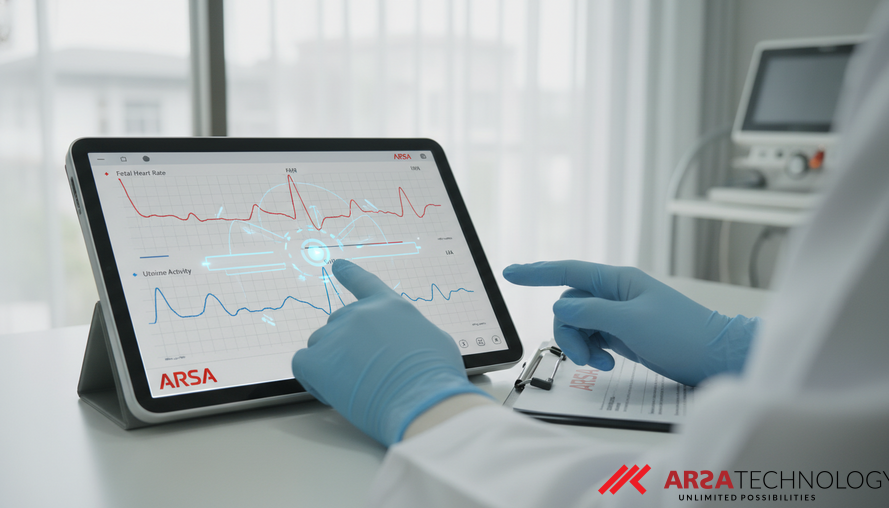
Revolutionizing Fetal Health Monitoring with AI
Cardiotocography (CTG) is a cornerstone of prenatal and intrapartum care, providing vital, non-invasive insights into fetal brain activity. By simultaneously recording fetal heart rate (FHR) and uterine activity (UA), it serves as the primary tool for continuously assessing a baby's well-being during pregnancy and labor. However, the interpretation of CTG traces is notoriously complex, subjective, and time-consuming, often requiring sustained attention from clinicians over prolonged periods. This subjectivity can lead to diagnostic uncertainty, potentially delaying crucial medical decisions.
The rise of artificial intelligence (AI), particularly deep learning models, has offered a promising avenue for automating CTG analysis and assisting clinicians. Yet, these models have traditionally faced significant hurdles. They typically rely on narrowly curated, labeled datasets and limited patient cohorts, which constrains their ability to learn comprehensive and robust patterns. This leaves a vast amount of physiologically rich clinical data untapped, hindering the development of truly versatile and generalizable AI solutions in this critical healthcare domain.
The Challenge with Traditional CTG Analysis and Supervised AI Models
Traditional supervised deep learning models for CTG analysis are designed to excel at specific tasks, such as detecting fetal acidemia or classifying abnormalities. While effective within their defined scope, their performance is inherently limited by the data they are trained on. These models demand large quantities of high-quality, clearly defined labels—often derived from neonatal outcomes or strict clinical criteria. The problem is that many real-world CTG recordings don't fit neatly into these categories. Factors such as early recordings not reflecting final neonatal status, ambiguous cases, or data dropouts frequently lead to the exclusion of valuable information from training pipelines.
Consequently, AI models trained on these highly selective subsets of CTG recordings tend to learn task-specific representations that may lack robustness and the ability to generalize across different clinical scenarios. This means that a model trained to predict one outcome might struggle significantly when applied to a slightly different context or dataset, limiting its practical utility in diverse healthcare environments. Overcoming this data dependency and enhancing the transferability of learned representations is critical for advancing automated fetal monitoring.
Unlocking Insights: Self-Supervised Learning and Foundation Models
Self-supervised learning (SSL) offers a powerful alternative to overcome the limitations of traditional supervised models by enabling AI to learn meaningful representations directly from large volumes of unlabelled data. This approach has proven highly effective in various physiological signal domains, paving the way for the development of "foundation models" (FMs). These FMs are designed to learn deep, transferable domain-level representations, making them capable of performing well across a multitude of downstream tasks without needing extensive retraining for each new application.
Despite the success of FMs in other areas, their application in CTG analysis has remained largely unexplored. Existing SSL approaches in other physiological domains often rely on single-signal pretext objectives, which, while capturing low-level signal characteristics, frequently overlook the rich clinical context available. Patient metadata, such as gestational age, medical history, or even expert-engineered features routinely used in clinical interpretation, often goes ignored or discarded during conventional AI training. This rich information, though individually insufficient for diagnosis, provides valuable inductive bias and context that can significantly enhance an AI model's understanding of physiological patterns.
PRISM-CTG: A New Paradigm for Clinically Grounded AI
To address these critical limitations, a groundbreaking new model, PRISM-CTG (Physiology-aware Representation Learning via Integrated Self-supervision and Metadata for CTG), has been introduced. This is the first large-scale foundation model for CTG analysis, explicitly designed to learn clinically grounded, transferable representations. PRISM-CTG was pretrained on an extensive dataset of over 250,000 hours of CTG recordings, spanning three decades, utilizing an innovative multi-view self-supervised learning framework.
This multi-view framework jointly optimizes three complementary pretext objectives, transforming otherwise discarded clinical information into powerful supervisory signals. These objectives include:
- Random-projected guided masked signal reconstruction (Best-RQ-MAE): This objective allows the model to learn general CTG patterns by predicting missing or corrupted segments of the FHR and UA signals, similar to how humans might fill in gaps based on context.
- Clinical variable prediction: PRISM-CTG leverages readily available patient metadata (e.g., gestational age, parity) by reframing it as prediction targets. This guides the model to learn representations that incorporate crucial patient-level context.
- Feature classification: Integrating domain-engineered features, which are typically derived from expert clinical knowledge, further enriches the model's understanding of physiological subtleties.
The model's architecture employs dedicated task-specific tokens for specialized representation learning for each objective, while controlled cross-attention facilitates intelligent information exchange across these different clinical contexts. This design mirrors how expert clinicians interpret CTG traces, evaluating signal inputs alongside comprehensive patient context to make informed decisions. Such advanced AI solutions, leveraging proprietary technology and deep engineering expertise, are precisely the kind of custom AI solutions that ARSA Technology specializes in, delivering measurable impact across various industries.
Significant Breakthroughs and Real-World Impact
The development of PRISM-CTG represents a significant breakthrough in automated CTG analysis. It is, to the researchers' knowledge, the first study to introduce a large-scale foundation model for CTG that learns robust, domain-level representations. Extensive experiments validated its performance across seven downstream CTG tasks in both antepartum (before labor) and intrapartum (during labor) domains.
PRISM-CTG consistently outperformed conventional in-domain and existing SSL baselines, demonstrating an impressive average improvement of 4.93% to 19.31% over supervised models. Furthermore, the model showcased strong cross-institution generalization capabilities when externally validated on two distinct datasets, achieving average improvements of 2.76% and 8.62%. This remarkable ability to generalize, even with minimal intrapartum data during pretraining, signifies its potential for widespread real-world application. Notably, PRISM-CTG achieved performance comparable to studies trained on substantially larger, privately labeled datasets, highlighting the efficiency and power of its self-supervised approach. This translates directly to improved diagnostic accuracy, reduced workload for clinicians, and ultimately, better patient outcomes through earlier and more precise interventions.
Flexible Deployment for Healthcare Environments
The practical deployment of advanced AI models like PRISM-CTG requires flexible and secure infrastructure solutions. In healthcare, where data privacy and regulatory compliance (such as GDPR and HIPAA) are paramount, on-premise or edge deployment strategies are often preferred to ensure full control over sensitive patient data. By processing video streams and physiological signals locally, these solutions minimize latency and eliminate dependency on external cloud services, critical for time-sensitive medical applications.
Providers like ARSA Technology offer deployment options tailored to these needs. For instance, edge AI systems such as the AI Box Series can process data directly at the source, offering plug-and-play installation and robust local processing. For organizations with existing server infrastructure, ARSA's AI Video Analytics software can be deployed on-premise, transforming raw CCTV and sensor feeds into real-time operational intelligence without hardware dependency. This ensures that powerful AI capabilities can be integrated seamlessly into existing healthcare IT systems, preserving privacy and maintaining data sovereignty. ARSA, being experienced since 2018 in developing AI and IoT solutions, understands the practical deployment realities across various industries, including healthcare.
Conclusion: The Future of Fetal Monitoring
The introduction of PRISM-CTG marks a significant leap forward in AI for medical diagnostics, particularly in the complex field of cardiotocography. By harnessing the power of self-supervised learning and integrating rich clinical context, this foundation model demonstrates how AI can move beyond narrowly defined tasks to provide robust, transferable, and clinically meaningful insights. This innovation promises to enhance the accuracy and efficiency of fetal monitoring, reducing diagnostic uncertainty and supporting clinicians in making timely, life-saving decisions. As AI continues to evolve, models like PRISM-CTG will be instrumental in building a future where advanced technology seamlessly integrates with human expertise to deliver superior healthcare outcomes.
For organizations seeking to integrate cutting-edge AI and IoT solutions into their operations, exploring robust and compliant deployment options is crucial. To learn more about how advanced AI can be tailored for your specific needs and to discuss potential implementations, we invite you to contact ARSA for a free consultation.
Source: Sheng Wong et al., "PRISM-CTG: A Foundation Model for Cardiotocography Analysis with Multi-View SSL," https://arxiv.org/abs/2605.02917