AI-Powered Human Mobility Simulation: Bridging Individual Actions with Collective Patterns
Explore M2LSimu, an AI framework that guides LLM-based human mobility simulations using real-world data, enabling realistic population-level behaviors while preserving individual privacy. Discover its applications in urban planning and public health.

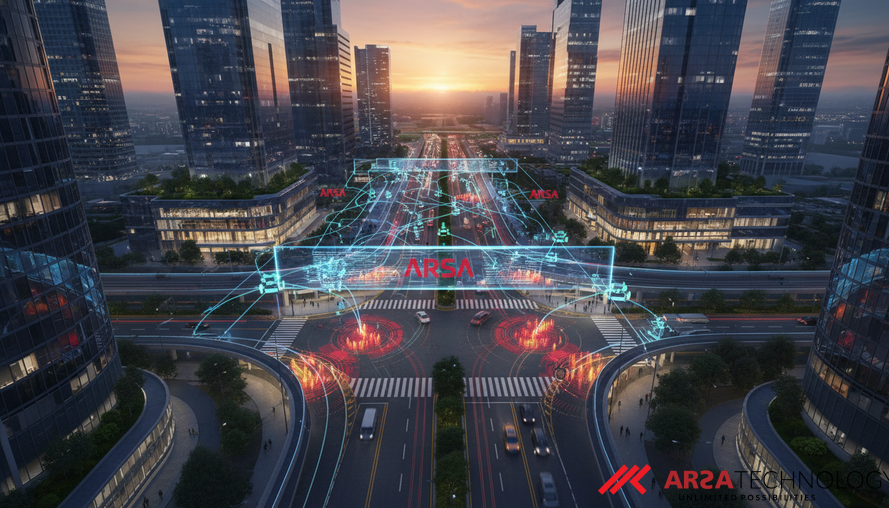
Human mobility—the complex patterns of how people move through space and time—is a foundational element for understanding and managing our modern world. Accurate simulations of these movements are crucial across diverse fields, from optimizing urban infrastructure and enhancing public safety to predicting the spread of diseases and planning efficient transportation networks. Without robust models, decision-makers face challenges in anticipating collective responses to policy changes, urban developments, or emergency situations.
The Critical Role of Human Mobility Simulation
Understanding and predicting human mobility is vital for numerous scientific and practical applications. In urban science, for example, precise mobility data informs city planning, resource allocation, and smart infrastructure development, leading to more efficient and sustainable cities. For epidemiology, simulating how populations move helps predict disease transmission patterns, enabling more effective public health interventions and resource deployment. Similarly, in transportation analysis, these simulations are used to optimize traffic flow, design public transit routes, and predict demand, ultimately reducing congestion and improving overall efficiency.
Traditionally, large-scale human mobility data has been acquired through costly and infrequent travel surveys, or via sensor-based tracking methods like mobile phone traces. While these methods offer valuable insights, they present significant challenges. Travel surveys are expensive and not easily scalable, while sensor data, despite high temporal coverage, raises substantial privacy concerns and relies heavily on device penetration, limiting their broad applicability. The need for scalable, privacy-preserving, and realistic simulation methods remains paramount.
The Gap in Current LLM-Based Mobility Models
Recent advancements in Artificial Intelligence, particularly Large Language Models (LLMs), have opened new avenues for generating synthetic human mobility trajectories. These innovative approaches treat LLMs as individual human agents, guiding them to simulate realistic movements by modeling cognitive processes such as intention and reflection based on a given user profile. This method offers a compelling advantage: it allows for large-scale data generation while inherently preserving individual privacy, as the data is synthetic rather than directly collected from real individuals.
However, a critical limitation persists in many existing LLM-based mobility simulations. They primarily focus on making individual agent behaviors human-like, modeling each trajectory independently without any overarching coordination mechanism. This independent generation often fails to capture emergent collective behaviors—the population-level patterns and scaling laws that are consistently observed in real-world human mobility. For instance, while an LLM might simulate a single agent’s commute realistically, it often struggles to reproduce phenomena like the aggregated distribution of travel distances across an entire city or the collective visitation frequencies of various locations. This disconnect means that while individual simulations might seem plausible, the overall picture may not accurately reflect real-world population dynamics.
M2LSimu: Bridging Individual Actions with Population Patterns
To address this challenge, researchers have developed M2LSimu, a novel framework designed to enhance LLM-based human mobility simulations by integrating population-level coordination. M2LSimu stands for Mobility Measures-guided Multi-prompt Adjustment, and its core idea is to leverage aggregate mobility measures from real-world data as guidance. These mobility measures—such as typical travel distances, activity ranges (like the "radius of gyration"), or aggregated visitation frequencies—characterize stable and reproducible patterns at the population level. Crucially, these measures can often be derived even from coarse-grained or shared datasets, significantly improving privacy and deployability, as detailed in the academic paper "Guiding LLM-Based Human Mobility Simulation with Mobility Measures from Shared Data".
M2LSimu's approach involves iteratively refining the prompts given to individual LLM agents. Instead of providing a single, generic prompt that only varies with basic profile information, the framework uses these population-level mobility measures to inform and tailor individual prompts. For example, if a simulation consistently generates too few short-distance trips or excessive very long-distance trips compared to real-world data, M2LSimu identifies these discrepancies. It then adjusts individual prompts by incorporating specific behavioral constraints or persona descriptions, guiding groups of individuals to exhibit behaviors that collectively align with the observed mobility measures. This enables the simulation to capture population heterogeneity while maintaining realistic individual actions. Such insights can be invaluable for applications like a Smart Parking System, which benefits from accurately simulated traffic flow and vehicle movement patterns.
Overcoming Simulation Complexities with AI
Implementing a system like M2LSimu presents several technical complexities. First, mobility measures are population-centric, making it challenging to pinpoint exactly which individual agents or which specific aspects of their behavior need adjustment when discrepancies arise. Moreover, satisfying multiple, potentially conflicting mobility objectives (e.g., matching both travel distance distributions and activity rhythms) requires careful coordination. Second, each adjustment step demands re-running LLM-based simulations for multiple agents and then re-evaluating population-level outcomes, leading to high computational costs.
M2LSimu addresses these hurdles by framing the prompt adjustment as a multi-objective, multi-prompt optimization task. It models the process as a Markov Decision Process, where the system's state is defined by the current set of prompts, and actions involve coarse-grained adjustment strategies applied to groups of individuals. Although these strategies begin at a coarse level, the iterative nature of the framework allows for a fine-grained, emergent adaptation at the individual level. This ensures that various individuals undergo different combinations of adjustments, collectively satisfying multiple mobility-law objectives. To manage the computational burden, M2LSimu employs Monte Carlo Tree Search (MCTS), an AI technique that intelligently explores promising adjustment pathways, balancing exploration (trying new adjustments) and exploitation (refining known good adjustments) to efficiently allocate computational budget. A global action value estimator further enhances efficiency by filtering less promising candidates. This method allows the system to generalize adjustments from a small, representative subset of the population to larger groups, ensuring scalability. Companies like ARSA Technology, experienced since 2018, leverage similar advanced AI techniques in developing Custom AI Solutions for complex enterprise challenges.
Real-World Impact and Future Implications
The experimental results for M2LSimu have been highly promising, demonstrating significant improvements over state-of-the-art LLM-based simulation methods. Across multiple metrics and two public datasets, M2LSimu achieved performance gains ranging from 11.29% to an impressive 64.08% compared to the best baselines. This highlights its capability to generate far more realistic human mobility patterns at the population level.
A particularly noteworthy finding is the framework's effectiveness even when relying on varied types of shared data—including purely statistical data without specific trajectory information. This means that M2LSimu can operate effectively under limited data access, which is crucial for real-world deployments where data privacy regulations and sharing constraints are common. This adaptability greatly enhances the generalizability and practical deployability of AI-driven mobility simulations. For enterprises and governments aiming to implement advanced AI Video Analytics or other intelligent monitoring systems, M2LSimu represents a significant step forward in creating powerful, privacy-aware simulation tools that inform critical decision-making without compromising sensitive information.
The ability to accurately simulate collective human behavior while preserving individual privacy holds immense implications for urban planning, emergency response, and public health policy. By turning existing raw data into predictive intelligence, businesses and authorities can optimize operations, reduce risks, and drive innovation with confidence.
Ready to explore how advanced AI and IoT solutions can transform your operational intelligence? Discover ARSA Technology's range of products and services, and contact ARSA today for a free consultation.
Source: Hua Yan, Heng Tan, and Yu Yang, "Guiding LLM-Based Human Mobility Simulation with Mobility Measures from Shared Data," arXiv:2602.16726, February 17, 2026. Available at: https://arxiv.org/abs/2602.16726