AI-Powered Surveillance: An Interpretable Framework for Suicide Risk Assessment in Metro Stations
Explore an innovative AI framework using video analytics for proactive suicide prevention in public spaces. Learn how AI assesses risk through behavioral patterns, spatial context, and temporal dynamics.

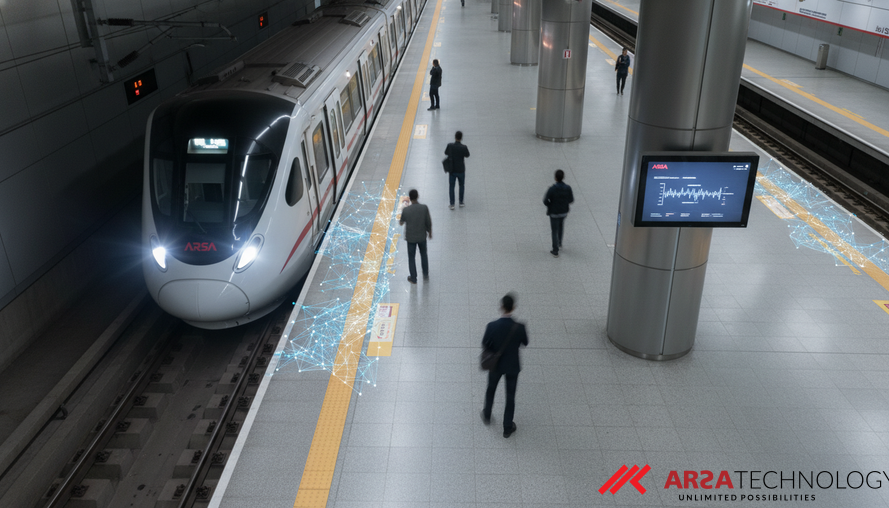
Suicide remains a critical global public health concern, with urban public spaces like metro stations often identified as high-risk locations. While surveillance cameras are extensively deployed in these areas, traditional monitoring methods often rely on continuous human observation or trigger alarms only at very late stages, such as when safety barriers are crossed. These reactive approaches limit the potential for early intervention and are susceptible to human fatigue and oversight. An academic paper titled "Suicide Risk Assessment from AI-powered Video Surveillance: An Interpretable Framework for Prevention in Metro Stations" by Naimi et al., explores a proactive solution by leveraging advanced AI for early identification of at-risk situations, enabling timely intervention to support prevention efforts (Source: arxiv.org/abs/2605.22904).
Beyond Simple Detection: A Holistic Approach to Risk Assessment
The core innovation lies in formalizing Suicide Risk Assessment (SRA) as a distinct computational task. Unlike systems that merely detect isolated anomalies or attempt to infer a person's intent, this framework aims to assess the level of suicide risk associated with observable behavior, spatial context, and temporal dynamics for each passenger. This aligns with interdisciplinary findings, particularly from suicidology and psychology, which emphasize that suicide risk is an emergent phenomenon, shaped by the interaction between individuals and their environment, rather than a single, isolated action.
Existing vision-based systems often fall short by focusing on simple visual cues, like detecting a person stepping onto the tracks. Such methods are often too late to prevent an incident effectively. The new framework introduces an interpretable pipeline that assesses risk from accumulated evidence, integrating multiple complementary modules to provide continuous, individual-level suicide risk assessment. This approach also deliberately avoids reliance on appearance cues or personal attributes, focusing solely on behavioral patterns and spatial exposure for ethical and privacy reasons.
How AI Translates Complex Behaviors into Actionable Insights
The framework integrates several sophisticated computer vision techniques to analyze video streams in real-time. These include:
- Person Tracking: Continuously following individuals within the camera's view to understand their movement patterns over time.
- Activity Recognition: Identifying specific actions that, based on prior research, may indicate distress or risk, such as repeated pacing back and forth, prolonged standing, or looking towards the tunnel.
- Semantic Segmentation of the Platform: Digitally mapping the platform geometry to identify critical zones, such as the yellow safety line or the far-end of the platform, where certain behaviors are considered high-risk.
- Trajectory-Driven Risk Heatmap Modeling: Combining the tracked movements and identified activities with the segmented spatial context to generate a "risk score" that accumulates over time based on a person's presence in high-risk zones and their actions.
By combining these elements, the system moves beyond simple anomaly detection to a more nuanced, context-aware risk assessment. For instance, rather than just detecting someone near the yellow line, it tracks how long they stay there, whether they pace back and forth, or repeatedly look into the tunnel. This aggregation of behaviors and their persistence in specific areas contributes to an interpretable risk indicator. For enterprises seeking to implement such detailed video analytics, solutions like AI Video Analytics can transform existing CCTV infrastructure into intelligent platforms capable of processing these complex cues.
Key Indicators and Measurable Outcomes
The research highlights several key behavioral and spatial patterns identified as significant indicators of elevated risk, based on interdisciplinary studies. These include:
- Spending significantly more time on the yellow platform demarcation line.
- Prolonged standing or walking near the far-end zone of the platform.
- Repeatedly looking toward the tunnel.
- Repetitive movement patterns, such as pacing between the platform wall and the yellow line.
- Leaving an object on the platform.
Crucially, the framework emphasizes that risk is not defined by a single action but by the accumulation and repetition of these behaviors over time. The study demonstrated the operational pipeline achieving an 83.2% ROC-AUC on real surveillance data. ROC-AUC (Receiver Operating Characteristic - Area Under the Curve) is a performance metric that quantifies how well a model distinguishes between two classes (in this case, at-risk vs. control scenarios), with 1.0 being perfect discrimination and 0.5 being random. An 83.2% ROC-AUC indicates a strong capability for meaningful discrimination, offering a significant improvement for proactive suicide prevention. This robust performance underscores the potential for AI to dramatically enhance safety protocols in public transportation.
Deployment and Ethical Considerations for Real-World Impact
The deployment of such AI-powered surveillance systems must be carefully managed with strong ethical guidelines, particularly concerning privacy. The framework’s design, which avoids analyzing appearance cues or personal attributes and instead focuses on aggregated behavioral patterns in public spaces, is a key step in this direction. These systems are designed to support human operators, flagging potentially high-risk situations in real-time so that human personnel can intervene promptly and appropriately, rather than replacing human judgment.
For organizations looking to deploy such advanced AI capabilities, choosing the right infrastructure is vital. Solutions like the ARSA AI Box Series offer pre-configured edge AI systems that can process video streams locally, ensuring low latency, data privacy, and operational reliability without constant cloud dependency. Furthermore, ARSA Technology has been experienced since 2018 in delivering custom AI and IoT solutions, enabling enterprises to tailor these advanced frameworks to their specific operational environments and compliance needs. Our custom AI solutions can help integrate this kind of interpretable framework into your existing security and operations infrastructure, ensuring the system is optimized for your specific requirements.
The development of interpretable AI systems for social good, such as this suicide risk assessment framework, marks an important step forward in leveraging technology to enhance public safety and well-being. By formalizing this complex task and demonstrating a robust, ethically grounded solution, this research paves the way for future advancements in AI that directly address critical societal challenges.
To explore how ARSA Technology can help implement advanced AI and IoT solutions for public safety and operational intelligence, we invite you to contact ARSA for a free consultation.