AI Surveillance at Major Events: Balancing Security, Privacy, and Business Imperatives
Explore the expanding role of AI-powered surveillance at global events, its implications for privacy and data governance, and strategic considerations for B2B enterprises.

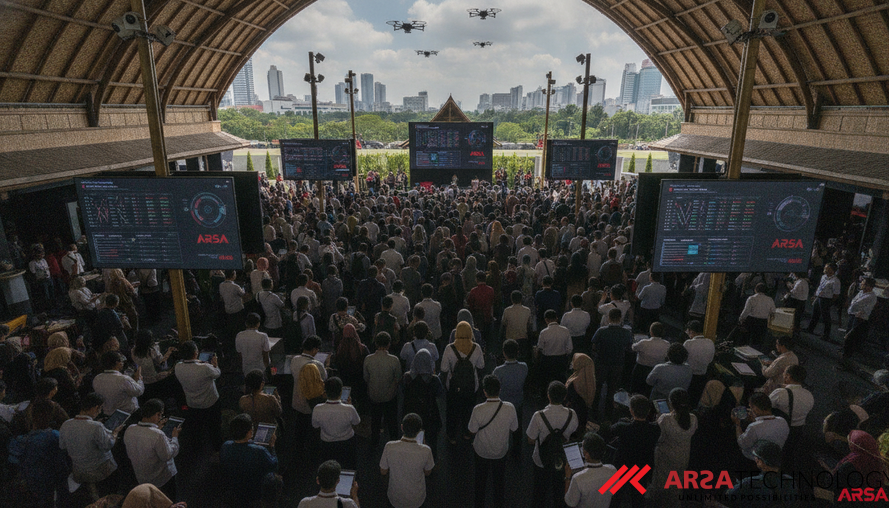
As global events like the World Cup and national celebrations such as America250 captivate millions, a parallel narrative unfolds concerning the escalating deployment of artificial intelligence (AI) and advanced surveillance technologies. While the immediate objective is to ensure public safety, these extensive security measures raise critical questions for businesses and policymakers about data privacy, ethical deployment, and the potential for temporary surveillance infrastructure to become permanent. Understanding this evolving landscape is crucial for organizations navigating an increasingly digitized and monitored world.
The Evolution of Event Security with AI and Advanced Technologies
Major public gatherings, particularly those designated as National Special Security Events (NSSE) by agencies like the Department of Homeland Security, necessitate stringent security protocols. This designation, common for events like the Super Bowl and now extending to significant national celebrations, signals an unprecedented level of surveillance integration. Traditional security measures, such as airport-style checkpoints and the presence of bomb technicians and countersnipers, are becoming commonplace. However, the true transformation lies in the proliferation of less visible technologies. Cities hosting these events are investing heavily in advanced camera networks, often equipped with biometric capabilities, and sophisticated counter-drone systems. For instance, reports indicate a $250 million federal grant for states hosting World Cup matches, largely allocated to counter-drone technology, with federal agencies actively training local law enforcement in drone mitigation tactics. This investment is transforming security operations from reactive responses to proactive, data-driven intelligence gathering, enhancing real-time situational awareness.
From Temporary Safeguards to Permanent Infrastructure
A central concern highlighted by privacy advocates is the potential for these "temporary" security installations to transition into enduring surveillance infrastructure. While deployed under the urgency of major events, the advanced capabilities of these systems, once in place, are often retained and expanded. The case of the 2024 Paris Olympics provides a pertinent example, where AI video surveillance systems enabled for the games are slated to remain operational for an extended period, sparking considerable privacy debate. Similarly, cities in the US have seen upgrades to their Closed-Circuit Television (CCTV) networks and proposals for new AI-powered systems, even in areas far beyond immediate event venues. This trend extends to the integration of AI Video Analytics Software that can process vast amounts of data from existing cameras, transforming passive footage into active intelligence for ongoing operational insights. This shift means that what begins as event-specific protection can contribute to broader smart city initiatives and permanent monitoring capabilities.
Navigating the Ethical and Legal Landscape
The widespread deployment of AI surveillance, especially involving biometric data, introduces complex ethical and legal challenges. Legal experts, such as privacy attorney Anne Toomey McKenna, emphasize that while heightened security at high-risk events may be warranted, the methods of biometric data collection and retention are critical. Unlike some jurisdictions, such as British Columbia, which has specific regulations on how long surveillance footage can be kept, the United States currently lacks comprehensive federal rules on this matter. The legal framework traditionally views public space surveillance as permissible under the Fourth Amendment, which protects against unreasonable searches and seizures, arguing there's no reasonable expectation of privacy in public. However, modern AI-powered cameras, with their ability to pan, tilt, zoom, and apply analytics, far exceed the capabilities of older CCTV systems, potentially altering this legal interpretation. Academic research on AI-powered public surveillance systems further outlines the necessity of continuous ethical reevaluation throughout a system's lifecycle, emphasizing data privacy, transparency, and individual autonomy as core requirements for responsible deployment (ScienceDirect, 2022). Businesses implementing such technologies must navigate these evolving norms carefully.
Strategic Considerations for B2B Enterprises
For enterprises, the proliferation of AI and advanced surveillance technologies in public spaces presents both opportunities and significant responsibilities. Organizations operating in sectors like transportation, retail, smart manufacturing, and logistics can leverage similar AI capabilities to enhance operational efficiency, improve safety, and gain valuable insights. For example, deploying AI Box Series or specialized Face Recognition & Liveness SDK can offer on-premise processing, ensuring data sovereignty and addressing privacy concerns for sensitive environments. However, the ethical and legal implications cannot be overlooked. Enterprises must prioritize:
- Data Governance: Establishing clear policies for data collection, usage, storage, and deletion, aligning with international privacy regulations.
- Transparency: Being transparent with stakeholders about the use of AI surveillance technologies and their purpose.
- Ethical AI Frameworks: Integrating ethical considerations into the design and deployment of AI systems, ensuring accountability and minimizing bias.
- Compliance Readiness: Designing systems that help you meet regulatory obligations, especially concerning biometric data. This often involves robust solutions that support air-gapped systems and full data control, a key offering from companies building AI since 2018 like ARSA Technology.
The global landscape also indicates a rapid expansion of AI surveillance technology by various states for a range of policy objectives, some lawful and others raising human rights concerns, as detailed by the Carnegie Endowment for International Peace (Carnegie Endowment, 2019). This broader trend underscores the need for private sector entities to adopt AI solutions responsibly and consider the societal impact of their technology choices.
The integration of AI into security and public monitoring systems is an undeniable trend. While promising enhanced safety and operational efficiency, it simultaneously demands a proactive and principled approach to safeguard individual privacy and ensure ethical deployment. For B2B enterprises, this means moving beyond mere technological adoption to embrace comprehensive strategies for data governance, regulatory compliance, and human-centered innovation.
To explore how advanced AI solutions can enhance your operations while adhering to stringent privacy and ethical standards, contact ARSA today.
Sources
Del Valle, G. (2026, July 3). While you’re watching the World Cup, the feds may be watching you*. The Verge. https://www.theverge.com/policy/961004/world-cup-america-250-surveillance-drones-cameras Fontes, C., Hohma, E., Corrigan, C. C., & Lütge, C. (2022, November). AI-powered public surveillance systems: why we (might) need them and how we want them*. Technology in Society, 71, 102137. https://www.sciencedirect.com/science/article/pii/S0160791X22002780 Carnegie Endowment for International Peace. (2019). AI Global Surveillance Technology*. https://carnegieendowment.org/features/ai-global-surveillance-technology