Automotive AI Leadership Shift: Doug Field Departs Ford Amidst EV Strategy Revisions
Doug Field, Ford's former EV and software chief, is leaving amidst significant shifts in the automaker's electric vehicle and digital strategy, focusing on cost-effective, AI-driven solutions.

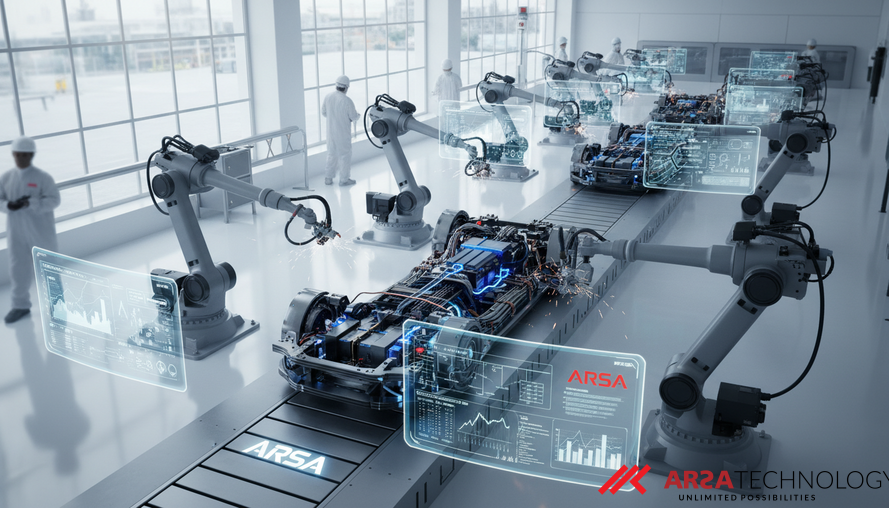
In a significant development within the rapidly evolving automotive industry, Doug Field, a prominent figure previously leading Ford’s electric vehicle (EV) and software divisions, is set to depart the company. His exit, five years after joining the automaker from Apple, marks a pivotal moment for Ford as it navigates a shifting landscape and redefines its strategy for electrification and digital integration. The move comes as Ford confronts substantial financial re-evaluations of its EV investments and pivots towards a more cost-conscious, integrated approach to vehicle development, with a strong emphasis on smart software and artificial intelligence. This news was reported by Andrew J. Hawkins on The Verge on April 15, 2026, at 8:05 PM UTC, available at theverge.com.
Leadership Transition Amidst Evolving EV Landscape
Doug Field’s tenure at Ford saw him spearhead the company's ambitious foray into electric vehicles and advanced software systems. With a notable background from Tesla, where he served as chief engineer for the Model 3, and Apple, where he was involved in its secretive car project, Field brought invaluable experience in high-tech product development and software integration to Ford. His departure next month coincides with a key internal promotion: Alan Clarke, an ex-Tesla engineer currently heading Ford’s California-based skunkworks lab, will step into the role of Vice President of Advanced Development Projects. Clarke will continue to lead the crucial initiative to develop Ford’s Universal Electric Vehicle (UEV) Platform, signaling continuity in core strategic projects despite Field's exit.
The timing of this leadership change is particularly noteworthy. It follows less than five months after Ford announced a significant $19.5 billion writedown on its EV investment. This substantial financial adjustment also led to the discontinuation of several electric models, including the anticipated F-150 Lightning pickup truck, and the scrapping of plans for a next-generation electric truck (codenamed T3) and an electric commercial van. These decisions underscore the intense pressures and recalibrations happening across the automotive sector as companies balance innovation with market demand and profitability.
Ford’s Strategic Pivot in Electrification
Ford’s revised strategy now emphasizes a dual focus: expanding its hybrid vehicle offerings while concurrently refining its existing lineup of gas-powered trucks and SUVs. This pragmatic approach aims to maintain profitability and market share in the short term, funding the long-term vision for electric vehicles. Central to this future is the Universal Electric Vehicle (UEV) Platform, which is envisioned to underpin an entire family of low-cost EVs. The first of these, a midsize truck priced around $30,000, is slated for release in 2027. This shift towards more affordable, mass-market EVs reflects a broader industry recognition that mainstream adoption requires competitive pricing and practical solutions.
For enterprises considering their own transitions to intelligent, connected fleets, understanding these strategic pivots is crucial. The investment in a flexible, scalable platform like the UEV, which can accommodate various vehicle types and price points, highlights the importance of foundational technology. Integrating advanced capabilities such as AI-powered diagnostics and predictive maintenance from the ground up, rather than as an afterthought, can deliver significant long-term benefits in terms of cost reduction and operational efficiency. ARSA Technology, for instance, offers custom AI solutions and AI Video Analytics that can be tailored to similar fleet management and operational intelligence needs, helping organizations derive real-time insights from their assets.
Redefining Software and Digital Product Creation
Beyond hardware, Ford is also restructuring its approach to digital products and services. The company is establishing a new "end-to-end organization" called Product Creation and Integration, led by Chief Operating Officer Kumar Galhotra. This team's mandate is to leverage Ford's existing vehicle platforms for "digital growth," focusing on scaling the automaker’s vehicles and digital products throughout the company. This initiative signifies a commitment to viewing vehicles not just as mechanical devices but as sophisticated, software-defined platforms.
The success of this new organization will heavily rely on the seamless integration of advanced software, artificial intelligence, and IoT capabilities into every aspect of vehicle design, manufacturing, and user experience. This includes developing intelligent infotainment systems, advanced driver-assistance systems (ADAS) with higher levels of automation, and integrated services that enhance safety, convenience, and connectivity. Companies like ARSA, with their ARSA AI API, demonstrate how modular AI components can be integrated to power such advanced digital experiences and intelligent functions within complex enterprise systems.
The Vision Behind the "Baton Pass"
During a briefing, Ford CEO Jim Farley lauded Field's efforts in building a robust team that significantly advanced Ford's high-tech capabilities. Doug Field himself clarified that his departure was an "opportune time" to "pass the baton" to the company’s industrial and manufacturing experts. Field emphasized his original goal at Ford was to collaborate with those proficient in industrializing technology at scale. With the UEV platform reaching a critical maturity level, his role transitions to being "completely dependent on the experts at Ford" who specialize in high-volume, high-quality, and affordable manufacturing. This perspective highlights the distinct challenges in taking an innovative design from concept to full-scale production, a transition where operational realities often take precedence.
This move underscores a critical lesson for any enterprise pursuing technological transformation: the journey from innovation to scalable, profitable deployment requires diverse expertise. Early-stage conceptualization and prototyping demand visionary leadership and agile development, while mass industrialization requires deep engineering discipline, supply chain mastery, and robust manufacturing capabilities. Organizations must recognize and manage these distinct phases, ensuring the right leadership and teams are in place at each stage to achieve measurable impact, a principle ARSA Technology has upheld since it was experienced since 2018.
Innovating the Future of Automotive Intelligence
Ford’s future plans, as outlined by Farley, include refreshing 80 percent of its North American vehicle portfolio and 70 percent of its global portfolio by 2029. These updates are set to feature new electric architectures, enhanced interior experiences, significantly higher levels of automation, and a new generation of integrated services and software products. By the end of the decade, an impressive 90 percent of Ford’s vehicles are projected to incorporate entirely new electric architectures, including zonal and partially zonal systems. This commitment to future-proofing its fleet will inevitably integrate advanced AI for everything from optimizing battery performance and predictive maintenance to sophisticated in-car user interfaces and autonomous driving capabilities.
During Field’s tenure, Ford introduced notable innovations such as the highly acclaimed BlueCruise hands-free driver-assist system and the Android-powered Ford Digital Experience infotainment system, which enhances smartphone mirroring. These advancements signify Ford’s dedication to integrating sophisticated software into its vehicles, moving towards an era where AI-driven features are not merely add-ons but core to the driving experience.
Challenges and the Path Forward
The journey, however, has not been without its hurdles. Ford previously discontinued its high-cost, next-generation electrical architecture, FNV4 (fully networked vehicle), which contributed to a reported $5 billion loss on EVs and software in 2024. This decision to instead adapt Ford’s third-generation architecture (FNV3, rebranded as FNV3.X) across its lineup demonstrates the complex balance between cutting-edge innovation and cost-effectiveness in large-scale automotive manufacturing. Developing resilient, secure, and scalable AI and IoT solutions for such environments often involves significant upfront investment and meticulous planning, mirroring challenges faced by many global enterprises.
Despite these challenges, Ford's strategic adjustments reflect a determined effort to pivot effectively in a dynamic market. The company’s 2022 decision to divide its business into two distinct entities—Model e for electric vehicles and Ford Blue for gas-powered trucks and SUVs—was an earlier attempt to streamline operations and enhance focus. The continued evolution of its leadership and technological strategy underscores a clear path toward transforming its vehicles into digitally sophisticated, AI-enhanced machines capable of competing in the future of mobility.
Transforming complex operational challenges into intelligent, profitable solutions requires deep technical expertise and strategic foresight. To explore how AI and IoT can drive your enterprise’s next breakthrough, contact ARSA for a free consultation.