Autonomous Cleaning Reinvented: The Power of Smart Robot Vacuums and Mops
Explore how advanced robot vacuums with AI navigation, self-cleaning docks, and intelligent mapping are transforming domestic and commercial cleaning, offering unparalleled convenience and efficiency.

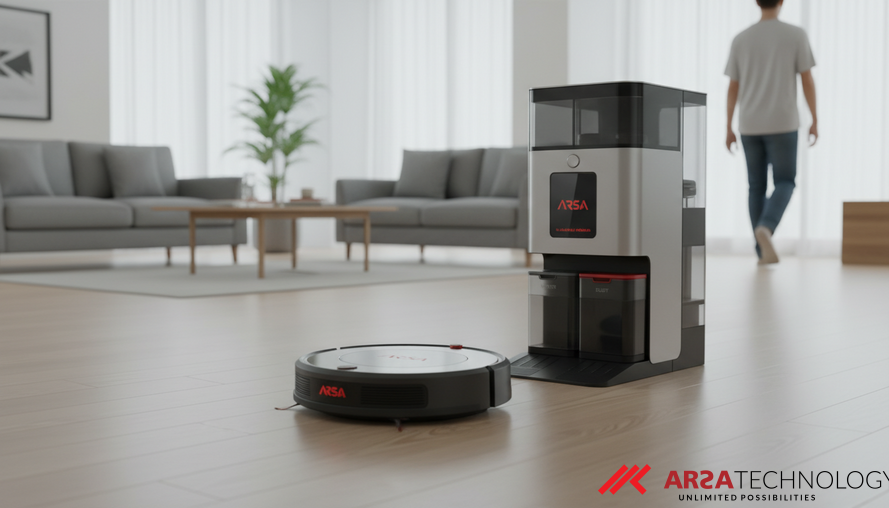
The landscape of cleaning and maintenance, both in domestic and commercial settings, is undergoing a profound transformation thanks to advancements in Artificial Intelligence (AI) and the Internet of Things (IoT). What once required significant manual effort and supervision is now becoming increasingly autonomous, powered by sophisticated technologies that promise efficiency, convenience, and a higher standard of cleanliness. This evolution is perhaps most visibly demonstrated in the rise of advanced robot vacuums and mops, which exemplify how intelligent automation can tackle complex tasks with minimal human intervention.
These cutting-edge devices are moving far beyond simple vacuuming, integrating features like self-cleaning capabilities, precise navigation, and adaptive intelligence to deliver comprehensive floor care. They represent a microcosm of the larger trend toward smart, connected environments, where intelligent systems work in concert to optimize operations and enhance daily living. As we delve into the functionalities that define this new era of cleaning, it becomes clear how these technological principles are scalable and applicable to broader enterprise challenges, from smart facility management to industrial automation.
The Evolution of Autonomous Home Care
Early robot vacuums offered a glimpse into a future of automated cleaning, but often struggled with navigation, getting stuck, or missing spots. Modern iterations, however, have overcome these limitations by integrating advanced AI and IoT components. Key among these is LiDAR (Light Detection and Ranging) navigation, a technology borrowed from self-driving cars, which allows these devices to create highly accurate maps of their environment. This precise mapping capability ensures comprehensive coverage, systematic cleaning paths, and efficient operation, drastically reducing the chances of missed areas or repeated passes.
Beyond static mapping, dynamic intelligence is crucial. AI-powered obstacle avoidance systems enable robot cleaners to detect and maneuver around everyday clutter, furniture, and even pets in real-time. This reduces the need for pre-cleaning tasks, making the automation truly "low-maintenance." These systems continually learn and adapt to changes in the environment, ensuring a smooth and uninterrupted cleaning cycle. This blend of precise mapping and reactive intelligence marks a significant leap from the random bump-and-go patterns of their predecessors.
Redefining Convenience: Advanced Self-Cleaning Features
The true hallmark of next-generation robot vacuums and mops lies in their ability to perform their own maintenance, significantly reducing the human effort required. The self-cleaning dock, a central innovation, transforms these devices into almost entirely autonomous units. These docks are engineered to handle multiple aspects of post-cleaning upkeep, ensuring the robot is always ready for its next task.
For instance, these intelligent docks can automatically wash the robot’s mop pads, often using hot water to sanitize and ensure thorough cleaning. Following the wash cycle, hot air drying prevents mildew and odors, maintaining hygiene and extending the life of the mop pads. Furthermore, many docks are equipped to automatically dispense cleaning solution, ensuring optimal cleaning performance for every session. The dock also acts as a central hub for waste management, emptying the robot's dustbin contents into a larger, sealed dust bag, sometimes allowing for up to 75 days of use before manual intervention is needed. This level of automation extends to refilling the robot’s onboard water tank, ensuring it has enough water for mopping tasks without constant oversight. These features collectively create a truly hands-off cleaning experience, a testament to practical IoT integration.
Intelligent Cleaning Performance and Adaptability
Modern robot vacuums are not just convenient; they are also highly effective cleaners. Devices now boast powerful suction capabilities, often exceeding 7,000 Pascals (Pa), enabling them to pick up dust, debris, and pet hair with remarkable efficiency across various floor types. This robust suction ensures deep cleaning, particularly for carpets and rugs.
A notable advancement is the intelligent mop lifting mechanism. When encountering carpets, the mop automatically lifts to prevent wetting and effectively transition from hard floors to soft surfaces without manual adjustment. Moreover, these robots are designed to clean beyond open spaces. Features that allow the mop to extend into edges, corners, and other hard-to-reach areas ensure comprehensive cleaning coverage, leaving virtually no spot untouched. AI algorithms further enhance cleaning by allowing users to select specific rooms for cleaning and enabling the robot to adjust its approach based on room type and layout, for example, applying more scrubbing power in a kitchen versus a bedroom. Some even boast the ability to automatically return to re-mop areas if embedded sensors detect lingering dirt, ensuring a truly thorough clean.
Beyond the Home: The Broader Implications of AI & IoT Automation
While advanced robot vacuums streamline domestic chores, the underlying technologies driving their efficiency have profound implications for enterprise environments. The principles of autonomous navigation, real-time environmental analysis, predictive maintenance, and automated task execution are directly transferable to industrial, commercial, and public sector applications.
Consider manufacturing facilities, where AI video analytics can monitor production lines for anomalies, or logistics hubs requiring efficient tracking and movement of goods. The sophisticated mapping and obstacle avoidance found in home robots mirror the needs of autonomous guided vehicles (AGVs) in warehouses or drones for infrastructure inspection. Similarly, the self-maintenance capabilities of these cleaning robots can be scaled to predictive maintenance systems for industrial machinery, optimizing uptime and reducing operational costs. For organizations looking to implement such advanced automation, ARSA Technology offers expertise in designing and deploying custom AI solutions and AI Box Series for edge processing, ensuring that these intelligent capabilities are tailored to meet specific business outcomes. The ability to integrate these intelligent systems into existing infrastructure, without cloud dependency, is particularly critical for security-sensitive or regulated environments, a core focus for ARSA Technology, which has been experienced since 2018.
Conclusion
The latest generation of robot vacuums and mops represents more than just convenience for homeowners; they embody the powerful potential of integrated AI and IoT to revolutionize operational efficiency. By combining advanced navigation, intelligent cleaning protocols, and truly autonomous self-maintenance, these devices set a new standard for automated tasks. As these technologies continue to mature, their principles will increasingly underpin sophisticated solutions across various industries, driving down costs, enhancing safety, and unlocking new levels of productivity. The journey from passive data to predictive intelligence is well underway, and intelligent automation is leading the charge.
For enterprises seeking to leverage the transformative power of AI and IoT for their specific operational challenges, ARSA Technology stands as a trusted partner. We specialize in engineering bespoke solutions that deliver measurable impact, ensuring your infrastructure is equipped for the future of intelligent automation.
(Source: The Verge)
Ready to explore how AI and IoT can enhance your operations? We invite you to contact ARSA for a free consultation.