Autonomous Drones and Enterprise AI: Navigating the Future of Critical Operations
Explore Skydio CEO Adam Bry's insights on the transformative power of autonomous drones, the shift to enterprise AI, and the critical role of on-premise solutions in security and infrastructure.

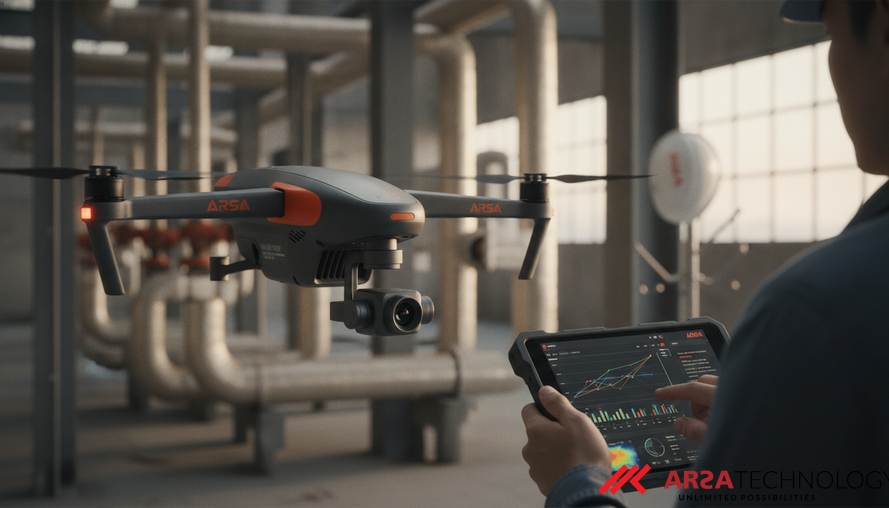
In an evolving landscape where cutting-edge technology intersects with critical operational demands, autonomous drones are transforming how industries approach efficiency, safety, and security. Recent discussions, such as one with Skydio CEO Adam Bry by Nilay Patel of The Verge (Source: Skydio CEO Adam Bry on why Silicon Valley shouldn’t draw red lines for drone use), shed light on the profound shift from recreational drone use to sophisticated enterprise applications. This transition emphasizes the power of AI-driven autonomy, the strategic implications of manufacturing location, and the increasing need for robust, on-premise solutions that offer unparalleled control and data privacy.
The Evolution of Drone Technology: From Toys to Tools
The journey of drones has been remarkable, transitioning from simple remote-controlled toys to indispensable instruments for industrial and governmental operations. Initially, the allure of drones lay in the sheer novelty of flight, enabling amateur pilots to capture aerial footage. This early phase, dominated by consumer-grade quadcopters, primarily focused on basic flight control and photographic capabilities. As cameras became more advanced, drones found niche applications in cinematography and real estate, demonstrating their potential beyond mere recreation.
However, the real revolution began with the integration of advanced artificial intelligence and computer vision. This development elevated drones from piloted gadgets to autonomous platforms, capable of understanding and interacting with their environment. The shift towards autonomy means drones can now operate with minimal human intervention, perform complex tasks, and collect data with precision that was previously impossible. This has opened doors for applications in critical sectors, where the ability to deploy sensors accurately and reliably can fundamentally alter outcomes, enhancing both safety and efficiency.
The Strategic Importance of Domestic Manufacturing and On-Premise AI
The global supply chain and geopolitical landscape have significantly influenced the drone industry, particularly in the United States. Recent policy changes, such as restrictions on foreign-made drones, have led to a rapid consolidation of the market, favoring domestic manufacturers. This emphasis on national origin is not just about economic protection; it extends to national security and data sovereignty concerns, especially when drones are deployed in sensitive environments like defense or critical infrastructure.
For enterprises and governments, the ability to ensure the security and integrity of their drone systems is paramount. This drives demand for on-premise AI solutions, where data processing and storage occur within the client's own infrastructure, minimizing reliance on external cloud services. This model provides complete data ownership, reduces latency, and ensures compliance with strict privacy regulations. Companies like ARSA Technology, for instance, offer modular AI Video Analytics solutions that can be deployed on-premise, processing CCTV streams in real-time without cloud dependency, which is crucial for sensitive applications and regulated industries.
Autonomous Capabilities: The Foundation of Future Operations
At the heart of modern enterprise drones lies sophisticated autonomy, which represents a continuous area of significant investment and innovation. While many might consider autonomous flight a 'solved problem,' the reality is far more complex. Developing truly world-class autonomous drones requires expertise across numerous engineering disciplines, from aerodynamics and thermal management to advanced compute and sensor integration. These are not merely flying cameras; they are cutting-edge aerospace devices akin to self-driving cars that navigate three-dimensional space.
The progression of drone autonomy has seen several key milestones. Early drones required direct, manual stick input. The introduction of low-level microprocessors and inertial measurement units enabled basic attitude control, making quadcopters flyable. GPS position hold then allowed drones to hover stably without constant pilot input, democratizing drone operation beyond expert pilots. The current frontier, pioneered by companies like Skydio, leverages computer vision to enable drones to perceive their environment, map it in 3D, and navigate complex spaces autonomously. This visual-inertial navigation allows for obstacle avoidance and precise maneuvers even in GPS-denied environments, transforming drones into intelligent, adaptable assets that can perform in challenging real-world scenarios.
Transforming Industries with AI-Powered Drones
The impact of autonomous drones is being felt across a multitude of critical industries, fundamentally changing how various operations are conducted.
- Public Safety and Defense: Drones provide invaluable situational awareness, assisting law enforcement in search-and-rescue missions, accident scene reconstruction, and perimeter security. In defense, they offer critical intelligence gathering, surveillance, and reconnaissance capabilities. For highly sensitive operations, the need for robust, on-premise solutions is paramount. ARSA Technology offers AI BOX - Basic Safety Guard for industrial environments, which exemplifies how AI at the edge can monitor restricted areas and safety compliance in real time.
- Energy Utilities: Inspecting vast networks of power lines, pipelines, and other energy infrastructure traditionally involves hazardous and time-consuming manual processes. Autonomous drones can conduct these inspections remotely, more safely, and with greater efficiency, identifying potential issues before they escalate. This reduces operational costs and enhances overall reliability.
- Construction and Transportation: Drones are used for site mapping, progress monitoring, and safety compliance on construction sites. In transportation, they help inspect bridges, roads, and railways, and monitor traffic flow for smart city initiatives. Real-time data collection significantly improves project management and maintenance scheduling.
- Security Organizations: For perimeter security and surveillance, AI-powered drones offer continuous, intelligent monitoring. Their ability to detect anomalies, identify intrusions, and provide real-time alerts enhances existing security infrastructure significantly. The self-contained nature of solutions like ARSA's AI Box Series, which processes video streams at the edge, is ideal for rapid deployment where infrastructure is limited and cloud dependency is not desired.
These applications highlight the transition from drones as simple data capture devices to integrated components of broader operational intelligence systems. The value lies not just in the "data" collected, but in the intelligent, actionable insights derived from that data through sophisticated AI processing.
Ethical Considerations and the Future of AI in Critical Applications
The increasing sophistication and autonomy of AI systems, particularly in defense and public safety, inevitably raise ethical considerations. The conversation around "red lines" for AI use, especially concerning military applications, is a critical ongoing dialogue. Leaders in the AI drone industry advocate for a pragmatic approach, focusing on the tangible safety and efficiency benefits that these technologies bring. From their perspective, autonomous drones are tools that can make operations safer for human personnel by taking on hazardous tasks, improving situational awareness, and ultimately preventing accidents and harm.
This viewpoint emphasizes the importance of building AI responsibly, with an unwavering focus on reliability, accuracy, and clear operational parameters. The development must be guided by robust engineering discipline, rigorous testing, and a commitment to understanding real-world constraints. Rather than preemptively limiting technological development, the focus should be on how AI can augment human capabilities and solve critical problems more effectively and safely. This necessitates an ecosystem where technology providers, regulators, and end-users collaborate to ensure that AI deployments align with ethical standards and deliver verifiable positive impact.
Building the Future of Enterprise AI and IoT
The journey towards fully integrated AI and IoT solutions is a complex one, requiring deep technical expertise and a practical understanding of industrial challenges. Companies like ARSA Technology, with over experienced since 2018, exemplify this approach by focusing on production-ready systems that deliver measurable impact across various industries. Their commitment to full-stack vertical integration, proprietary technology, and a consultative engineering approach ensures that AI solutions are not just innovative but also scalable, secure, and aligned with client needs.
The convergence of AI, IoT, and robust software platforms is transforming passive infrastructure into intelligent decision engines. This future requires partners who can engineer solutions that navigate the complexities of deployment models—cloud, on-premise software, or turnkey edge systems—while maintaining full control over data, privacy, and performance.
To explore how advanced AI and IoT solutions can transform your operations and to discuss your specific needs, contact ARSA for a free consultation.