Autonomous ML Pipeline Generation: Self-Healing AI Elevates Enterprise Data Science
Explore how a multi-agent AI system automates machine learning pipeline creation, boosting efficiency and reliability with code-grounded insights and self-healing capabilities.

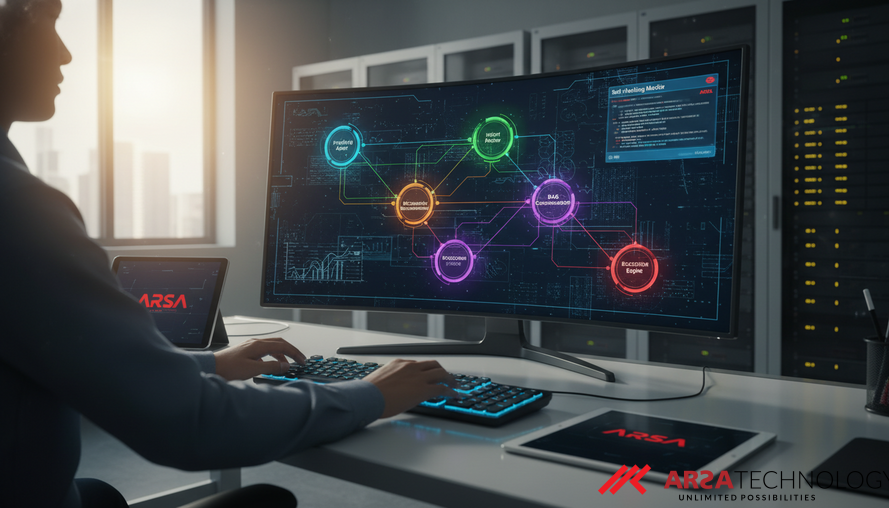
The Future of Data Science: Autonomous ML Pipeline Generation
In the rapidly evolving landscape of artificial intelligence, building and deploying machine learning (ML) solutions has become increasingly complex. Modern ML workflows are no longer singular programs but intricate compositions of specialized components, each handling a specific task from data preparation and feature engineering to model training and evaluation. While this modularity offers immense flexibility and reusability, it also introduces significant hurdles: identifying the right components, understanding their capabilities, configuring them correctly, and ensuring seamless compatibility across different stages. This process often proves time-consuming, error-prone, and heavily reliant on manual intervention, especially for domain experts without extensive software engineering backgrounds.
Addressing these challenges, a recent academic paper, "Think it, Run it: Autonomous ML pipeline generation via self-healing multi-agent AI," proposes a groundbreaking solution. The research introduces a unified multi-agent architecture designed to automate the entire ML pipeline generation process, transforming raw datasets and natural language objectives into fully executable AI workflows. This innovation promises to dramatically improve efficiency, enhance the robustness of ML systems, and bring greater clarity to complex AI operations. This represents a significant step forward in making AI more accessible and reliable for global enterprises (BÂRA, A., DOBRIȚA, G., & OPREA, S.-V., 2024, https://arxiv.org/abs/2604.27096).
Bridging the Gap: Code-Grounded Understanding for Reliability
A fundamental problem in traditional ML pipeline construction arises from "semantic uncertainty." Current systems often rely on documentation or predefined component descriptions to understand a microservice's functionality. However, in real-world ML ecosystems, where components are frequently user-contributed, documentation can be incomplete, outdated, or inconsistent with the actual implementation. This lack of reliable information creates a critical barrier to robust component discovery and composition.
The paper tackles this by introducing a "code-grounded" approach. Instead of trusting potentially flawed descriptions, the system automatically analyzes the microservice's source code to infer its true semantic capabilities, input-output behavior, and usage context. This innovative method shifts the "source of truth" from documentation to implementation, providing a more reliable foundation for intelligent pipeline construction. By deeply understanding the code, the system can robustly discover and integrate components even when human-written descriptions fall short, minimizing the risks associated with unreliable information. This is a crucial step towards building AI systems that can independently reason about their own tools.
An Orchestrated Approach: The Multi-Agent AI Framework
The core of this autonomous ML pipeline generation system is a sophisticated five-agent architecture, each playing a distinct yet coordinated role in transforming a high-level goal into an operational ML pipeline. This multi-agent system functions like a specialized team, where each AI agent brings its unique expertise to the task:
- Profiling Agent: This agent is responsible for understanding the incoming dataset. It analyzes data characteristics, identifies potential biases, and prepares the data for subsequent processing stages.
- Intent Parsing Agent: When a user provides a natural language goal (e.g., "classify customer reviews," "predict equipment failure"), this agent translates it into a formal, machine-understandable representation. This step clarifies the objective and sets the parameters for the pipeline.
- Microservice Recommendation Agent: Leveraging the code-grounded semantic analysis, this agent identifies and recommends suitable microservices or components for each stage of the ML pipeline. It uses an explainable hybrid recommender system that considers multiple criteria to suggest the most appropriate tools, addressing "selection uncertainty" by providing clear rationale for its choices. For enterprises needing tailored AI capabilities, integrating such recommendations into custom AI solutions can significantly accelerate development. ARSA Technology, for instance, offers custom AI solutions designed to meet specific operational requirements, building upon advanced AI paradigms.
- Directed Acyclic Graph (DAG) Construction Agent: Once components are recommended, this agent maps out the logical flow of the ML pipeline, creating a Directed Acyclic Graph (DAG). A DAG visually represents the sequence of operations and their dependencies, ensuring that data flows correctly from one component to the next without loops or dead ends.
- Execution Agent: Finally, this agent takes the constructed DAG and executes the ML pipeline. It orchestrates the operation of each selected microservice, monitors its performance, and processes outputs, ultimately delivering the desired ML model or insights.
Building Resilience: Self-Healing and Continuous Improvement
One of the most compelling features of this autonomous system is its inherent robustness, which directly addresses "execution uncertainty." Real-world deployments of ML pipelines are prone to runtime failures due to unexpected data formats, environmental changes, or even subtle incompatibilities between components. The proposed architecture incorporates a powerful self-healing mechanism that allows it to recover from such errors dynamically.
When a failure occurs, the system utilizes a Large Language Model (LLM) to interpret the error messages. This intelligent interpretation goes beyond simple error codes, understanding the context and nature of the problem. Based on this understanding, the system can then select alternative components or adjust parameters to circumvent the failure and successfully complete the pipeline. Furthermore, an adaptive learning module continuously improves the system's recommendations by logging execution history. Successful and failed pipeline attempts provide valuable feedback, allowing the recommender agent to refine its choices over time, making future pipeline generations even more reliable. This continuous learning ensures that the system becomes smarter and more resilient with every deployment, similar to how ARSA AI Box Series products are designed for robust, on-premise operation, adapting to various environmental conditions for sustained performance.
Real-World Impact and Business Implications
The evaluation of this multi-agent system on 150 ML tasks across diverse scenarios yielded impressive results, demonstrating an 84.7% end-to-end pipeline success rate. This significantly outperforms baseline methods, highlighting the practical efficacy of the integrated approach. Beyond mere success rates, the system demonstrates substantial benefits for enterprises:
- Reduced Development Time: By automating complex pipeline construction, organizations can drastically cut down the time required to develop and deploy ML solutions, enabling faster innovation and time-to-market for new AI-powered products and services.
- Enhanced Robustness and Reliability: The self-healing mechanism ensures that ML pipelines are less susceptible to runtime failures, leading to more stable and trustworthy AI operations. This is particularly critical in mission-critical applications where downtime is costly or dangerous.
- Democratization of AI: The natural language interface lowers the barrier to entry for domain experts, allowing them to leverage advanced ML capabilities without needing deep programming or data science expertise. This broadens the internal capacity for AI adoption across an organization.
- Improved Explainability: The hybrid recommender system provides transparent reasons for component selection, offering valuable insights into how decisions are made within the pipeline, which is crucial for compliance and auditing in regulated industries.
The study underscores a critical insight: tightly coupled intelligent components, working in unison, can achieve far greater results than isolated solutions. This integrated framework addresses the multi-faceted uncertainties inherent in ML pipeline generation—semantic, selection, and execution—through a unified, intelligent architecture. Companies like ARSA Technology, experienced since 2018 in deploying production-ready AI and IoT solutions, understand the need for such integrated, robust systems that deliver measurable impact in real-world industrial contexts.
This paradigm shift towards autonomous, self-healing ML pipeline generation holds immense promise for accelerating digital transformation across various industries, from smart cities and manufacturing to healthcare and logistics, delivering solutions that reduce costs, increase security, and create new revenue streams.
Ready to explore how autonomous AI can transform your enterprise operations and accelerate your digital journey? Discover ARSA’s cutting-edge AI and IoT solutions and request a free consultation with our expert team today.