Autonomous Trucking: The Unseen Half of the Journey Beyond Self-Driving
Discover why successful autonomous trucking extends far beyond vehicle technology. Explore the crucial operational, economic, and integration challenges in deploying driverless freight solutions.

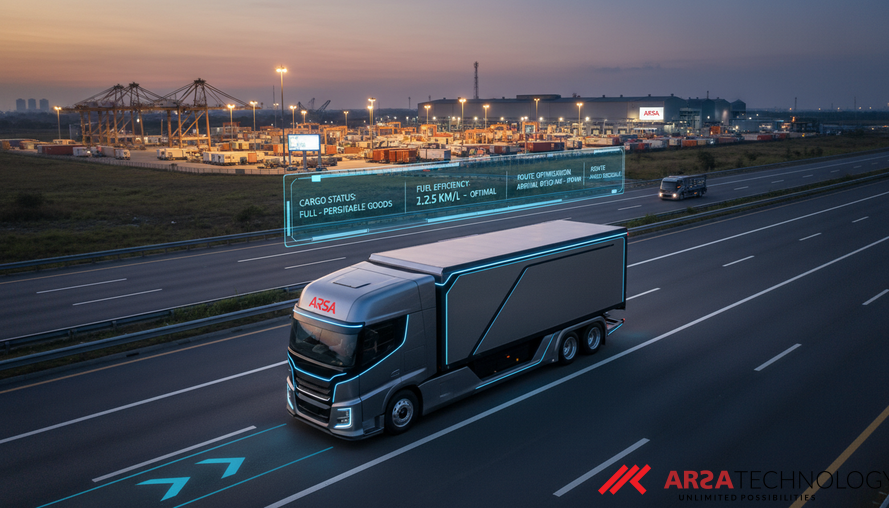
The advent of self-driving vehicles has captivated global imagination, promising a future of enhanced safety and efficiency. While robotaxis often grab headlines, autonomous long-haul trucks are quietly but steadily advancing towards mainstream deployment. Companies like Kodiak AI are pushing boundaries, aiming for fully driverless freight operations. However, as Kodiak AI CEO Don Burnette insightfully points out, the challenge of making trucks drive themselves is merely "half the battle." The true test lies in the complex operational and business realities that come with integrating such technology into existing enterprise workflows.
Beyond Autonomy: The Business Reality of Driverless Freight
Many autonomous vehicle developers concentrate heavily on the core technology: perfecting AI algorithms, enhancing perception systems, and achieving impressive mileage milestones. While these are undeniably "table stakes" for any self-driving solution, Burnette emphasizes that real-world deployment for enterprise clients demands a far broader perspective. The focus must shift from simply can it drive? to how effectively does it integrate and perform within a business ecosystem? This includes critical questions around vehicle ownership, required uptime, maintenance protocols, and the types of freight that can be profitably transported. It’s about converting technological capability into tangible business value and measurable financial outcomes.
Operational Hurdles: From Road to Revenue
The operational landscape for autonomous trucks is vastly more intricate than just safe navigation on highways. Burnette highlights the neglected aspects of operational efficiency: how quickly and smoothly can a truck enter and exit a logistics operation, including loading docks, distribution centers, and warehouses? This "everything in between" often goes unaddressed by companies focused solely on the autonomous driving aspect. The true value proposition for customers isn't just a driverless vehicle, but a seamless, integrated system that minimizes delays, optimizes routes, and ensures cargo reaches its destination reliably. Solutions like AI Video Analytics can play a crucial role in monitoring these complex on-site operations, providing real-time insights into vehicle movement, loading times, and potential bottlenecks, thus complementing the autonomous driving technology itself.
Strategic Deployment: Aftermarket Solutions and Data Control
Kodiak AI, founded in 2018 by Don Burnette (a veteran of Google’s self-driving car project, now Waymo) and Paz Eshel, has adopted a distinctive approach to overcome these challenges. Instead of waiting for OEMs to produce autonomous-ready trucks, Kodiak AI has focused on an aftermarket solution. This involves partnering with established industry players like Roush Industries and Bosch to retrofit existing trucks with autonomous capabilities. This strategy allows for more scalable and compliant vehicle production once the core autonomous driving technology matures, demonstrating a practical understanding of market dynamics and manufacturing constraints.
Furthermore, Kodiak AI’s business model often involves customers owning and operating the autonomous vehicles. This model fundamentally alters the performance expectations. When a customer directly owns the asset, metrics like utilization rate, consistent uptime, predictive maintenance, and direct revenue generation become paramount. This creates a significantly higher bar for the operational reliability and performance of the autonomous system compared to a scenario where the autonomous vehicle developer retains ownership. For instance, companies like ARSA Technology, who have been experienced since 2018, also prioritize robust, client-owned deployments, understanding that data sovereignty and operational continuity are non-negotiable for enterprise clients.
The Pillars of Practical Autonomy: Safety, Integration, and Usability
Before any autonomous truck can truly become a commercial product, a robust safety case must be completed. This involves extensive real-world data collection, rigorous virtual testing in simulated environments, and a comprehensive plan for risk mitigation. The rigorous approach to safety championed by teams with backgrounds from pioneering autonomous vehicle projects like Waymo is essential for building public and regulatory trust. This includes demonstrating predictable behavior in "unstructured" environments, such as industrial sites or off-road conditions, which then better prepares the vehicles for more "structured" highway driving.
However, even with cutting-edge driving performance and a strong safety record, true usability often hinges on what Burnette terms the "third pillar": full-system integration into existing customer workflows. This means addressing how driverless trucks handle the nuances of pickups and drop-offs, how they communicate with human operators or dispatch systems, and how monitoring tools provide actionable intelligence. Companies specializing in enterprise AI, like ARSA, offer Custom AI Solutions that can address these complex integration needs, ensuring that advanced AI capabilities translate into seamless, secure, and efficient operations across various industries. Without tackling this integration layer, even the most technologically advanced autonomous trucks remain mere prototypes rather than viable commercial solutions.
The evolution of autonomous trucking is a journey that moves beyond technological marvels into the realm of practical, profitable business solutions. As industry leaders continue to innovate, the focus on integrating these advanced systems into the daily fabric of logistics and supply chains will define their success.
Source: The Verge - Kodiak CEO says making trucks drive themselves is only half the battle
Ready to transform your operations with intelligent technology that delivers real-world impact? Explore ARSA Technology's solutions and contact ARSA today for a free consultation.