Autonomous Trucking: Why Self-Driving is Just Half the Battle for Enterprise Adoption
Kodiak AI CEO Don Burnette emphasizes that operational integration and customer-centric design are as crucial as self-driving technology for autonomous trucks. Learn how enterprises can achieve real ROI.

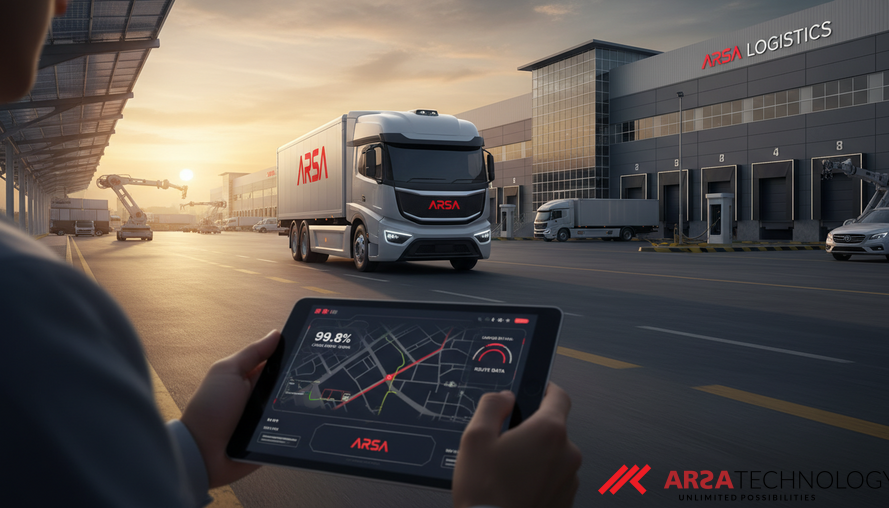
The landscape of autonomous vehicles is rapidly evolving, with self-driving trucks increasingly moving from ambitious concepts to real-world deployments. While much attention often focuses on the intricacies of artificial intelligence, perception systems, and accumulating millions of miles in testing, industry leaders are highlighting a more nuanced truth: the technology that enables a truck to drive itself is merely one part of a far larger equation for successful enterprise adoption. Don Burnette, CEO of Kodiak AI, a company at the forefront of autonomous freight, articulates this perspective, suggesting that making trucks drive themselves is only half the battle, as reported by Andrew J. Hawkins on The Verge on March 21, 2026, 11:00 AM UTC in his article, "Kodiak CEO says making trucks drive themselves is only half the battle."
Beyond the Wheel: The Operational Realities of Autonomous Freight
As the autonomous trucking sector anticipates significant milestones – with players like Kodiak AI aiming for fully driverless long-haul freight operations by the end of 2026 – the conversation must shift. Burnette argues that while competitors might be preoccupied with advanced AI capabilities, vehicle perception, and driving statistics, true success hinges on the practicalities of running an efficient business. Enterprises demand solutions that seamlessly integrate into their existing logistics, not just advanced robotics.
The critical questions for businesses extend far beyond mere vehicle autonomy. Who owns these sophisticated trucks? What level of uptime is truly required to make them profitable? And what specific cargo or services will these vehicles transport? These considerations are fundamental to unlocking tangible value. A truck that operates safely on the road is merely "table stakes," Burnette emphasizes. The real differentiator lies in how effectively and efficiently an autonomous truck can be integrated into and out of a customer’s operations, addressing every step from dispatch to delivery.
Kodiak's Strategic Approach to Real-World Autonomy
Founded in 2018 by Don Burnette and Paz Eshel, Kodiak AI (formerly Kodiak Robotics) has developed self-driving trucks for a range of applications, including highway use, industrial settings, and even the defense sector. Their strategy involves tackling more "unstructured" environments first, such as industrial and off-road trucking. These complex and unpredictable settings, according to Burnette, uniquely prepare their trucks for the seemingly simpler "structured" environments of public highways. This foundational experience builds resilience and adaptability into their AI systems.
A testament to their real-world focus, Kodiak’s trucks have been making driverless deliveries for Atlas Energy Solutions in the Permian Basin since 2025, with 20 autonomous units now operational. This hands-on experience in demanding environments, coupled with a rigorous safety protocol influenced by their team’s background at Waymo, underscores their commitment to production-ready systems. Such deployments highlight the need for robust AI Video Analytics and monitoring systems that ensure safety and efficiency in diverse operational contexts.
The Business Model: Ownership, Uptime, and ROI
One of Kodiak's most significant differentiators lies in its business model. Unlike some counterparts who expect original equipment manufacturers (OEMs) to deliver autonomous-ready trucks, Kodiak has collaborated with partners like Roush Industries and Bosch to develop an aftermarket solution. This approach allows them to produce fully compliant, automotive-grade trucks and scale deployments more effectively. Crucially, the 20 trucks currently deployed are owned and operated by Kodiak's customers, not by Kodiak itself. This distinction profoundly impacts expectations and performance.
When a customer owns the vehicle, the demands for reliability and operational performance skyrocket. Metrics like utilization rates, uptime, maintenance schedules, and consistent revenue generation become paramount. As Burnette points out, "When a customer owns the vehicle, it has to work." This contrasts sharply with situations where autonomous vehicle developers own their test fleets, potentially allowing them to "stage-manage" deployments without the pressure of real-world functionality or continuous revenue generation. For enterprises looking to invest in AI and IoT solutions, understanding these nuances is critical for projected Return on Investment (ROI). ARSA Technology, with its experienced since 2018 approach, consistently prioritizes solutions that deliver measurable financial outcomes and operational efficiency for its clients.
Integrating Autonomy into Enterprise Workflows: The "Third Pillar"
Burnette is direct in his assessment of the broader autonomous vehicle industry, suggesting that while many companies excel at producing impressive technology demonstrations and "snazzy visuals," they often overlook what he calls the "third pillar": making autonomy truly usable within existing enterprise workflows. This involves more than just a self-driving truck; it encompasses seamless integration into customer operations, efficient handling of complex pickups and drop-offs, and robust monitoring and communication tools.
The challenge lies in marrying advanced AI driving capabilities with the intricate practicalities of commercial logistics. This means developing comprehensive platforms that support fleet management, provide real-time operational insights, and enable quick intervention when necessary. From custom AI solutions designed for specific operational contexts to intelligent software that streamlines data flow, the goal is to transform complex operational challenges into competitive advantages. Neglecting this crucial full-system integration can lead to advanced technology that fails to deliver on its promise in the real world.
The Road Ahead for Autonomous Logistics
The journey towards widespread autonomous freight is multifaceted, requiring not just technological breakthroughs but also a deep understanding of operational realities and customer needs. Companies like Kodiak AI are paving the way by recognizing that the success of self-driving trucks will ultimately be judged by their ability to provide reliable, efficient, and integrated solutions that genuinely enhance business operations and deliver measurable returns. As the industry continues to advance, the emphasis will increasingly shift from simply demonstrating capability to proving long-term, scalable viability within demanding enterprise environments.
Enterprises evaluating AI and IoT solutions for logistics and operations must look for partners who understand this holistic vision. It's about engineering intelligence into every aspect of an operation, from the autonomous vehicle itself to the broader ecosystem of fleet management, data analytics, and customer integration.
If your organization is seeking to transform its operations with practical, proven AI and IoT solutions that go beyond mere technological display, we invite you to explore ARSA Technology’s offerings and contact ARSA for a free consultation.