Autonomous Vehicles Navigate Complexities: Waymo Halts Freeway Operations
Waymo's temporary suspension of freeway driving highlights the real-world challenges in autonomous vehicle deployment, from construction zones to weather. Discover how AI and IoT solutions address these complexities for safer, more reliable self-driving technology.

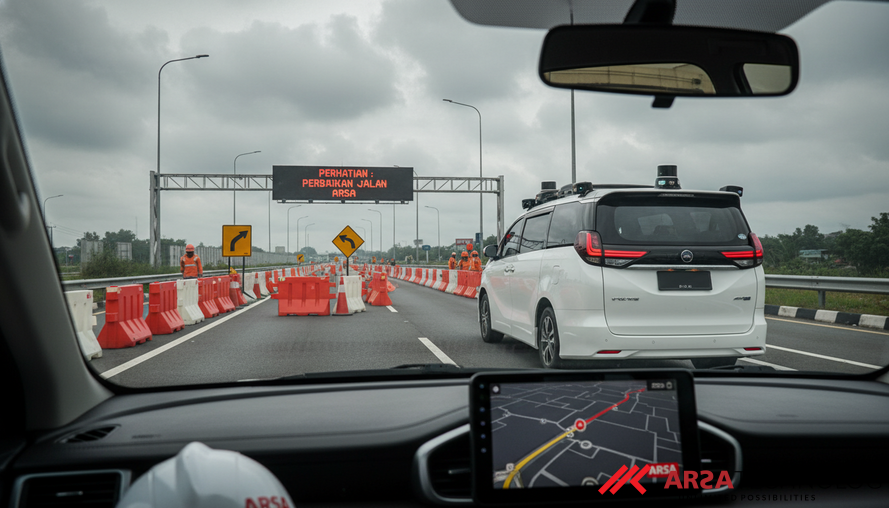
Autonomous Vehicles Face New Roadblocks: Waymo Suspends Freeway Operations
The journey towards fully autonomous vehicles is marked by continuous innovation, yet it frequently encounters practical challenges that demand adaptive solutions. Recently, Waymo, a pioneer in self-driving technology and an Alphabet subsidiary, announced a significant pause in its operations. The company has suspended freeway driving across all its U.S. markets, citing concerns related to dynamic construction zones. This decision underscores the intricate complexities involved in deploying AI-powered mobility solutions in unpredictable real-world environments.
Beyond freeway operations, Waymo also temporarily halted its services in Atlanta and San Antonio due to persistent issues with flooded roads. This follows a previous incident where several of the company’s robotaxis were observed driving at high speeds through flooded areas in Texas, prompting a fleet-wide software recall. These events, reported by Andrew J. Hawkins on The Verge (source: The Verge), serve as a crucial reminder that even the most advanced AI systems require robust testing and careful deployment strategies to ensure safety and reliability.
The Critical Role of Freeway Driving in Robotaxi Scalability
Freeway capabilities are not merely a convenience for autonomous vehicle services; they are a cornerstone of their operational efficiency and profitability. By enabling faster travel times and access to critical locations like airports, highway routes are vital for scaling a robotaxi business and competing effectively with traditional human-driven rideshare platforms. The ability to navigate these high-speed arterial roads efficiently directly impacts a company's capacity to offer financially viable services and expand its footprint.
At the time of the suspension, Waymo’s freeway services were active in key urban centers, including San Francisco, Los Angeles, Phoenix, and Miami. The interruption of these services, even if temporary, highlights the delicate balance between rapid market expansion and the thorough validation of autonomous capabilities across diverse and challenging scenarios. Companies aiming for ambitious targets, such as Waymo's goal of reaching one million paid rides per week, must consistently address these operational nuances.
Beyond the Glitches: The Complexities of Real-World AI Deployment
Despite remarkable advancements in reducing traffic accidents and injuries compared to human drivers, autonomous vehicle technology frequently grapples with "edge cases"—unusual or unforeseen situations that challenge an AI system's decision-making. Waymo’s recent operational pauses are not isolated incidents but part of a broader narrative of adapting advanced AI to the inherent unpredictability of urban and highway environments. Just last week, a peculiar incident saw a neighborhood cul-de-sac in Atlanta overwhelmed by a fleet of empty Waymos, creating a notable traffic disruption. Similarly, an autonomous vehicle was recorded running a red light at a busy intersection in Dallas.
These occurrences highlight that while AI can process vast amounts of data and follow programmed rules, interpreting novel situations, dynamic construction changes, or extreme weather conditions still poses significant hurdles. Such incidents underscore the need for continuous learning, real-time adaptability, and robust fail-safes in autonomous systems. For enterprises seeking to deploy advanced AI Video Analytics or other intelligent systems, these real-world scenarios emphasize the importance of partnering with providers who understand the practical realities of deployment and prioritize reliability in challenging conditions, a principle ARSA Technology has upheld since its founding in 2018.
Ensuring Reliability in Autonomous Systems
The challenges faced by autonomous vehicle developers like Waymo prompt a deeper consideration of how robust AI systems are designed, tested, and deployed, especially for mission-critical applications. Ensuring safety and efficiency in unpredictable environments often relies on highly accurate, real-time monitoring and analysis. Solutions that can process data directly at the source, without heavy reliance on external cloud infrastructure, are becoming increasingly vital. This approach, known as edge AI, helps minimize latency and maintain data privacy, which are critical in fast-evolving scenarios such as navigating unexpected construction zones or adverse weather.
Consider the application of advanced monitoring for such situations. Systems like ARSA’s AI Box Series can provide on-premise, real-time video analytics to monitor environments for changes, detect anomalies, and issue immediate alerts. For instance, an AI BOX - Basic Safety Guard module could identify unexpected obstacles or personnel in a supposed clear zone, while a AI BOX - Traffic Monitor could analyze congestion patterns or sudden road closures. These capabilities are crucial not only for autonomous driving but for any industrial or public safety application where immediate, localized intelligence is paramount. The current situation with Waymo reinforces the value of having flexible, high-performance AI deployment options that can adapt to evolving operational requirements and prioritize safety in unforeseen circumstances.
The Future of Urban and Highway Mobility
The temporary suspension of Waymo’s freeway service, while a setback, also serves as a critical learning experience for the entire autonomous vehicle industry. It highlights that the widespread adoption of self-driving technology will hinge on its proven reliability, especially in diverse and challenging operational contexts. As companies like Waymo work towards integrating new vehicle platforms, such as the upcoming Zeekr-built Ojai electric van with its sixth-generation autonomous driving software, the focus remains on refining AI algorithms to handle complex edge cases and ensuring robust performance across all driving environments.
For enterprises and governments alike, the ongoing evolution of AI and IoT solutions offers immense potential to enhance safety, optimize operations, and drive new efficiencies across various sectors. The path to fully autonomous and ubiquitous intelligent mobility is an iterative one, characterized by continuous learning and the strategic application of advanced technology to real-world problems. There is no current timeline for Waymo's resumption of highway driving or service in the affected cities.
To explore advanced AI and IoT solutions designed for practical, real-world deployment and ensure the safety and efficiency of your operations, we invite you to contact ARSA for a free consultation.