Beyond Surveillance: How AI-Powered Vision Analytics Is Transforming Business Security and…
In the evolving landscape of business security and operational efficiency, traditional surveillance systems are rapidly becoming relics of…
Beyond Surveillance: How AI-Powered Vision Analytics Is Transforming Business Security and Efficiency in 2025
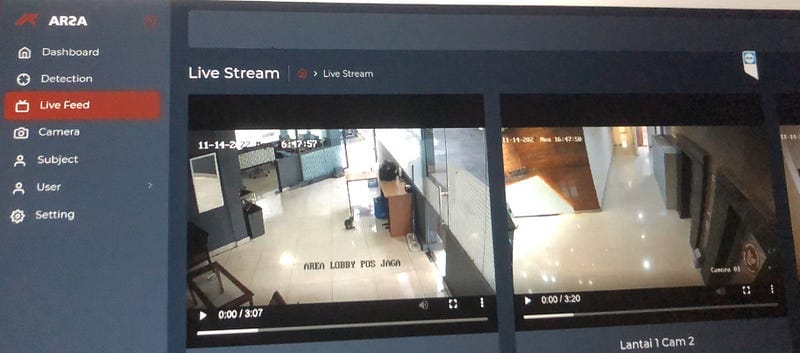
In the evolving landscape of business security and operational efficiency, traditional surveillance systems are rapidly becoming relics of the past. The passive monitoring that characterized security protocols for decades is now being replaced by proactive, intelligent systems that not only observe but analyze, predict, and respond. Welcome to the era of AI-powered vision analytics — technology that’s redefining what’s possible in business security and operational intelligence¹.
The Shifting Paradigm in Business Security
For years, businesses have relied on standard CCTV cameras and human monitors to ensure security. But this approach comes with significant limitations: human attention spans are finite, consistency varies, and the sheer volume of footage makes comprehensive monitoring nearly impossible. These systems are fundamentally reactive — useful for investigating incidents after they occur but limited in their ability to prevent them.
Today, as we navigate 2025, AI-powered vision analytics is changing this paradigm entirely by transforming passive video feeds into actionable intelligence.
What Makes AI Vision Analytics Revolutionary?
AI vision analytics uses advanced algorithms and machine learning to interpret visual data in real-time. Unlike traditional systems that merely record, these smart systems understand what they’re seeing:
- Advanced Recognition Capabilities: Modern AI systems can identify faces, vehicles, objects, and even specific behaviors with remarkable accuracy
- Real-Time Processing: Information is analyzed instantly, allowing for immediate responses to potential security threats
- Predictive Analytics: By identifying patterns in behavior, these systems can highlight anomalies that might indicate security risks before they develop into incidents
- Multi-Camera Intelligence: Systems can track individuals or objects across multiple cameras, creating a comprehensive security envelope
The difference is transformational — from passive recording to active intelligence that serves as both a deterrent and an efficiency tool².
Beyond Security: The Business Intelligence Advantage
While security applications may be the most obvious use case, the business intelligence capabilities of AI vision analytics extend far beyond traditional security concerns:
Operational Efficiency
AI vision systems can analyze workplace movement patterns, identifying bottlenecks in production lines or inefficient layouts in retail spaces. This data-driven approach to spatial optimization can significantly increase productivity and reduce operational costs³.
Safety Compliance
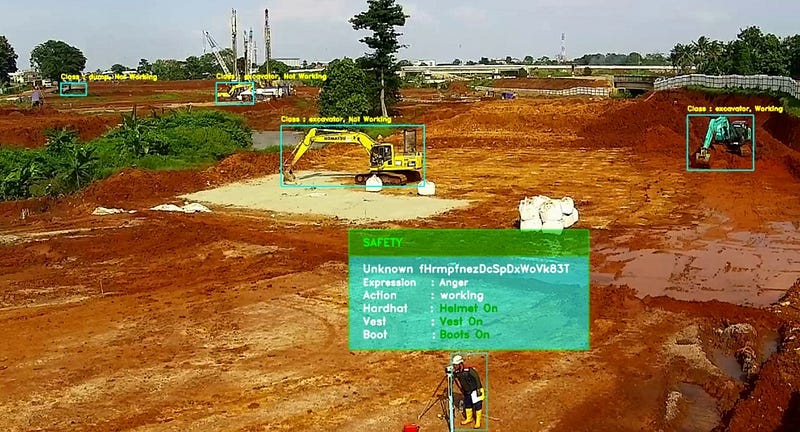
In industrial settings, AI vision can monitor for proper use of Personal Protective Equipment (PPE), detecting when workers aren’t wearing hardhats, safety vests, or appropriate footwear. The system can automatically flag compliance issues, helping prevent workplace accidents and ensuring regulatory requirements are met consistently⁴. Modern AI-powered PPE detection systems can achieve over 95% accuracy in detecting safety equipment like helmets and vests, significantly improving workplace safety⁵.
Customer Insights
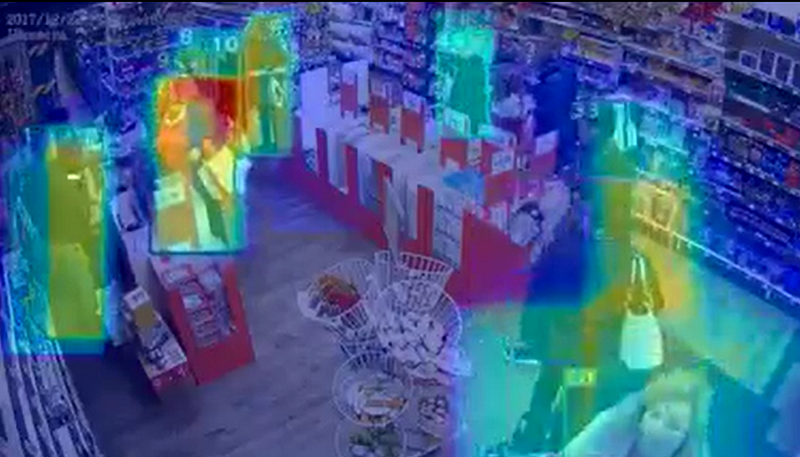
In retail environments, vision analytics provides invaluable customer behavior data: how shoppers move through stores, where they linger, which displays attract attention, and even demographic information that can inform marketing strategies. All this without infringing on individual privacy when implemented with proper ethical guidelines.
Vehicle Management
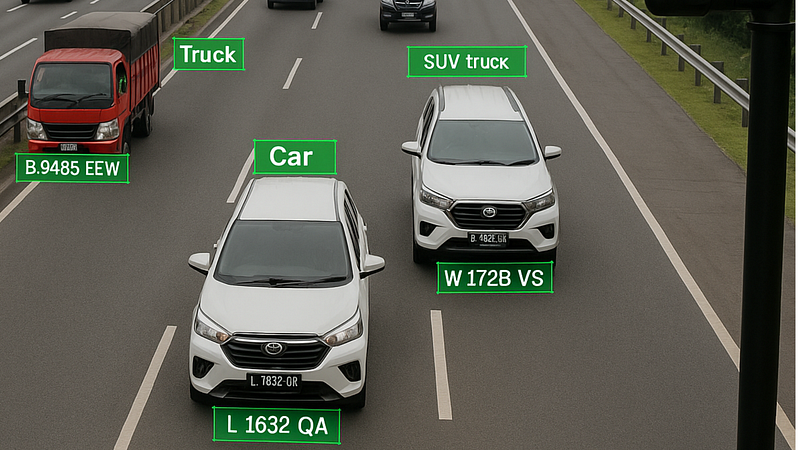
For businesses with vehicle fleets or parking facilities, license plate recognition and vehicle identification systems streamline access control, enhance security, and provide valuable data on vehicle movement patterns and facility usage.
Implementation Considerations for Decision Makers
For C-suite executives and security directors considering AI vision analytics implementation, several factors warrant careful consideration:
1. Integration with Existing Infrastructure
The most effective AI vision systems can work with existing camera networks, allowing businesses to enhance capabilities without replacing entire security infrastructures. Look for solutions that are compatible with ONVIF standards to ensure seamless integration.
2. Data Privacy and Ethical Implementation
As these systems collect and analyze visual data, privacy concerns must be addressed proactively. Ensure your implementation complies with relevant data protection regulations and consider transparent communication about how these systems are used.
3. Scalability
As business needs evolve, your vision analytics system should scale accordingly. Consider solutions that can accommodate growth in both camera networks and analytical capabilities.
4. Customization
Different industries have different security and operational concerns. The most effective systems allow for customization of alerts, analytics, and reporting to address specific business needs.
5. ROI Assessment
While the security benefits are clear, a comprehensive ROI analysis should also consider operational efficiencies, loss prevention improvements, and potential insurance premium reductions that might result from implementing advanced security measures.
Real-World Applications Demonstrating Value
The theoretical benefits of AI vision analytics are compelling, but real-world applications demonstrate its true value:
- A leading e-commerce distribution center implemented AI vision safety solutions and reduced accidents by 76%, saving $1.2M annually⁶
- A retail chain utilized customer movement analytics to redesign store layouts, resulting in a 18% increase in average transaction value
- A logistics hub employed license plate recognition for automated access control, reducing entry processing time by 74% and improving security verification⁷
- A corporate campus implemented face recognition for secure access, eliminating badge fraud and reducing unauthorized entry incidents to zero⁸
According to industry reports, organizations implementing AI-driven safety monitoring systems have seen incident rates reduced by up to 45%, demonstrating the substantial impact of these technologies on workplace safety⁹.
Looking Forward: The Evolution of Visual Intelligence
As we progress through 2025, several trends are shaping the future of AI vision analytics:
- Edge Computing Integration: Processing capabilities at the camera level are reducing bandwidth requirements and enabling faster response times
- Enhanced AI Models: Accuracy and capabilities continue to improve as machine learning models become more sophisticated, with the global AI in computer vision market projected to reach $63.48 billion by 2030, growing at a CAGR of 22.1% from 2025¹⁰
- Multi-Modal Analysis: Integration of visual data with other sensor inputs creates more comprehensive security and business intelligence systems
- Ethical AI Frameworks: Industry standards around privacy and ethical use are maturing to address concerns about surveillance technologies, with 60% of organizations expressing concerns about inadequate preparedness to defend against AI-powered threats¹¹
Making the Strategic Decision
For decision makers, the question is no longer whether to implement AI vision analytics, but how to do so strategically to maximize both security benefits and business intelligence advantages.
The most successful implementations start with clear objectives, followed by thoughtful planning around infrastructure needs, data management, staff training, and ethical guidelines. As with any transformative technology, the greatest benefits come to organizations that approach implementation as a strategic initiative rather than merely a security upgrade.
In an age where data drives decision-making across every aspect of business, AI vision analytics represents one of the most valuable untapped data sources in many organizations. The visual intelligence these systems provide offers insights that extend well beyond security concerns, creating competitive advantages for businesses that implement them effectively.
The passive, reactive security systems of the past are giving way to intelligent, proactive platforms that don’t just record incidents but help prevent them — while simultaneously providing valuable business intelligence. For forward-thinking executives, this technology represents not just a security enhancement but a strategic business advantage in an increasingly competitive landscape.
What experiences have you had with AI vision analytics in your organization? I’d be interested to hear about implementation challenges and unexpected benefits in the comments below.
#ArtificialIntelligence #BusinessSecurity #VisionAnalytics #AITechnology #BusinessIntelligence
This article is part of Machine State — ARSA Technology’s official publication exploring intelligent systems and future tech.
Ditulis oleh Hilmy Izzulhaq
Founder @ ARSA Technology — 7 tahun membangun solusi AI Vision & IoT di industri berat, parkir, dan smart city.
References
¹: Realtime Networks. (2024, December 9). Emerging AI Security Trends for 2025. https://www.realtimenetworks.com/blog/artificial-intelligence-trends-in-security
²: McKinsey & Company. (2025, March 12). The state of AI: How organizations are rewiring to capture value. https://www.mckinsey.com/capabilities/quantumblack/our-insights/the-state-of-ai
³: ThoughtSpot. (2025). Top AI Statistics and Trends for Analytics (2025). https://www.thoughtspot.com/data-trends/ai/ai-statistics-and-trends
⁴: Easyflow. (2024, October 14). AI-Powered PPE Detection: Enhance Workplace Safety. https://easyflow.tech/ai-ppe-detection/
⁵: Intenseye. (2025). 5 steps to improve PPE compliance with AI. https://www.intenseye.com/blog/how-is-artificial-intelligence-helping-in-ppe-detection
⁶: Visionify. (2025). AI-Powered Workplace Safety. https://visionify.ai/
⁷: ARSA Technology. (2025). ARSA Face Recognition & LPR Technology Solutions. Company documentation.
⁸: ARSA Technology. (2025). Company Profile. Company documentation.
⁹: VCA Technology. (2025, January 19). Revolutionising PPE Compliance with AI-Enhanced Video Monitoring. https://vcatechnology.com/industry-solution/ai-ppe-monitoring/
¹⁰: Globe Newswire. (2025, March 10). AI in Computer Vision Market Research Report 2025–2030. https://www.globenewswire.com/news-release/2025/03/10/3039488/28124/en/AI-in-Computer-Vision-Market-Research-Report-2025-2030-AI-Powered-Image-Processing-Real-Time-Analytics-and-Rising-Automation-at-the-Forefront-of-Innovation-and-Growth.html
¹¹: Lakera. (2025). AI Security Trends 2025: Market Overview & Statistics. https://www.lakera.ai/blog/ai-security-trends