Boosting 3D Human Pose Estimation: The Power of 2D Pre-Training
Discover how 2D pre-training revolutionizes 3D Human Pose Estimation, enhancing accuracy and computational efficiency for real-world AI applications. Explore its impact on industries from smart cities to industrial safety.

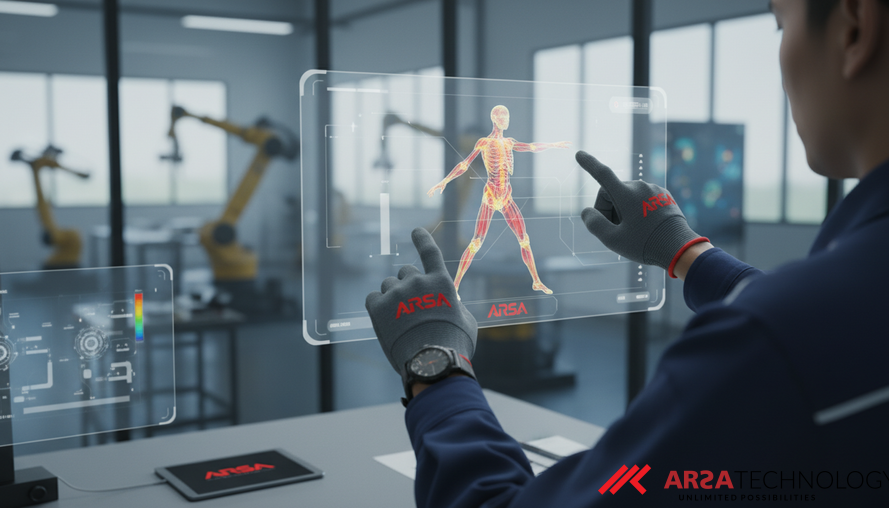
The Evolution of Human Pose Estimation: From 2D to 3D
Human Pose Estimation (HPE) is a foundational technology in computer vision, focused on precisely identifying the locations of a person’s joints, such as their arms, legs, and neck, from image or video data. While 2D HPE analyzes these joint positions within a flat, two-dimensional plane (X and Y coordinates), 3D HPE takes this a significant step further by predicting the depth (Z coordinate) as well. This added dimension provides a complete spatial understanding of human movement, making it invaluable for a wide array of advanced applications. However, inferring depth information from a standard 2D camera feed is inherently more complex and challenging.
The difficulty in 3D HPE largely stems from the nature of data collection. Unlike 2D datasets, where images can be sourced from diverse, real-world scenarios – often termed "in the wild" – and annotated by human observers, 3D data requires specialized Motion Capture (MoCap) equipment. This equipment is typically worn by actors in controlled environments, leading to datasets like Human3.6M, a widely used benchmark. The controlled nature of these datasets means they often lack the "stochastic noise" and variability present in real-world scenarios, making it harder for models trained solely on them to generalize effectively. This limitation highlights a critical need for methods that can bridge the gap between idealized training data and unpredictable real-world performance.
Overcoming Data Limitations with Pre-Training
In response to these challenges, pre-training has emerged as a powerful technique to enhance 3D HPE models. Pre-training involves an initial phase where a deep learning model is trained on a related, often simpler, task using a larger or more diverse dataset. This initial training helps the model develop a more generalized understanding of input data, learning robust features that are transferable. After this initial phase, the model is then fine-tuned on the specific downstream task, which, in this case, is 3D HPE. This approach forces the model to capture broader patterns, moving beyond the specific nuances of a single dataset.
A notable approach, as described in research by Jiang et al., 2026, leverages 2D pre-training to significant effect. This method initially employs an advanced neural network architecture (a ResNet-based encoder within a stacked hourglass network) to learn 2D pose estimation. Subsequently, the model is trained on a combined dataset of both 2D and 3D images. During this phase, it uses a shared module to predict 2D joint coordinates while separately estimating 3D depth. A key innovation is the use of a "geometric loss" function during fine-tuning. This function artificially generates depth labels for 2D samples from their ground truth, allowing the model to learn depth relationships even from 2D input. While prior methods often confined their scope to limited datasets such as MPII and Human3.6M, the strength of this technique lies in its potential for broader applicability.
Expanding the Scope and Proving Efficiency
The study undertaken by Jiang et al. significantly expanded the compatibility of this 2D pre-training scheme with a wider array of datasets. This included integrating additional 2D datasets like FLIC-Full and LSP-Extended, as well as the 3D synthetic dataset Occlusion Person, and full integration of MPI-INF-3DHP. This expansion is crucial because the number and selection of human body joints can vary drastically between different datasets, making integration a complex task. By broadening the dataset compatibility, the researchers could conduct a more thorough investigation into how various aspects of 2D pre-training, such as model size, influence performance and the model's ability to generalize to new, unseen data.
The experimental results confirmed that 2D pre-training consistently outperforms models trained exclusively on 3D data. This advantage is particularly pronounced in computational efficiency, with 2D pre-trained models executing in significantly less time – saving hours of processing and reducing resource costs. Furthermore, these models demonstrated superior generalization capabilities across different datasets. The research achieved a Mean Per Joint Position Error (MPJPE) score of under 64.5mm using MPII and Human3.6M, a testament to the accuracy gained. Even for smaller 2D datasets like FLIC-Full, adjusted training epochs showed performance improvements, though the overall generalizability still benefited most from larger, more diverse image samples, underscoring the importance of comprehensive data.
Practical Implications for Industry and Real-World Deployment
The findings from this research have profound practical implications for industries reliant on precise human movement analysis. Improved 3D Human Pose Estimation, driven by efficient 2D pre-training, can lead to more robust and cost-effective AI solutions across various sectors:
- Public Safety & Security: Enhancing surveillance systems for crowd monitoring, anomaly detection, and security perimeter analysis. Accurate 3D pose data can help identify suspicious behavior or potential threats in real-time.
- Industrial & Manufacturing: Improving worker safety by detecting improper posture, compliance with PPE (Personal Protective Equipment) usage, or unauthorized access to hazardous zones. This can reduce accidents and support compliance audits. ARSA's AI BOX - Basic Safety Guard is an example of an edge AI solution that can leverage such advancements for real-time safety monitoring.
- Retail & Commercial: Analyzing customer behavior, traffic flow, and engagement in retail spaces. Understanding 3D movement can refine store layouts, optimize staffing, and enhance the overall customer experience, leading to improved conversion rates.
- Smart Cities & Traffic Management: Monitoring pedestrian movement, traffic congestion, and accident detection. Enhanced 3D HPE can contribute to more intelligent urban planning and emergency response systems. For such complex environments, ARSA offers robust AI Video Analytics solutions.
- Healthcare & Sports Analytics: Providing detailed biomechanical analysis for rehabilitation, ergonomic assessments, or performance enhancement in sports. Accurate 3D models of human movement are critical in these fields.
By offering a more efficient and accurate method for 3D pose estimation, this research paves the way for wider adoption of sophisticated AI applications that were previously constrained by computational demands or data limitations. Companies can now deploy AI models that perform reliably in complex, real-world environments without requiring massive, expensive 3D datasets for initial training.
In summary, the study demonstrates that strategically applying 2D pre-training is not just an academic optimization but a critical pathway to developing more effective, computationally efficient, and generalizable 3D Human Pose Estimation systems. It transforms the potential of AI vision, making it more practical for challenging operational scenarios.
To explore how advanced AI and IoT solutions, including cutting-edge computer vision capabilities, can be tailored for your enterprise, contact ARSA for a free consultation.
Source: Jiang et al., 2026