Data Centers in Rural Areas: Promises, Pitfalls, and the Real Economic Impact for Global Enterprises
Explore the true economic impact of data centers in rural areas, examining job creation, resource demands, and the challenges faced by communities globally. Understand key considerations for AI/IoT infrastructure development.

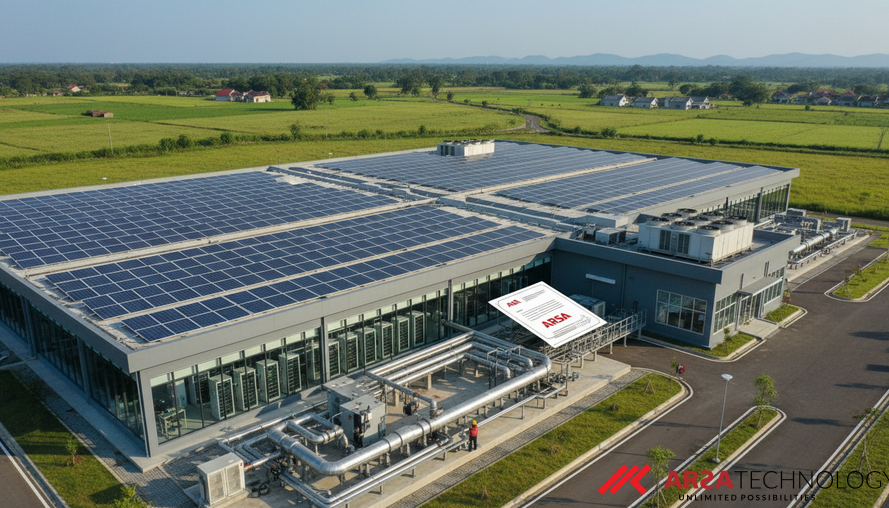
In an era defined by rapid digital transformation and the burgeoning demands of Artificial Intelligence (AI) and Machine Learning (ML), data centers have become the indispensable backbone of modern industry. As the digital economy expands, so does the physical footprint of these crucial facilities. Increasingly, data center developers are turning their gaze towards rural communities, promising economic revitalization and high-paying jobs. However, recent trends and studies reveal a stark disparity between these promises and the actual long-term impact on local economies, urging a closer examination by global enterprises and policymakers alike.
The Magnetic Pull of Rural Landscapes for Data Infrastructure
The proliferation of data centers into rural areas, particularly across North America, reflects a strategic shift driven by several factors. Regions like Maine, for example, present an appealing environment for these energy-intensive operations due to naturally cooler year-round temperatures, which reduce cooling costs. Additionally, these areas often offer abundant, affordable land and a higher percentage of renewable energy sources, aligning with corporate sustainability goals. The allure extends beyond geographic advantages, however, as many states and municipalities are eager to attract investment, offering significant tax breaks and other incentives. This enthusiasm, while understandable for communities seeking economic growth, often overlooks the complex realities of hosting such specialized industrial facilities. The increasing demand for computing power for advanced AI workloads, which require immense energy and sophisticated cooling, further fuels this migration, transforming quiet agricultural or former industrial towns into potential hubs for digital infrastructure.
The scale of this shift is notable: a Pew Research Center analysis indicates that 67 percent of planned data centers in the United States are slated for rural areas, with 39 percent heading to counties currently devoid of such infrastructure. This expansion, while presenting opportunities, also raises critical questions about preparedness. As highlighted in a report by The Verge (May 13, 2026), the recent push to develop a large data center at the site of a former paper mill in Jay, Maine, serves as a poignant example. Despite a proposed 18-month moratorium on new data center permits in Maine to study their environmental and economic impact, the bill was ultimately vetoed, citing the potential for job creation in a town that had lost its largest employer.
Differentiating the Job Promise from Reality
The primary incentive offered to rural communities is often the promise of significant job creation. Developers frequently tout "high-paying positions" that will emerge from these multi-million dollar investments. However, the reality on the ground often tells a different story. Economist Michael Hicks, director of the Center for Business and Economic Research at Ball State University, conducted a causal analysis of data center employment effects in 254 Texas counties. His findings revealed that the net long-term job creation from data centers was effectively zero. While construction phases undoubtedly bring temporary employment and economic activity, these jobs are transient, with workers often moving on after their specialized tasks are complete. Hicks observed that while hotels might fill up and local services see a temporary boost during construction, there is "no net pulse" of permanent job growth.
Once operational, a large-scale data center typically requires a relatively small permanent workforce—sometimes as few as 50 employees for a substantial facility, and even for "neocloud" data centers specialized in high-performance AI and machine learning, this number might only reach 30 to 50 full-time staff. Even within this smaller number, a significant portion consists of maintenance staff and technicians for backup generators, with truly "high-tech" roles making up perhaps only 10 percent. Furthermore, as pointed out by Anthony Elmo from Good Jobs First, data center companies sometimes count remote workers located elsewhere as employees of the state where the data center resides, further diluting the actual local economic benefit. The national financial implications are equally concerning, with some reports indicating subsidies exceeding $2 million per permanent job, and extreme cases where tens of millions in tax breaks generated only a single permanent position.
The Unseen Demands: Power, Water, and Infrastructure Strain
Beyond the employment question, the resource demands of modern data centers, especially those designed for AI and ML workloads, pose substantial challenges. Neocloud data centers, purpose-built for high-performance GPU computing, are incredibly power-hungry, often requiring over 100kW of energy per rack. Such intense energy consumption necessitates advanced cooling systems, like direct-to-chip or immersion cooling, which, in turn, demand significant water resources. These requirements place immense strain on local power grids and water supplies, which rural infrastructures are often ill-equipped to handle without substantial upgrades.
This colossal resource footprint contrasts sharply with the minimal permanent workforce, leading to a lopsided return on investment for the host communities. While data centers are essential infrastructure for powering everything from global cloud services to sophisticated AI platforms, their deployment requires careful consideration of environmental sustainability and the capacity of local resources. Specialized solutions designed for edge deployment, such as ARSA Technology's AI Box Series, aim to minimize this large-scale infrastructure footprint by bringing AI processing closer to the data source, optimizing resource use for specific applications.
Navigating the Complexities: A Call for Informed Decision-Making
Rural communities, often lacking the governmental and legal expertise of larger urban centers, can find themselves "outgunned" when negotiating with experienced data center developers. This imbalance can lead to agreements that disproportionately favor the developer, with communities offering generous tax breaks and incentives without fully understanding the long-term trade-offs. The call for creating a "playbook" for evaluating data center proposals, as suggested by Maine state Rep. Melanie Sachs, underscores the critical need for comprehensive frameworks that allow towns to properly assess the real impact on their economies, infrastructure, and environment.
Enterprises seeking to deploy advanced AI capabilities should similarly adopt a pragmatic approach, focusing on solutions that offer verifiable benefits and deployment flexibility. ARSA Technology, for instance, provides enterprise-grade AI Video Analytics software and various edge AI systems that can operate on-premise, ensuring data ownership and compliance without requiring massive, resource-intensive hyperscale facilities. This focus on practical, proven AI deployments is a hallmark of ARSA's approach, developed by experts experienced since 2018.
The trend of data centers moving into rural America, and globally, is a complex issue driven by the accelerating demand for digital infrastructure, particularly for advanced AI workloads. While the promise of economic revitalization is compelling, communities and enterprises must critically evaluate the true cost and benefits. Focusing on sustainable, localized, and context-appropriate solutions can help ensure that technological advancement truly serves the interests of all stakeholders, avoiding the creation of resource-hungry industrial facilities with negligible long-term local benefits.
To discover how ARSA Technology delivers practical, deployable AI and IoT solutions that align with your operational realities and compliance needs, we invite you to explore our offerings and contact ARSA for a free consultation.