Data-Driven Material Science: Unlocking Plasticity with Acoustic Profiling and AI
Explore how AI-powered acoustic profiling and wavelet analysis are revolutionizing the understanding of plastic deformation in crystalline metals, moving beyond traditional methods for enhanced predictive material science.

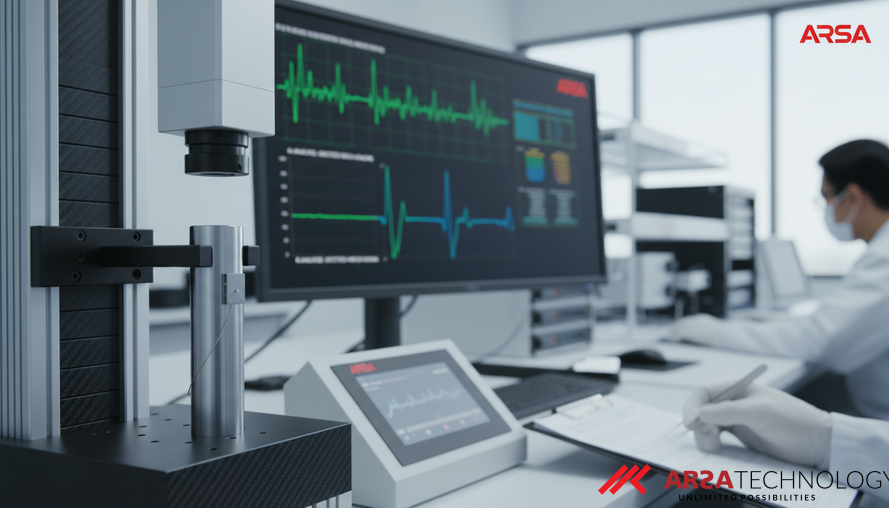
Unlocking Material Secrets: Acoustic Emissions and AI
Materials science is constantly seeking more precise ways to understand how materials behave under stress. For crystalline metals, plastic deformation—the permanent change in shape—isn't a smooth process. Instead, it occurs through a series of tiny, abrupt "micro-earthquakes" within the material's crystal lattice. These events, driven by the movement of microscopic defects called dislocations, release bursts of energy in the form of sound waves, known as Acoustic Emissions (AEs). Understanding these subtle acoustic signatures is key to predicting material failure, optimizing manufacturing processes, and ensuring structural integrity.
Traditionally, detecting and analyzing these AEs has been challenging. Early methods relied on simple amplitude thresholding, which often missed crucial, smaller events. However, new research is pushing the boundaries, combining advanced signal processing techniques like wavelets with artificial intelligence to build a more comprehensive, data-driven model of material plasticity. This approach promises to transform retrospective material characterization into proactive temporal modeling and forecasting, offering unprecedented insights into a material's internal mechanics as it deforms.
The Unseen Dynamics of Material Deformation
In everyday terms, imagine stretching a piece of metal. It feels smooth, but at a microscopic level, it's a series of jerky movements. These movements are caused by line defects, or dislocations, within the metal's crystal structure. When stress is applied, these dislocations move, but they often get stuck against obstacles like other defects or impurities. When the stress builds enough, groups of dislocations suddenly break free and move, releasing a tiny burst of energy. These energy bursts travel through the material as elastic waves, which can be picked up by specialized sensors as acoustic emissions.
Understanding these events is critical for industries ranging from aerospace to construction, where predicting material fatigue and failure is paramount. By capturing and interpreting the full spectrum of these acoustic signals, engineers can gain a deeper understanding of a material's health and predict its behavior under various conditions. The goal is to move beyond merely detecting these "pops" to decoding their hidden messages about the material's ongoing internal struggles.
Beyond Simple Thresholds: Advanced Acoustic Event Detection
The challenge with traditional AE detection, often relying on simple amplitude thresholds, is that it can be easily masked by background noise and may miss less intense, yet significant, deformation events. The latest research, drawing on experiments conducted by Dr. J. El-Awady and Dr. M. Omar of John Hopkins University, introduces a more sophisticated approach. Their work, detailed in publications like Omar and El-Awady (2025a) and Omar and El-Awady (2025b) [Source: https://arxiv.org/abs/2603.25894], utilizes Morlet wavelets, a technique similar to how seismologists detect earthquakes, to isolate specific frequency bands where energy is concentrated.
In their experimental setup, a small nickel micropillar was subjected to increasing compressive stress while a piezoelectric device captured the emitted acoustic signals at a high sampling rate. After filtering out significant background noise by focusing on frequencies below 60 KHz, the analysis revealed prominent energy peaks around 8KHz, 16KHz, 22KHz, and 44KHz. By designing targeted wavelets for these specific bands, the researchers could compute an "instantaneous band energy" metric. This allowed for the precise detection of AE events, identifying distinct patterns of acoustic activity that would otherwise remain hidden. For enterprises dealing with sensitive equipment or critical infrastructure, leveraging advanced signal processing through AI Video Analytics and specialized sensors can provide continuous, real-time insights into structural integrity, preventing costly downtime and enhancing safety.
Confirming the Physics: Validation Through Stress and Strain
A critical step in any new analytical method is validating its findings against known physical principles. For acoustic emissions, true events representing plastic deformation should correlate with observable changes in the material's mechanical state. The researchers rigorously validated their wavelet-based AE detection by comparing the timing and energy of detected events with the material's stress-strain curve. They found a strong correlation: the occurrence of AE events aligned closely with sudden dips in the applied stress, signifying the release of internal energy as dislocations moved. Furthermore, the magnitude of the released acoustic energy corresponded with the size of these stress drops.
Beyond instantaneous changes, the cumulative energy from these acoustic events also showed a significant relationship with the overall material strain. For instance, an early phase of small energy releases coincided with moderate strain, followed by a large AE event that preceded a rapid increase in the material's deformation rate. This physics-based validation confirms that the advanced signal processing method is not merely detecting noise but uncovering physically meaningful events, providing a credible foundation for further AI-driven analysis. These insights are invaluable for companies that require meticulous condition monitoring and predictive maintenance for their assets. ARSA, with its AI Box Series, offers edge AI systems capable of processing such critical sensor data locally, ensuring low latency and data privacy for industrial applications.
AI for Dislocation Dynamics: Initial Classification Steps
With a validated method for detecting acoustic emission events, the next frontier is to leverage artificial intelligence for deeper understanding and classification. The research explored using machine learning models to differentiate between actual deformation events and other signals. This involved creating a carefully labeled dataset of both AE events and "non-events" (periods without significant deformation). Due to the nature of plastic deformation, actual events are less frequent than non-events, posing a common challenge known as imbalanced data in machine learning.
To prepare the diverse acoustic snippets for AI processing, they were first standardized: resampled to a uniform length and normalized for amplitude. Baseline classifiers such as K-Nearest Neighbors (KNN) and Support Vector Machines (SVM) were then applied. While these initial models provide a foundational understanding, this paves the way for more advanced deep learning techniques. Such techniques can uncover subtle patterns in the acoustic signals that might correlate with specific types of dislocation movements or even predict impending material changes before they become critical. For specialized research and industrial applications requiring bespoke analytical tools, ARSA provides Custom AI Solutions, leveraging our team's expertise in computer vision, industrial IoT, and data analytics to design systems tailored for unique operational challenges. ARSA has been experienced since 2018 in delivering such production-ready AI systems.
The Future of Predictive Material Science
The integration of advanced acoustic profiling with AI represents a significant leap forward in material science. By moving beyond simple detection to detailed, data-driven modeling and classification of plastic deformation events, industries can gain unprecedented control over material quality, reliability, and lifecycle. This research demonstrates how leveraging techniques like wavelet analysis and machine learning can turn raw sensor data into actionable intelligence, offering a clearer picture of a material's internal state. The ability to forecast material behavior based on these acoustic signatures could revolutionize predictive maintenance strategies, enhance product design, and contribute to safer, more efficient industrial operations globally.
This groundbreaking work, originating from the collaboration between Khalid El-Awady, Dr. M. Omar, and Dr. J. El-Awady, underscores the immense potential of applied AI in traditionally complex fields, demonstrating how subtle physical phenomena can be precisely quantified and interpreted through intelligent systems.
Ready to integrate advanced AI and IoT solutions to gain critical insights into your operations? Explore ARSA Technology’s offerings and contact ARSA today for a free consultation.
Source: El-Awady, K. (2026). Data-Driven Plasticity Modeling via Acoustic Profiling. arXiv preprint arXiv:2603.25894. https://arxiv.org/abs/2603.25894