EdgeLDR: Unleashing Powerful AI on Tiny Devices for Industrial Transformation
Discover EdgeLDR, an AI framework making advanced deep learning possible on edge devices. Learn how quaternion neural networks and structured matrices enable efficient, real-time AI for industries, reducing costs and boosting security.

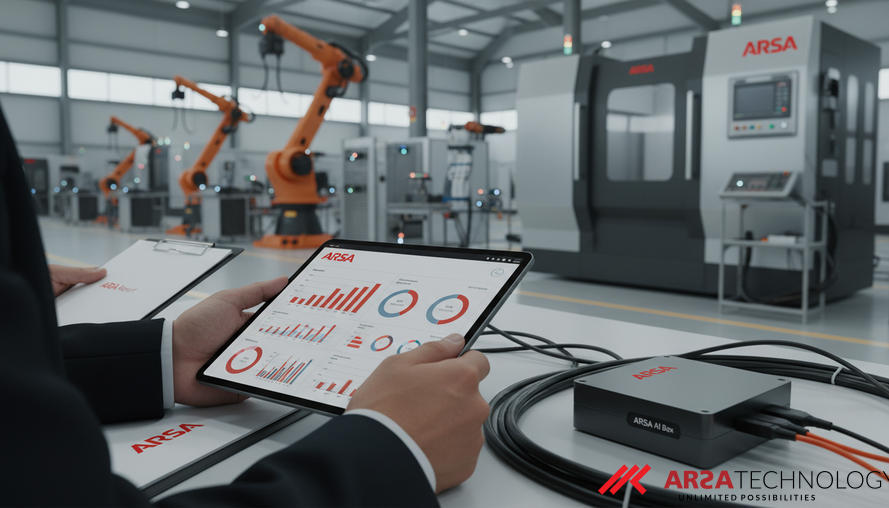
The Dawn of Pervasive AI: Bringing Intelligence to the Edge
Deep learning has revolutionized industries, powering breakthroughs in everything from autonomous vehicles to medical diagnostics. However, the immense computational power and memory typically required by these advanced Artificial Intelligence (AI) models pose a significant challenge when deploying them to "edge devices." These are compact, resource-constrained pieces of hardware like mobile phones, wearable sensors, industrial IoT devices, or even smart cameras, operating directly where data is generated, far from powerful cloud data centers. The vision of truly pervasive AI – where intelligent systems seamlessly augment every aspect of our lives and operations – hinges on making these complex AI models lightweight, efficient, and capable of operating in real-time, right at the source of action.
The limitations of edge devices are stark: typically only megabytes of on-chip memory, restricted off-chip data bandwidth, and tight power budgets, often without access to high-performance GPUs or stable, high-speed internet connectivity. In such environments, traditional AI models, which demand massive data storage and computation, can lead to prohibitive latency, energy consumption, and operational overheads. This is particularly critical for real-time applications that continuously process multi-channel sensor streams, such as detecting anomalies in manufacturing, monitoring traffic patterns in smart cities, or recognizing critical keywords in voice assistants. Overcoming these hurdles requires a fundamental shift in how deep neural networks are designed and deployed.
The Edge AI Dilemma: Power vs. Performance
The core problem for deploying deep learning on edge devices lies in the "dense linear operators" that form the backbone of most neural networks. These operators perform complex mathematical calculations on vast amounts of data, resulting in large "parameter counts" (the number of variables the model learns) and high "compute demands." Each calculation and data transfer consumes energy and time, creating significant latency and draining limited battery life on edge hardware. For industries looking to implement always-on monitoring or real-time decision-making, these overheads are simply unfeasible.
Consider the needs of modern industrial operations. For instance, in manufacturing, real-time detection of product defects requires instantaneous analysis of visual data without sending massive video streams to the cloud. Similarly, in logistics, on-device gesture recognition can streamline warehouse operations, or immediate alerts from environmental sensors can prevent critical failures. These scenarios demand intelligence that is both powerful and localized. Current model compression techniques like "low-rank factorization" (approximating large matrices with smaller ones), "pruning" (removing redundant connections), or "quantization" (reducing data precision) offer some relief, but often come with trade-offs in accuracy or don't fully address the fundamental architectural inefficiencies.
Redefining Efficiency: How EdgeLDR Works
To truly unlock the potential of edge AI, a new architectural paradigm is needed. This is where innovations like EdgeLDR come into play. This framework leverages two sophisticated mathematical concepts to achieve unprecedented efficiency: "Quaternion Neural Networks" and "Structured Matrices" with "Fast Fourier Transform (FFT)-based evaluation."
Imagine a traditional AI network processing an image. It might process the red, green, and blue (RGB) color channels somewhat independently. Quaternion Neural Networks, however, process these multiple channels (or other multi-sensor data streams) together, as a single, more complex number system called "quaternions." Think of it as adding extra dimensions to how the network perceives and processes data. This inherent "channel mixing" allows the network to capture intricate correlations between different data streams with significantly fewer "parameters" – leading to improved "parameter efficiency" and smaller model sizes. This is like a chef using a single, multi-bladed tool to chop several vegetables at once, rather than using separate knives for each, saving time and effort.
Complementing this, EdgeLDR integrates "structured matrices," specifically "block-circulant" structures. Instead of having unstructured, dense weights that require a lot of memory and processing power, these matrices organize the network's calculations in highly specific, repeating patterns. This "low-displacement rank" property allows for a mathematical shortcut: "FFT-based evaluation." Similar to how FFT can rapidly convert an audio signal into its constituent frequencies, it can dramatically accelerate the complex calculations within the network. This combination means that EdgeLDR layers can perform calculations much faster, even as the size of the processing blocks increases, making larger compression factors computationally viable without compromising speed. This is a game-changer for deploying powerful AI models on hardware with limited resources.
Unlocking Real-World Applications with EdgeLDR
The implications of EdgeLDR for various industries are profound. By making deep learning models compact and efficient enough for edge devices, it enables a new generation of real-time, low-latency applications that were previously impractical.
For instance, in smart city applications, this technology could power highly efficient pedestrian and vehicle counting, traffic flow analysis, and even detect unusual patterns in dense urban environments directly from smart cameras. Our AI BOX - Traffic Monitor leverages similar edge AI principles to provide real-time vehicle analytics.
In industrial settings, EdgeLDR could facilitate on-device vision systems for immediate gesture recognition, enhancing worker safety by ensuring Personal Protective Equipment (PPE) compliance, or even advanced object detection for quality control on production lines. Solutions like AI BOX - Basic Safety Guard demonstrate the practical application of edge AI for real-time safety and compliance monitoring. Furthermore, it can enhance environmental and audio event recognition for proactive monitoring of machinery or hazardous conditions, significantly reducing operational costs and improving security across various industries. For businesses, this translates to tangible benefits such as optimized operational efficiency, reduced human error, faster response times to critical incidents, and enhanced security across their facilities.
The ARSA Technology Advantage: Implementing Edge-Efficient AI
At ARSA Technology, we understand the critical need for advanced AI solutions that are not only powerful but also practical for real-world deployment on edge devices. Our expertise in AI Vision and Industrial IoT focuses on transforming complex challenges into measurable business outcomes. While EdgeLDR is an academic framework, the principles of efficient edge computing, privacy-first design, and real-time analytics are at the core of our product development.
We specialize in designing and implementing robust edge AI solutions that deliver high accuracy with minimal resource consumption. Our ARSA AI Box Series embodies these principles, transforming existing CCTV cameras into intelligent monitoring systems without heavy cloud dependency. This approach ensures maximum privacy by processing data locally, providing instant insights and alerts where they are needed most. Whether it's enhancing security, optimizing operational workflows, or enabling new forms of data-driven decision-making, ARSA Technology is committed to delivering custom and ready-to-deploy AI solutions tailored to your specific industry needs, built on the latest advancements in edge computing.
Ready to explore how advanced edge AI can transform your business operations, reduce costs, and enhance security? We invite you to explore ARSA's comprehensive suite of AI and IoT solutions and request a free consultation with our expert team.