Elon Musk's Terafab Vision: Building a Massive AI Chip Plant in Austin, Texas
Explore Elon Musk's ambitious plan for a Terafab chip plant in Austin, Texas, aiming to produce AI chips at scale for Tesla and SpaceX, and the immense challenges of semiconductor manufacturing.

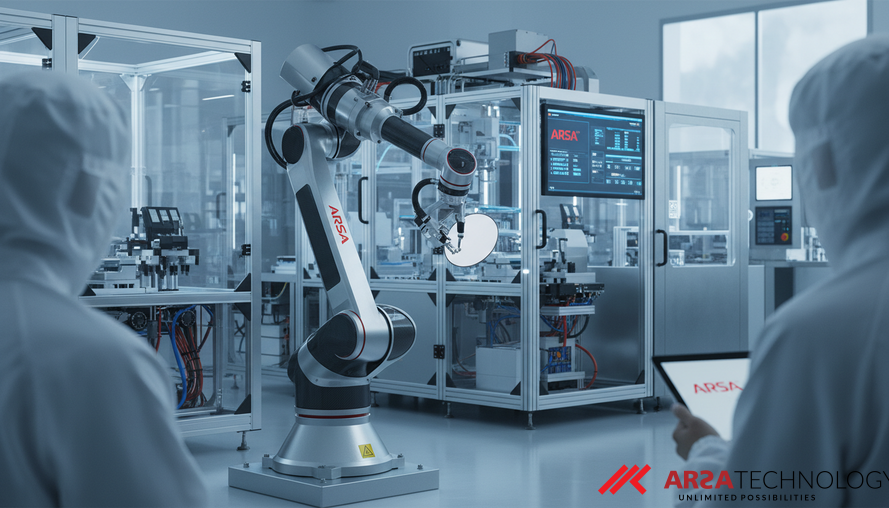
Elon Musk has announced an ambitious project to construct a colossal "Terafab" chip manufacturing plant in Austin, Texas. This facility, intended to be a joint venture between Tesla and SpaceX, aims to produce specialized chips at an unprecedented scale. The chips are earmarked for a wide array of applications across Musk's ventures, including advanced robotics, artificial intelligence systems, and even future space-based data centers. This bold declaration highlights a growing concern among tech leaders regarding the global semiconductor industry's capacity to keep pace with the exploding demand for AI-specific hardware, a challenge that ARSA Technology understands deeply as we implement practical AI solutions today.
The Ambitious Vision for AI Chip Production
The proposed Terafab plant represents a strategic move to vertically integrate a crucial component of modern technology – advanced semiconductors – directly into the operational ecosystem of Tesla and SpaceX. Musk articulated a vision to eventually achieve an output capable of supporting up to 200 gigawatts of computing power annually on Earth, with an even more staggering target of one terawatt for space-based operations. This level of computational capability would be transformative, powering everything from self-driving vehicles and humanoid robots to complex AI models and the infrastructure for extraterrestrial data processing. The initiative underscores the critical role that custom-designed, high-performance chips play in achieving cutting-edge AI and automation.
However, the sheer scale of this ambition is met with significant hurdles. Building a semiconductor fabrication plant, or "fab," is an immensely complex undertaking. It demands colossal financial investment, often running into billions of dollars, requires many years from conception to full operational capacity, and necessitates an enormous array of highly specialized equipment. This challenge is further compounded by the intricate processes and exacting environmental controls required for microchip production, making it one of the most capital-intensive and technically demanding industries globally.
The Complex Realities of Semiconductor Manufacturing
The global semiconductor industry has long grappled with the inherent complexities of chip manufacturing. Each new generation of chips demands more precise engineering, cleaner facilities, and increasingly sophisticated machinery, driving up costs and lengthening development cycles. The recent boom in artificial intelligence has exacerbated this, putting unprecedented strain on existing fabrication capabilities. Companies across various sectors, from automotive to consumer electronics, are struggling to secure sufficient chip supplies, leading to bottlenecks in production and innovation.
Musk himself has publicly voiced concerns about the chip industry's ability to meet the escalating demand from the rapidly expanding AI sector. While the need for more advanced and abundant chips is undeniable for the future of AI and IoT, establishing new high-volume production facilities like the proposed Terafab requires a rare blend of deep technical expertise, sustained financial commitment, and robust operational discipline. These are the same principles that guide ARSA Technology in delivering custom AI solutions that meet enterprise demands for precision and reliability.
Musk's Track Record and Industry Skepticism
While the vision for Terafab is certainly grand, it's important to consider external perspectives. As noted by Bloomberg, Elon Musk, despite his extensive experience in several high-tech industries, does not possess a background in semiconductor production. Furthermore, his career has seen a pattern of setting extremely ambitious goals and timelines that are often subject to significant delays or adjustments. This history naturally leads to a degree of skepticism within the industry regarding the realistic timeline and ultimate success of such a monumental undertaking.
The sentiment "We either build the Terafab or we don’t have the chips, and we need the chips, so we build the Terafab" reflects a decisive, problem-solving approach. Yet, the semiconductor world operates on multi-year roadmaps and proven expertise, where even seasoned giants face challenges. The scale of the project, coupled with the lack of a detailed timeline for achieving these immense computing power targets, means that the Terafab remains, for now, an aspirational project that will undoubtedly draw significant attention as it unfolds, as reported by The Verge.
Strategic Implications for AI and Edge Computing
The discussion around Terafab highlights a critical strategic imperative for enterprises worldwide: controlling their technology stack and securing crucial component supply. For companies heavily reliant on advanced AI, especially those deploying edge AI systems for real-time processing and low latency, a dedicated chip supply chain could offer a significant competitive advantage. Edge AI, which processes data closer to the source rather than relying solely on cloud infrastructure, is becoming increasingly vital for applications in manufacturing, smart cities, and public safety.
The ability to design and produce custom chips specifically optimized for edge computing requirements, such as those used in real-time video analytics or specialized sensor processing, allows for greater efficiency, improved privacy, and reduced operational costs. While a Terafab aims for hyperscale production, the underlying principle of tailoring hardware to AI workloads is a key trend in the industry.
Delivering Practical AI Solutions in Today's Landscape
While the prospect of a Terafab facility is years away, the immediate need for robust, deployable AI and IoT solutions is pressing for many enterprises. ARSA Technology focuses on delivering proven, practical AI that generates measurable business outcomes today. Our AI Video Analytics software, for instance, transforms existing CCTV infrastructure into intelligent monitoring systems, providing real-time alerts and actionable insights without the need for new, specialized hardware. With expertise accumulated since 2018, ARSA Technology understands the nuances of integrating AI into diverse operational environments.
Our approach prioritizes real-world deployments, offering flexible models—from self-hosted software to turnkey edge systems—that minimize latency, ensure data ownership, and comply with regulatory standards. Whether it's enhancing safety protocols, optimizing retail operations, or improving traffic management, ARSA's solutions are engineered for immediate impact and long-term scalability.
The vision of a Terafab underscores the future direction of AI hardware. However, for enterprises navigating current operational challenges, partnering with providers who can deliver production-ready, effective AI solutions now is paramount.
To explore how ARSA Technology can transform your operations with practical AI and IoT solutions, please contact ARSA for a free consultation.
Source: The Verge