Enactive Artificial Intelligence: A Paradigm Shift for Adaptive AI Systems
Explore Enactive AI, a revolutionary approach to artificial intelligence that emphasizes active engagement, embodied perception, and real-time interaction, moving beyond passive processing to create truly adaptive systems.

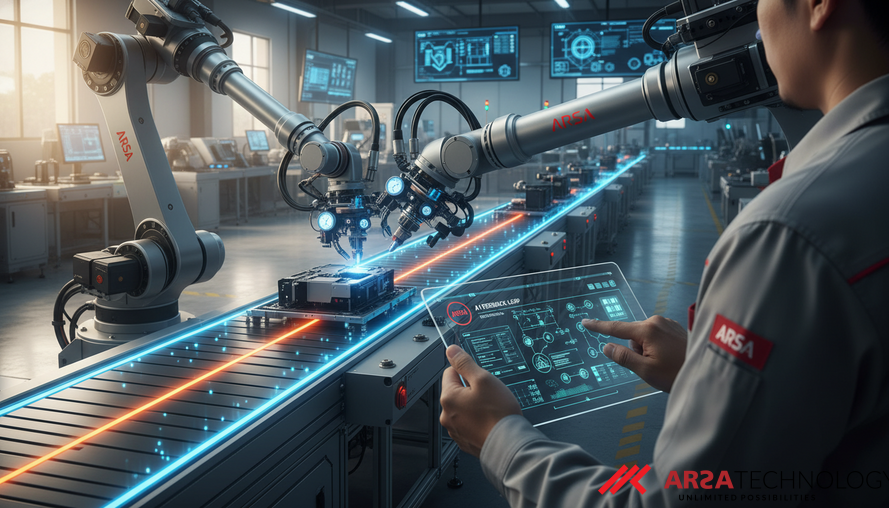
In the rapidly evolving landscape of artificial intelligence, a profound philosophical shift is gaining traction: the move towards "Enactive Artificial Intelligence." This approach advocates for integrating principles of enactive perception and cognition, fundamentally redefining how AI systems interact with and understand the world. Unlike traditional AI models that often treat perception as a passive process, Enactive AI posits that intelligence emerges from an active, skillful engagement with the environment, where actions and perceptions are inextricably linked. This perspective promises to unlock new levels of adaptability, robustness, and genuine intelligence in AI systems.
The foundational concept of Enactive AI stems from the idea that perception is not merely about receiving and processing sensory input. Instead, it’s an ongoing, dynamic interaction with the world where an agent perceives by acting and by understanding how its actions shape its experience. This is a stark contrast to classical views, which often model perception as an internal processing task, building a "representation" of the world that then dictates action. Enactive views, however, emphasize the embodied, interactive, and dynamic nature of perception, rooted in the lived experience of agents embedded within their environments. As highlighted in the academic paper "Toward Enactive Artificial Intelligence" by Banafsheh Rafiee and Richard S. Sutton, much of mainstream AI has historically neglected these critical insights, treating cognition as a detached internal process.
Understanding Enactive AI: Beyond Passive Perception
The core of enactive cognition lies in viewing cognition, perception, and action as mutually constitutive. This means that perception doesn't simply precede action, nor does it merely guide it; rather, they unfold together in a continuous, interactive loop with the environment. Actions actively shape an agent's perceptual experience by modulating sensory input. Simultaneously, perception is realized through patterns of action, leading to a deeper understanding of how the world reveals itself through active exploration. This mastery of "sensorimotor contingencies"—the ways bodily movements produce changes in sensory stimulations—is central to enactive perception.
This framework directly challenges the classical "representationalist" view prevalent in much of traditional AI. In this older paradigm, sensory input is seen as being transmitted through a body’s sensory apparatus, then transformed into internal representations or "maps" of the world. The brain, functioning like a central processing unit, manipulates these symbols and generates action plans based on these internal models. This creates a sharp distinction between the perceiving agent and the external world, reducing perception to the accurate construction and manipulation of internal representations.
Enactive perspectives, by contrast, reject this passive, internal mapping. They argue that the adequacy of perception isn’t measured by how faithfully an internal representation mirrors reality, but by the agent's capacity for skillful and effective engagement with its environment. To "enact" is to bring forth or constitute a meaningful world through this embodied interaction. This school of thought, drawing from various fields like phenomenology (Husserl, Heidegger, Merleau-Ponty) and psychology (Gestalt psychology, Gibson’s ecological approach), emphasizes that cognitive processes are deeply embedded in activity, tools, and social interactions, rather than solely arising from internal processes.
The Four Pillars of Enactive AI
For AI research, four key enactive concepts stand out as most relevant: experience, action-perception inseparability, autonomy, and embodiment. These elements provide a roadmap for developing more robust and adaptive AI systems.
**Experience:** Enactive cognition is fundamentally grounded in experience, understood as the continuous, dynamic interaction between an agent and its environment. In this view, the world isn't a static object to be perfectly represented internally; it's a dynamic field of possibilities that evolves based on the agent's actions, context, and history of engagement. As the philosopher Rodney Brooks famously put it, "the world is its own best model." The most reliable, up-to-date, and granular information is always available directly in the world itself, rather than in potentially outdated or incomplete internal surrogates. This demands that AI agents remain in constant interaction, using real-time feedback to adjust actions, recalibrate expectations, and refine understanding. This continuous feedback loop is critical for AI systems operating in unpredictable environments, such as autonomous vehicles or industrial robots.
**Action-Perception Inseparability:** This pillar highlights that perception and action are not separate stages but a tightly integrated, cyclical process. Our actions shape what we perceive, and what we perceive in turn informs our next actions. For instance, a robotic arm doesn't just "see" an object; it perceives the object in terms of how it can grasp or manipulate it. This active exploration allows the AI to develop a richer, more contextual understanding of its surroundings. In practical terms, this means designing AI systems that learn not just from observed data, but from the consequences of their own interventions, much like how ARSA AI Box Series devices process video streams at the edge, delivering instant insights by acting upon local data.
**Autonomy:** While not extensively detailed in the provided excerpt, autonomy in an enactive context refers to the agent's capacity for self-regulation and self-organization. An autonomous enactive AI system isn't simply executing pre-programmed commands; it's actively seeking to maintain its operational integrity and achieve its goals within its environment, adapting its behavior based on its internal norms and the dynamic feedback from its actions. This implies a higher degree of self-sufficiency and adaptive decision-making, crucial for AI systems in complex, unsupervised settings.
**Embodiment:** The concept of embodiment emphasizes that the physical body of an agent—be it biological or robotic—is not merely a container for intelligence but an integral part of its cognitive processes. The body's unique capabilities and limitations directly shape how an agent can interact with and perceive its world, giving rise to "affordances"—the possibilities for action that an environment offers to a specific agent. For example, a robot designed for delicate manipulation will perceive objects differently than one built for heavy lifting. This insight is vital for designing AI in robotics and IoT, ensuring that hardware and software capabilities are co-optimized for specific tasks and environments.
Reinforcement Learning: A Step Towards Enactive AI
Reinforcement Learning (RL) stands out as an AI paradigm that exhibits a structural resonance with several enactive principles. Its emphasis on an agent taking actions within an environment, receiving feedback (rewards or penalties), and adapting its policy over time directly aligns with the enactive focus on action, agent-environment interaction, and feedback-driven adaptation. RL agents learn by doing, much like an enactive system learns by engaging. This "agent-centered evaluation," where learning is driven by the consequences of the agent's own actions, is a significant step away from purely supervised or rule-based AI.
However, despite these strong alignments, RL does not fully equate to enactive cognition. Key elements remain absent or weakly developed. While RL emphasizes interaction, the "experience" it gains is often framed in terms of optimizing a reward function, which can still be a form of internal representation rather than the rich, skillful, normative, and deeply embodied experience central to enactivism. The nuances of subjective, lived experience and the intrinsic normativity (what it means for an action to "fit well" with the situation beyond a predefined reward) are still areas where RL could benefit from deeper enactive integration.
The Practical Implications for Enterprise AI & IoT
The implications of adopting enactive AI principles for enterprise solutions are profound, particularly for domains demanding high adaptability, robustness, and real-time decision-making.
- Enhanced Situational Awareness: AI systems that actively probe and interact with their environment, rather than passively observing, can achieve a deeper and more accurate understanding of dynamic situations. This is critical for applications like industrial safety, where real-time monitoring of PPE compliance or restricted area intrusions requires the system to continually interpret complex, changing visual information. AI Video Analytics, for example, can be designed with enactive principles to improve accuracy and reduce false positives in highly variable environments.
- More Robust Automation: By emphasizing continuous feedback and adaptation, enactive AI can lead to automation systems that are more resilient to unexpected changes or novel situations. Instead of breaking down when encountering something outside their training data, these systems could actively explore and adapt, much like human operators do. This translates into higher operational uptime and reduced intervention costs in manufacturing, logistics, and critical infrastructure.
- Improved Human-AI Collaboration: When AI systems are designed to perceive and act in a more human-like, interactive manner, the potential for seamless collaboration with human workers increases. Such AIs would not just follow instructions but also understand the context of human actions and respond in a more intuitive, adaptive way.
- Privacy-by-Design and Edge AI: The "world is its own best model" ethos aligns perfectly with edge AI deployments. Processing data locally, on-device, and only extracting necessary insights minimizes data transfer and central storage, inherently enhancing privacy and compliance. ARSA Technology, with its focus on practical, on-premise, and edge AI solutions, is well-positioned to implement these principles, especially in regulated industries or for sensitive government applications. Our custom AI solutions are engineered to meet unique operational demands while adhering to strict data sovereignty requirements.
By embracing an enactive approach, AI moves beyond simply processing information towards truly understanding and engaging with the world. This paradigm promises to create a new generation of intelligent systems that are not only more capable but also more aligned with the dynamic, complex realities of human experience and interaction.
Ready to explore how enactive AI principles can transform your operations? Discover ARSA Technology’s innovative AI and IoT solutions and contact ARSA for a free consultation to engineer your competitive advantage.