Enhancing AI Reliability: How a New Dataset is Revolutionizing Out-of-Distribution Detection for Industry
Explore ICONIC-444, a 3.1-million-image industrial dataset driving breakthroughs in AI's ability to detect unforeseen inputs. Learn its impact on safety, efficiency, and industrial automation.

The Critical Challenge of Unforeseen Inputs in AI
In today's rapidly evolving industrial landscape, Artificial Intelligence (AI) and Machine Learning (ML) models are increasingly deployed to automate critical processes, from manufacturing quality control to autonomous navigation. However, a significant challenge persists: what happens when an AI encounters something it has never seen before? This phenomenon, known as Out-of-Distribution (OOD) detection, is crucial for the reliability and safety of any AI system. Without robust OOD detection, an AI model might confidently make incorrect predictions when faced with new object classes, corrupted data, sensor malfunctions, or even inadequate lighting.
The consequences of such errors can range from minor operational inconveniences to catastrophic failures. Imagine a food sorting machine misclassifying harmful foreign materials as safe products, or an autonomous vehicle failing to identify an unexpected obstacle. These scenarios highlight why enabling AI systems to reliably recognize and properly manage OOD samples is not just an academic pursuit but a critical necessity for extending the usability and safety of AI in real-world applications. The fundamental task of detecting these OOD inputs, however, remains largely unsolved, limiting the routine deployment of AI in truly unpredictable environments.
Introducing ICONIC-444: A New Benchmark for Real-World AI
A key barrier to advancing OOD research has been the lack of suitable datasets. Most existing datasets were not originally designed with OOD detection in mind, often suffering from limitations like small scale, insufficient granularity, and contamination where "unseen" data might subtly overlap with training data. To address these critical shortcomings, researchers have introduced ICONIC-444 (Image Classification and OOD Detection with Numerous Intricate Complexities), a specialized, large-scale industrial image dataset.
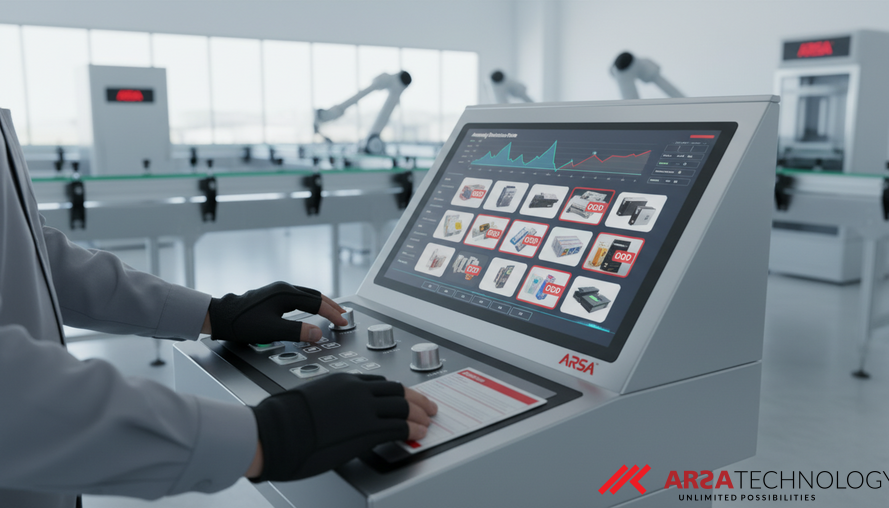
ICONIC-444 comprises over 3.1 million RGB images across 444 classes, specifically tailored for OOD detection research. What makes this dataset unique is its origin: it was captured using a prototype industrial sorting machine, meticulously mimicking the complexities and conditions of real-world industrial tasks. This provides an unprecedented level of realism, offering diverse, structured data essential for rigorously evaluating OOD detection across a spectrum of difficulty levels, from near-OOD (subtle variations) to far-OOD (entirely unrelated objects) and even extreme-OOD (synthetic or highly unusual images). The dataset supports both fine-grained (distinguishing very specific items within a category) and coarse-grained (broader category differentiation) computer vision tasks, providing a comprehensive foundation for developing more robust AI solutions.
Why ICONIC-444 Matters for Industry
The implications of a dataset like ICONIC-444 for businesses are profound. By providing a clean, large-scale, and industrially relevant benchmark, ICONIC-444 enables developers and researchers to build and test OOD detection methods that are truly robust against real-world uncertainties. This directly translates to significant business benefits across various sectors:
- Enhanced Safety and Risk Reduction: In manufacturing, OOD detection can prevent defective products or foreign materials from entering the supply chain. In high-risk environments like construction or mining, it can alert to unexpected hazards or unsafe conditions, preventing accidents. Solutions such as ARSA’s Basic Safety Guard can leverage advanced OOD detection to identify anomalous situations in real-time, greatly improving workplace safety.
- Improved Operational Efficiency: For industries relying on automated sorting or inspection, accurately identifying OOD items reduces rework, minimizes waste, and streamlines processes. For example, ARSA’s Automated Product Defect Detection systems could become even more precise, ensuring only high-quality products reach the market by flagging truly unknown anomalies.
- Greater Trust and Reliability in AI Systems: When AI models can confidently signal "I don't know" rather than making confident but erroneous predictions, user trust increases dramatically. This self-awareness is critical for applications where human intervention might be required for complex, unforeseen situations, ensuring the AI acts as a reliable assistant rather than a blind decision-maker.
- Data-Driven Decision Making: ICONIC-444 helps advance the underlying AI Video Analytics capabilities that underpin many of ARSA's solutions. The insights gained from such data are invaluable for optimizing operations, identifying bottlenecks, and proactively addressing issues, fostering a culture of informed, data-backed decisions.
Advancing AI with Edge Computing and Privacy-First Design
The ongoing research using ICONIC-444 has already shown that even for seemingly simple OOD scenarios, robust detection remains an unsolved challenge. This underscores the need for continuous innovation in AI algorithms and deployment strategies. ARSA Technology is committed to building the future with AI and IoT, providing solutions that integrate these advanced capabilities directly into operational environments.
Our AI Box Series, for instance, represents intelligent edge computing solutions designed to process data locally, ensuring maximum privacy and instant insights without heavy cloud dependency. Integrating improved OOD detection algorithms developed using datasets like ICONIC-444 into edge AI devices means that industrial AI systems can respond to anomalies faster, more securely, and with greater autonomy directly where the data is generated, like on a factory floor or at a traffic intersection. This approach aligns perfectly with the need for privacy-by-design, a core principle in ARSA's development, ensuring sensitive industrial data remains within the client's premises.
The Future of Trustworthy AI: A Call to Action
The introduction of datasets like ICONIC-444 is a testament to the ongoing efforts to push the boundaries of AI, making it more resilient and dependable in the unpredictable real world. For businesses, this means the promise of AI-powered digital transformation—reducing costs, increasing security, and creating new revenue streams—is becoming more tangible and reliable. As an experienced AI and IoT solution provider, ARSA Technology is at the forefront of translating these research advancements into practical, high-impact industrial applications.
To discover how robust AI solutions can transform your operations and enhance your business's future, contact ARSA for a free consultation.