Enhancing Care with Voice AI: A Safety-First Approach to Smart Speakers in Care Homes
Explore how multi-agent voice AI smart speakers are being rigorously evaluated for safety and reliability in care homes, streamlining tasks while safeguarding residents. Discover the framework ensuring accuracy and trust in healthcare AI.

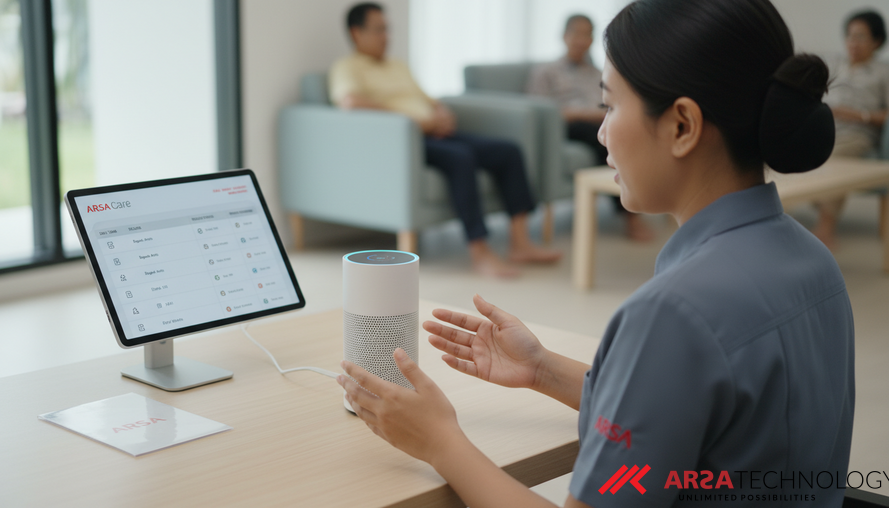
The Critical Role of AI in Modern Care Environments
The landscape of health and social care is undergoing a significant transformation, driven by the integration of artificial intelligence (AI) and the Internet of Things (IoT). A key focus is on reducing the substantial administrative workload that care staff routinely face, allowing them to dedicate more valuable time to direct patient interaction and care. From documenting daily observations and managing medication schedules to supporting mobility and personal care, these tasks are often time-sensitive and performed in dynamic, sometimes noisy environments. Delayed or incomplete documentation can pose significant risks, including missed information, which underscores the urgent need for administrative assistant tools that truly support care workers.
Amidst these advancements, voice-based technologies like smart speakers have garnered considerable attention. Their hands-free nature makes them particularly appealing in care settings, where staff are often actively engaged in physical care and cannot easily interact with screens or keyboards. These systems promise to revolutionize care documentation, provide timely reminders, and improve access to critical information, ultimately enhancing both staff efficiency and resident engagement. The potential for such technology to streamline operations and improve safety in residential care homes is immense, but it demands a robust and safety-focused approach to deployment.
Ensuring Reliability: The Foundation of Voice-Enabled Care
The deployment of voice-enabled systems in safety-critical environments like care homes introduces unique challenges, particularly regarding reliability. Errors in communication or system failures can lead to severe consequences, such as delayed interventions, missed care tasks, medication errors, or even direct harm to vulnerable residents. For instance, a mistranscribed reminder or an incorrect information retrieval could propagate through the system, with disproportionate effects. Linguistic diversity among care staff and residents further complicates matters, as varied accents, dialects, or speech impairments can lead to transcription errors that misreport symptoms or misinterpret care instructions.
Prior work has highlighted the importance of strengthening the foundational Automatic Speech Recognition (ASR) capabilities for such systems. Technologies that fine-tune speech models on diverse accents and incorporate real-time safeguards against "speech hallucinations" (where the system generates incorrect or non-existent speech) are crucial. This ensures the technical reliability of spoken input, establishing a prerequisite for developing more complex, task-oriented functionalities. The goal is to create a robust system where upstream uncertainties, such as transcription ambiguities, are detected and managed to prevent unsafe downstream actions, making rigorous, multi-level evaluation essential before any real-world deployment.
Behind the Voice: A Multi-Agent System for Integrated Care
To address the complexities of care home environments, a multi-agent system architecture has been developed for voice-enabled smart speakers. This advanced system comprises several specialized components designed to work in concert, creating a seamless and intelligent workflow. At its core, advanced speech-to-text technology, often based on models like Whisper, is used for accurate speech transcription, even in noisy care environments and across diverse voices. This transcription is then fed into natural language parsing modules that interpret the intent behind the spoken words.
The system integrates sophisticated Retrieval-Augmented Generation (RAG) approaches, which combine information retrieval with AI generation to provide accurate, context-aware responses. This allows for spoken access to structured data stored in systems like PostgreSQL, enabling real-time retrieval of resident records and care categories. Beyond information access, the architecture also includes modules for reminder scheduling and integration with calendar systems, such as Google Calendar, to manage tasks. Smart speaker notifications with follow-up confirmations ensure that actions are taken and validated. Such integrated systems require robust infrastructure, similar to those deployed by ARSA's AI Box Series, which offers edge AI capabilities for on-site processing and rapid deployment in various operational settings.
A Safety-Focused Framework for Trustworthy AI Evaluation
Given the safety-critical nature of care environments, a comprehensive evaluation framework is paramount. This framework goes beyond isolated technical metrics, explicitly designing for the detection of error propagation and treating "safe deferral/clarification" as a valid and crucial outcome when inputs are ambiguous. The evaluation assesses the voice-enabled smart speaker across multiple dimensions, including:
- Structured Data Parsing and Integrity: Ensuring that spoken information is correctly translated into structured data.
- Reliable Retrieval of Resident and Care-Category Information: Verifying accurate identification of individuals and care needs.
- Reminder Extraction and Scheduling Behavior: Confirming that reminders are correctly recognized, extracted, and scheduled with calendar integration.
- Uncertainty-Handling Safeguards: Evaluating the effectiveness of confidence scoring, clarification prompts, and human-in-the-loop confirmation mechanisms.
This rigorous approach is grounded in realistic usage scenarios, analyzing hundreds of logged spoken interactions across numerous care categories, including many reminder-containing interactions from supervised care-home trials and controlled testing. Performance is measured using proportion-based correctness metrics with statistical confidence intervals, alongside semantic similarity metrics to assess the preservation of meaning. For instance, in healthcare settings, ARSA also provides solutions like the Self-Check Health Kiosk, which integrates AI and IoT for autonomous health screening, demonstrating the company's commitment to deploying rigorously tested and reliable technology in sensitive environments.
Key Findings and Business Implications
The evaluation of these voice-enabled smart speaker systems has yielded promising results. In the best-performing configurations, resident ID and care category matching achieved a remarkable 100% accuracy (with a 95% confidence interval of 98.86–100%). Reminder recognition also performed strongly, reaching 89.09% accuracy (95% CI: 83.81–92.80), with zero missed reminders, demonstrating 100% recall. While some false positives occurred (meaning the system sometimes identified reminders that weren't there), the perfect recall for critical reminders is a significant safety achievement. End-to-end scheduling, including calendar integration, showed 84.65% exact reminder-count agreement (95% CI: 78.00–89.56). This indicates that while highly effective, there remain some edge cases in converting informal spoken instructions into perfectly actionable calendar events, necessitating further refinement.
The business implications of these findings are substantial. For care home operators, such systems offer a clear path to reducing administrative overhead and reallocating nursing staff time to direct care, potentially leading to significant ROI through increased efficiency and improved patient outcomes. The emphasis on privacy-by-design, data sovereignty (with options for on-premise deployment), and robust security protocols also addresses critical compliance concerns such as GDPR and HIPAA. The ability to minimize latency and operate in diverse real-world conditions ensures that the technology provides immediate, reliable support. Furthermore, features like predictive maintenance and centralized firmware updates, common in enterprise-grade solutions like ARSA AI Video Analytics Software, would ensure minimal downtime and consistent performance for such critical systems.
Building the Future of Care with Safeguarded AI
The findings strongly suggest that voice-enabled systems, when meticulously evaluated and properly safeguarded, can significantly contribute to accurate documentation, effective task management, and the trustworthy use of AI in care home settings. Beyond technical accuracy, the ability of these systems to manage uncertainty, provide explanations for their outputs, and foster trust between staff and technology is paramount. This work highlights not only the potential of advanced AI in healthcare but also the critical importance of a thoughtful, responsible deployment strategy that prioritizes patient safety and operational reliability. As technology continues to evolve, these frameworks will be crucial in ensuring that AI truly enhances human capabilities in care, without compromising accountability or privacy.
Source: Dehghani, Z., et al. (2026). Evaluating a Multi-Agent Voice-Enabled Smart Speaker for Care Homes: A Safety-Focused Framework. https://arxiv.org/abs/2603.23625
To learn more about how advanced AI and IoT solutions can transform your operations, please contact ARSA for a free consultation.