Enhancing Video Intelligence: How Attention Mechanisms Revolutionize Human Action Recognition
Explore how advanced AI attention mechanisms boost video classification accuracy for human action recognition. Learn about 3D CNN models, spatiotemporal features, and their impact on surveillance, retail, and safety.

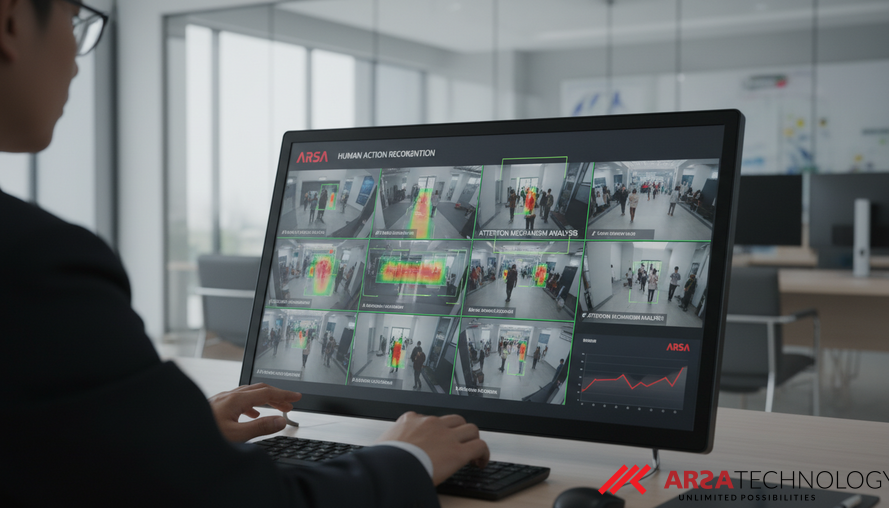
Unlocking Deeper Insights: The Power of Attention in Video Intelligence
Human action recognition (HAR) has rapidly emerged as a cornerstone of modern computer vision, driving innovation across a multitude of industries. From enhancing security surveillance and optimizing retail operations to streamlining healthcare assistance and advancing sports analytics, the ability of AI to accurately interpret human activities in video streams holds immense potential. The continuous advancement of deep learning algorithms, particularly in Convolutional Neural Networks (CNNs), has been pivotal in transforming passive video footage into actionable, intelligent data. This capability is essential for businesses seeking to automate monitoring, improve safety, and gain strategic insights from their visual data.
The journey to sophisticated video classification began with the success of 2D CNNs in image classification, such as the widely recognized ResNet and Inception architectures. These models excelled at extracting spatial features from static images. However, applying them directly to video — which inherently involves both spatial information (what’s in the frame) and temporal information (how things change over time, i.e., motion) — proved challenging. Videos are dynamic sequences, and merely treating each frame as an individual image fails to capture the crucial element of motion. This performance gap sparked a new wave of research focused on architectures capable of understanding the complex interplay of space and time.
From Static Images to Dynamic Videos: The Spatiotemporal Challenge
Early approaches to video classification relied on techniques like two-stream 2D CNNs, which used separate branches to process spatial features from individual frames and temporal features from optical flow data (representing motion). Recurrent Neural Networks (RNNs) and their variants, like Long Short-Term Memory (LSTM), offered a way to process sequences, but they often struggled with extracting rich spatial details. The real breakthrough came with the expansion of successful 2D CNN models into their 3D counterparts. By adding a third dimension to their convolutional filters, 3D CNNs became inherently capable of extracting both spatial features (details within each frame) and temporal features (patterns of movement across frames) directly from raw video data.
This innovation eliminated the need for separate optical flow computations, simplifying implementation and making 3D CNNs a dominant force in video classification. Architectures such as R3D, MC3, and R(2+1)D — all variations of 3D ResNet-based CNNs — demonstrated superior performance in capturing these intricate spatiotemporal relationships. These models form the backbone of advanced video analytics systems, turning ordinary CCTV footage into a powerful source of real-time intelligence for various enterprise applications. For businesses aiming to implement such capabilities, leveraging robust AI Video Analytics is a strategic move for operational efficiency and enhanced security.
The Role of Attention Mechanisms in AI Video Analytics
While 3D CNNs significantly improved video understanding, researchers continuously seek ways to optimize their performance, especially when dealing with various data constraints. One intriguing area of study involves understanding how models perform when the amount of temporal data (e.g., fewer frames) is reduced, but the spatial resolution of each frame is increased. This scenario often reflects real-world deployment challenges where bandwidth might be limited, or specific details within a single frame are critical. To compensate for potentially "missing" temporal context, advanced techniques called "attention mechanisms" come into play.
Attention mechanisms function much like human attention, allowing an AI model to selectively focus on the most relevant parts of the input data. In video classification, this means the model can learn to weigh certain spatial regions within a frame or specific moments in a video sequence more heavily than others. This intelligent filtering helps the AI pinpoint critical information, even under suboptimal data conditions. Researchers have explored various types of attention blocks, including Convolutional Block Attention Modules (CBAM), Temporal Convolutional Networks (TCN), multi-headed attention, and channel attention, each designed to enhance the model’s ability to discern important features.
Investigating Enhanced Video Models with Attention
A recent study delved into the impact of these attention mechanisms on modified 3D CNN models, specifically MC3, R3D, and R(2+1)D architectures. The experiment aimed to assess how these models, initially modified to prioritize higher frame resolution over temporal depth, performed with the addition of various attention blocks. The core idea was to see if these "intelligent filters" could offset any performance drop caused by reducing temporal information, while still benefiting from richer spatial detail. This investigation involved creating ten unique variants for each of the three foundational 3D CNN designs, integrating different attention blocks into their architectures.
The models were rigorously tested on the UCF101 dataset, a widely recognized benchmark for human action recognition. The findings were significant: a variant of the modified R(2+1)D architecture, enhanced with multi-headed attention, achieved an impressive accuracy of 88.98%. This result underscores the profound influence that attention mechanisms can have on model performance, particularly when temporal features are deliberately restricted. It highlights that even with a trade-off in temporal data, strategically applied attention can help AI models maintain high accuracy by effectively focusing on salient spatial and remaining temporal cues. Businesses leveraging solutions like the AI BOX - Basic Safety Guard can benefit from these types of advancements for precise activity monitoring.
Practical Implications for Industries
The insights from this research hold significant practical implications for various industries leveraging AI-powered video analytics. For instance, in manufacturing and construction, where worker safety and compliance are paramount, precise human action recognition can automate the detection of Personal Protective Equipment (PPE) usage or unsafe behaviors. Even with less frame data, an attention-enhanced AI could swiftly identify a worker without a hard hat or entering a restricted zone by focusing on critical visual elements.
Similarly, in retail environments, understanding customer movement and behavior is crucial for optimizing store layouts and improving the shopping experience. Models with attention mechanisms can accurately track customer journeys, identify popular areas (heatmaps), and monitor queue lengths, even if video streams are optimized for spatial detail over continuous motion. This allows for data-driven decisions that reduce waiting times and enhance customer satisfaction, which can be achieved through solutions like ARSA’s AI BOX - Smart Retail Counter. Furthermore, for smart cities and transportation, precise vehicle and pedestrian analytics, even from high-resolution snapshots, can help manage traffic flow and enhance public safety.
ARSA Technology's Approach to Intelligent Video Analytics
At ARSA Technology, we are committed to transforming existing infrastructure into intelligent, data-driven assets. Our solutions, built on robust AI and IoT foundations, incorporate advanced computer vision capabilities, including those benefiting from the principles of attention mechanisms. By understanding the nuances of how AI processes visual data, we develop and deploy high-accuracy systems that meet the specific needs of various industries. Whether it's for real-time security monitoring, optimizing operational workflows, or ensuring compliance, our offerings turn complex technical challenges into tangible business advantages.
Our expertise spans a wide range of AI applications, from real-time video analytics to advanced behavioral monitoring. We leverage the latest AI models and edge computing capabilities to deliver solutions that are not only high-performing but also privacy-compliant and easy to integrate. This focus ensures that businesses can deploy intelligent systems quickly and efficiently, realizing immediate benefits and a strong return on investment.
Ready to explore how advanced video intelligence and human action recognition can transform your operations? Discover ARSA Technology’s innovative solutions and enhance your business's efficiency, security, and decision-making capabilities. We invite you to contact ARSA for a free consultation and to schedule a demo tailored to your specific industry challenges.