Fast L-Spline Algorithms: Revolutionizing AI, Analog Circuit Design, and Engineering Simulations
Explore fast algorithms for clamped L-splines of order four, their mathematical stability, and practical applications in AI optimization, analog circuit design, and as an alternative to Physics-Informed Neural Networks.

Revolutionizing Data Interpolation: The Power of L-Splines
In the intricate world of data analysis and statistical modeling, the ability to accurately interpolate and smooth complex datasets is paramount. Traditional cubic polynomial splines have long served as a foundational tool, providing smooth curves that connect discrete data points. However, as modern engineering and AI applications demand greater precision and computational efficiency, researchers are pushing the boundaries with more sophisticated mathematical frameworks. A recent advancement in this field focuses on generalized splines, specifically "L-splines," which offer enhanced capabilities for modeling phenomena governed by specific differential operators.
This paper, "Fast algorithms for interpolation with clamped L-splines of order four" by O. Kounchev, H. Render, G. Simeonov, and Ts. Tsachev (source: arXiv:2605.20283), extends this framework, particularly addressing the critical need for fast and numerically stable algorithms in real-world scenarios. The core innovation lies in adapting these L-splines to handle "clamped" boundary conditions, where the behavior of the curve at its endpoints is precisely defined. This development paves the way for more robust and reliable solutions in areas ranging from analog circuit design to advanced AI optimization and even as an alternative to Physics-Informed Neural Networks (PINNs).
Beyond Basic Curves: Why Clamped L-Splines Matter for Precision
At its heart, a spline is a piecewise function that provides a smooth and continuous approximation of a curve passing through a set of given data points. While common cubic polynomial splines are effective for general smoothing, L-splines offer a more specialized approach. An L-spline is constructed such that each segment of the curve is a solution to a particular differential operator, L²ξ = (d²/dt² - ξ²)². This characteristic makes L-splines exceptionally well-suited for modeling systems where underlying physical laws or specific mathematical relationships dictate the data's behavior. For instance, in fields like engineering physics, understanding the exact nature of these operators can lead to more accurate and physically consistent models.
A crucial aspect of spline interpolation is how the curve behaves at its beginning and end points, known as boundary conditions. "Natural" L-splines, as explored in previous work, typically assume simplified boundary conditions where certain derivatives are set to zero. However, many practical applications require precise control over the curve's slope at its endpoints. This is where "clamped" or "complete" boundary conditions come into play. By prescribing the first derivatives at the interval endpoints, clamped L-splines offer unparalleled control over the trajectory and shape of the interpolated curve, which is vital for applications demanding high accuracy and specific endpoint behavior, such as designing precise signal waveforms in analog circuits.
The Algorithmic Breakthrough: Speed and Stability for Complex Systems
The real-world utility of any mathematical model often hinges on its computational efficiency and stability. Complex interpolation problems involving large datasets can quickly become computationally intensive, rendering even elegant mathematical solutions impractical without efficient algorithms. This research makes a significant stride by developing fast computational algorithms for these clamped L-splines. The authors meticulously construct the governing linear system for the interpolation problem, a critical step in translating the theoretical framework into a practical solution.
A key finding is the mathematical proof that the resulting matrix governing this system is "strictly row diagonally dominant." This technical property is fundamental for guaranteeing two vital aspects of the algorithm: its invertibility and its numerical stability. In simpler terms, strict diagonal dominance ensures that the system of equations has a unique solution and that any small errors introduced during computation do not magnify uncontrollably, leading to reliable and accurate results. The implementation of this method in MATLAB demonstrates its practical viability, offering engineers and data scientists a robust tool for high-precision interpolation tasks. The ability to handle large datasets quickly and with guaranteed stability means that these L-splines can be integrated into real-time systems or complex simulations, dramatically improving productivity and reducing computational overhead.
Real-World Impact: L-Splines in Advanced Engineering and AI
The implications of fast, stable clamped L-spline algorithms extend across numerous high-stakes industries, particularly where precision modeling and data interpretation are critical.
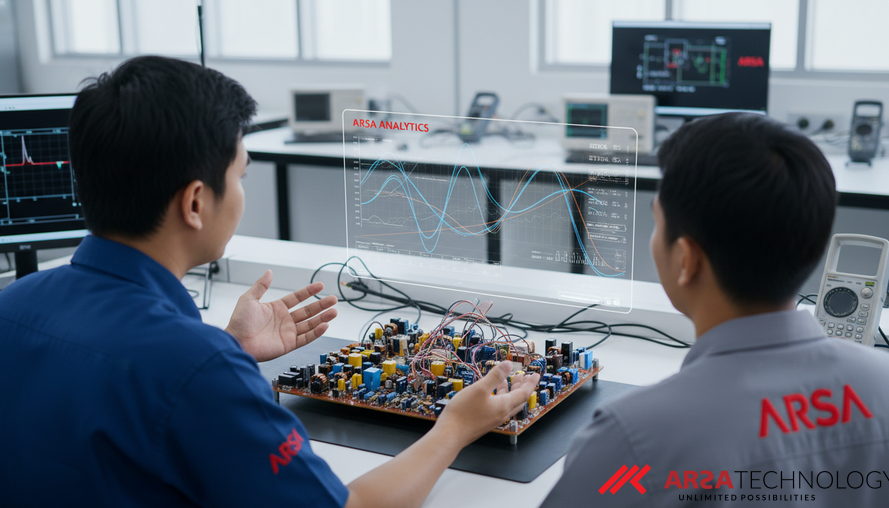
- Analog Circuit Design: In analog circuit design, precise control over signal waveforms, component responses, and system behavior is paramount. L-splines can accurately model complex non-linear characteristics of active and passive components, interpolate transient responses, or even shape desired output signals. The ability to prescribe endpoint derivatives with clamped conditions is essential for ensuring smooth transitions and preventing unwanted artifacts in electronic signals, directly impacting the performance and reliability of devices.
- AI Optimization and Control Systems: For AI optimization tasks, especially in areas like Bayesian optimization or reinforcement learning, accurate and fast function approximation is crucial. L-splines can serve as powerful surrogate models, quickly estimating complex objective functions. Their ability to handle specified boundary conditions allows for more controlled exploration of parameter spaces, leading to more efficient and stable optimization loops. This could be applied to fine-tuning machine learning models or optimizing complex industrial processes, where real-time analysis and response are necessary. ARSA Technology's commitment to delivering practical AI extends to developing custom AI solutions that leverage advanced algorithms for superior performance.
- Physics-Informed Neural Networks (PINNs) Alternative: Perhaps one of the most exciting potential applications highlighted is the role of multivariate clamped polysplines as a promising alternative to Physics-Informed Neural Networks (PINNs) for solving partial differential equations (PDEs) in mathematical physics. PINNs integrate physical laws directly into neural network training to solve complex problems. However, the mathematical rigor and proven stability of L-spline methods could offer a compelling alternative, providing predictable, verifiable, and potentially more efficient solutions for tasks such as fluid dynamics simulation, material science modeling, or environmental predictions. For instance, solutions like the ARSA AI Box Series, designed for edge AI processing, often require such underlying mathematical robustness to deliver real-time insights with high accuracy in demanding industrial environments.
- Signal Processing and IoT: Beyond these, the principles of fast, robust interpolation are vital for various signal processing applications, including the potential for enhanced keyword spotting in noisy environments or other real-time audio analytics. In IoT deployments, where vast amounts of sensor data need to be interpreted quickly and accurately, L-splines can provide the necessary mathematical backbone for reliable data interpretation and predictive modeling, as seen in ARSA's AI Video Analytics, which processes real-time CCTV footage for actionable intelligence.
ARSA Technology: Implementing Cutting-Edge AI for Enterprise
At ARSA Technology, our focus is on building the future with AI & IoT by transforming complex mathematical and algorithmic advancements into practical, profitable, and proven enterprise solutions. The principles demonstrated by this research – speed, stability, and precise control over data interpolation – are precisely what underpin robust AI deployments. For enterprises navigating digital transformation, the ability to leverage such advanced mathematical tools translates directly into reduced operational costs, increased security through more accurate monitoring, and the creation of new revenue streams through optimized processes and innovative product development. Our approach emphasizes combining technical depth with real-world deployment realities, ensuring that solutions are not just theoretically sound but perform reliably under industrial constraints.
The Future of Precision Modeling
The development of fast algorithms for interpolation with clamped L-splines of order four represents a significant step forward in numerical analysis and applied mathematics. By providing a mathematically sound, computationally efficient, and numerically stable method for high-precision data interpolation, this research unlocks new possibilities for engineers and AI developers. From designing advanced analog circuits to providing alternatives to cutting-edge AI techniques for solving physics problems, these L-splines are poised to play an increasingly vital role in shaping the next generation of intelligent systems and engineering solutions.
To explore how advanced AI and IoT solutions can transform your enterprise operations, we invite you to contact ARSA for a free consultation.
Source: Kounchev, O., Render, H., Simeonov, G., & Tsachev, Ts. (2026). Fast algorithms for interpolation with clamped L-splines of order four. arXiv preprint arXiv:2605.20283.