Ford's Quest for the Affordable EV: Engineering Efficiency in a Dedicated Innovation Lab
Explore how Ford's Electric Vehicle Development Center streamlines production, leveraging integrated design, manufacturing, and AI-driven efficiency to target a $30,000 EV.

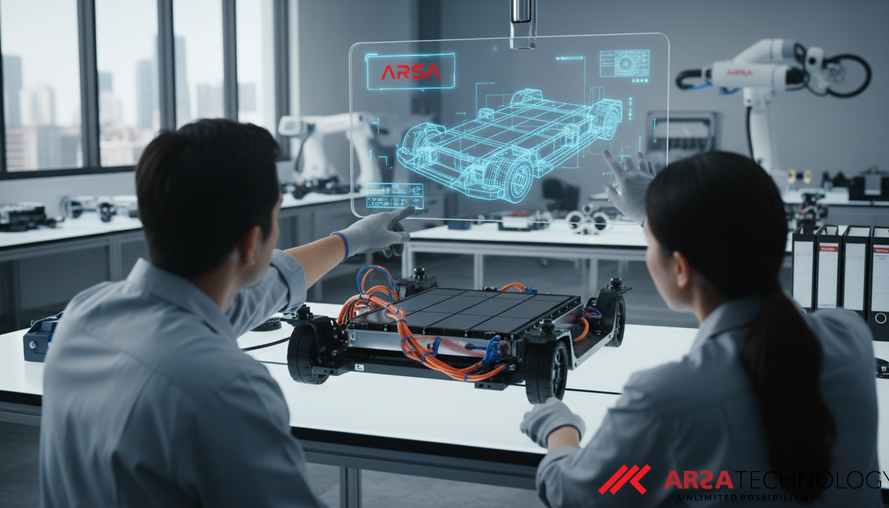
Amidst a fluctuating electric vehicle (EV) market and evolving regulatory landscape, automotive giants are redoubling efforts to make EVs accessible and profitable. Ford Motor Company, known for its deep heritage in manufacturing, is taking a bold, integrated approach to crack the code on affordable EVs. This strategic shift involves centralizing its Universal EV (UEV) platform development, focusing on proven manufacturing techniques, and leveraging rapid iteration cycles to achieve a target price point of $30,000 for its next model. The insights into this ambitious project come from a recent visit to Ford's Electric Vehicle Development Center (EVDC) in Long Beach, California, as reported by Peter Nelson for The Verge. (Source: The Verge)
A Unified Approach to EV Development
Traditionally, vehicle development at major manufacturers has been dispersed across various facilities, leading to potential delays and communication hurdles. Ford’s EVDC in Long Beach represents a significant departure from this model. By bringing multiple teams—engineers, designers, and manufacturing specialists—under one roof, Ford aims to eliminate silos and foster immediate collaboration. This co-location allows for rapid decision-making and instantaneous feedback loops, making even the most minor adjustments incredibly efficient. Every component, from interior materials to the entire assembly process, is scrutinized for maximum efficiency, with the ultimate goal of significantly reducing consumer costs.
This integrated environment accelerates the entire development cycle, transforming passive infrastructure into intelligent decision engines. Companies like ARSA Technology provide custom AI solutions that can build such comprehensive digital backbones, ensuring seamless data flow and collaborative workflows across complex engineering and design teams.
Rethinking Vehicle Assembly and Material Use
One of the most innovative aspects observed at the EVDC is the reimagining of the vehicle assembly process. Instead of assembling a unibody (floor, door frames, etc.) and then fitting interior components through door frames, Ford is exploring modular assembly. This involves constructing large sections, such as a complete midsection containing seats and the battery unit, which can then be integrated into the body as a single unit. This method promises substantial time savings compared to traditional bolt-in approaches. While the full implementation of this specific battery-as-floor-and-midsection concept for production remains to be seen, it highlights a deep commitment to assembly line optimization.
Beyond structural assembly, efficiency extends to material usage. Ford's lab workers employ advanced software to ensure that every square millimeter of interior fabric is utilized when cut, minimizing waste. This meticulous attention to detail, combined with rapid in-house prototyping of components like seats, allows designers and engineers to quickly evaluate comfort and make changes, reducing what once took months to mere weeks. Such precision in manufacturing processes can also be enhanced through AI Video Analytics, which provides real-time monitoring and quality control, ensuring optimal material use and assembly accuracy.
The Power of Zonal Architecture and In-House Wiring
Another critical area of focus for cost reduction and efficiency is the vehicle's electrical system. Ford is employing "zonal architecture" in its UEV platform, a departure from the more complex and extensive wiring of previous models like the F-150 Lightning. Zonal architecture simplifies the wiring harness, reducing material costs and making assembly more efficient. This approach organizes vehicle functions into localized zones, each with its own control unit and a shorter, more direct wiring path.
To further bolster this efficiency, Ford has an in-house wiring department where skilled technicians assemble all wiring harnesses, circuits, and control boxes. This eliminates reliance on external suppliers, ensuring quick turnaround times for design changes and mitigating potential supply chain issues. The ability to prototype and adapt wiring in-house is crucial for maintaining the rapid iteration pace required for cost-effective EV development. Edge computing solutions, such as the ARSA AI Box Series, could complement such in-house operations by providing localized, real-time processing for quality checks on wiring harnesses or to manage data flow within specific manufacturing zones.
Rigorous Testing for Real-World Performance
Ford's "bounties" system, where decisions are weighed against their net impact on efficiency and range, drives every aspect of development, including rigorous testing. The EVDC features comprehensive testing facilities designed to push prototypes to their limits. These include controlled climatic chambers that simulate extreme temperatures (from -40 to 65 Celsius), high humidity, varying elevations, and UV levels. A road load simulation chassis dynamometer replicates diverse driving scenarios, from maxed-out towing capacity on steep inclines to charging conditions with DC fast chargers.
Individual electronic control units (ECUs) are also tested in a massive Faraday tent to assess their susceptibility to external signals and vice versa, ensuring robustness and reliability. This exhaustive testing validates design decisions, predicts fuel economy range, and ultimately ensures the vehicle's performance and safety in diverse real-world conditions.
Strategic Location and Future Outlook
Ford's choice to establish its EVDC in Long Beach, California, is a strategic move. The region boasts a rich talent pool, particularly from the aerospace industry, providing access to highly skilled engineers with expertise in complex systems and rapid prototyping. This local workforce has proven invaluable to Ford's concentrated development efforts.
The integrated development model employed at the EVDC aims to create a foundational UEV platform that can be rapidly replicated and refined for various vehicle classes. If successful, this approach promises to significantly reduce the time and cost associated with bringing new EV models to market, paving the way for more affordable electric vehicles.
To explore how advanced AI and IoT solutions can transform your industrial operations and drive similar efficiencies, we invite you to contact ARSA for a free consultation.