From Pixels to Physics: Why Generative AI for Semiconductor Manufacturing Must Be Physics-Informed by Design
Explore why generative AI in semiconductor manufacturing requires embedding hard physical constraints from the outset, moving beyond perceptual plausibility to ensure functional, production-grade solutions. Discover the architectural toolkit and practical applications for enterprise success.

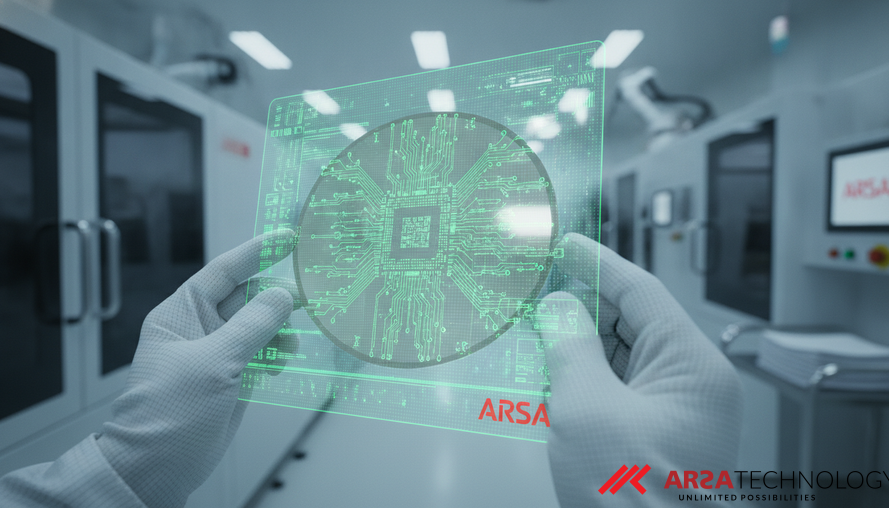
Bridging Generative AI from Perceptual Plausibility to Physical Reality
Generative Artificial Intelligence has rapidly evolved beyond its initial successes in creating compelling text and images, now venturing into domains where the stakes are fundamentally different. While generating a photorealistic image relies on "perceptual plausibility," the application of generative AI to physical systems demands an entirely new standard: "hard physical constraints." This transition marks a pivotal challenge for computational science, as outputs that merely look right but violate fundamental physical laws are not just low quality; they are often completely unusable. This distinction is particularly acute in semiconductor manufacturing, making it a critical proving ground for the next generation of AI innovation. The insights shared in the academic paper "Physics-informed generative AI for semiconductor manufacturing" underscore this crucial shift.
The core challenge lies in building generative models for environments where any violation of inherent physical laws renders an output worthless. Imagine generating a novel material or device geometry: if the proposed design cannot physically exist or function according to the laws of thermodynamics, mechanics, or electromagnetics, it holds no value. Semiconductor manufacturing encapsulates this problem with extreme severity, where nanometer-scale deviations can lead to catastrophic and expensive yield loss. The industry has spent decades perfecting digital infrastructure—from in-line metrology and fault detection to advanced process control (APC) and digital twins—all aimed at maintaining production within a minuscule process window where physics aligns with design intent.
The Critical Imperative for Physics-Informed Design
The precision required in semiconductor manufacturing makes it unique. Unlike a slightly imperfect generated image, a semiconductor mask or a process recipe that is 95% physically valid is not just suboptimal; it's scrap. The industry measures success by metrics like yield, critical-dimension uniformity (CDU), overlay, and defect density – all direct consequences of underlying electromagnetics, transport and reaction physics, and device behavior. A generative model that doesn't inherently encode these physical laws will, with high probability, propose designs or processes that appear plausible yet fail dramatically in real-world application.
Early applications of conventional generative AI in the semiconductor space, such as layout and mask generation, or process-recipe copilots, have already highlighted this gap. Without explicitly integrating lithography-aware constraints, generative models can suggest mask and layout candidates that require extensive, separate verification for printability, process-window compliance, and design-rule validity. Similarly, language model assistants might propose manufacturing steps that current toolsets simply cannot execute, necessitating time-consuming human validation against tool and process limitations. This necessitates a fundamental re-evaluation of how generative AI is structured, moving beyond simple data correlations to deeply embed physical principles.
Beyond Post-Hoc Filtering: Architectures for Guaranteed Validity
The traditional generative AI paradigm, successful in fields like language and image generation, often relies on post-hoc filtering to refine outputs. This means generating a plausible output and then checking if it meets certain criteria. For physical systems, particularly in semiconductor manufacturing, this approach is insufficient and costly. The rejection of an invalid output after it has been generated represents wasted computational resources and, if applied in a real manufacturing pipeline, could lead to significant material and time losses.
Instead, the next generation of generative AI for mission-critical physical domains must be "physics-informed by construction." This means architectural choices are made that intrinsically embed physical laws, conservation principles, and boundary conditions directly into the model's design. This ensures that every generated sample is physically valid from the outset, eliminating the need for extensive post-generation validation and filtering. This approach shifts the paradigm from merely plausible outputs to guaranteed functional and compliant designs.
Emerging Architectural Toolkit for Physics-Informed AI
A new toolkit of advanced generative architectures is emerging to tackle this challenge. These include sophisticated methods such as physics-informed diffusion models, which learn to generate data consistent with physical laws, and Partial Differential Equation (PDE)-constrained variational models, which ensure that generated solutions adhere to the governing equations of physics. Neural-operator priors are another innovative approach, enabling models to learn mappings between function spaces, allowing them to predict physical system behavior with high fidelity. Furthermore, conservation-law-respecting generative networks are designed to inherently preserve fundamental physical principles like energy or mass conservation.
These architectural innovations are critical for integrating generative AI into the existing infrastructure of semiconductor manufacturing. They connect directly with advanced engineering tools like differentiable lithography, Technology Computer-Aided Design (TCAD), and sophisticated process simulation. By building these physics principles into the AI's core, we can create systems that not only propose novel designs but also guarantee their physical viability and performance characteristics. ARSA Technology is at the forefront of applying such advanced techniques, utilizing computer vision and AI for practical deployment in real-world scenarios, transforming passive infrastructure into intelligent decision engines through custom AI solutions that meet demanding industry needs.
Strategic Integration Patterns for the Fab
Effective integration of physics-informed generative AI into semiconductor manufacturing relies on strategic patterns that bridge data-driven methodologies with physics-based simulations. This involves creating symbiotic relationships where generative models leverage the predictive power of simulators, and simulators, in turn, provide feedback to refine the AI's learning process. Such integration can streamline the design cycle, accelerate material discovery, and optimize manufacturing processes. For instance, generative models can propose new mask layouts, which are then validated by differentiable lithography simulators that can back-propagate gradients to refine the AI model, ensuring printability and process window compliance.
The path forward demands a concerted research agenda centered on developing robust physics-fidelity benchmarks to accurately evaluate the adherence of generated outputs to physical laws. It also requires the creation of advanced differentiable simulator infrastructure that can seamlessly integrate with AI training loops. Finally, the development of multimodal foundation models for physical design and manufacturing, capable of understanding and generating across various data types (schematics, simulation results, sensor data), will be crucial. These foundational elements will ensure that generative AI becomes a truly "load-bearing component" of the fab stack, rather than merely a "productivity gadget." Companies like ARSA Technology, with their focus on deploying practical AI and IoT solutions such as the AI Box Series and AI Video Analytics, exemplify how these solutions are applied in demanding industrial environments where accuracy and operational reliability are non-negotiable.
Engineering Generative AI for Real-World Success
Ultimately, for semiconductor manufacturing and other mission-critical physical domains, physical validity is not a negotiable constraint but the operative criterion of success. Architectures that are designed to enforce these hard physical constraints by construction will fundamentally outperform those that merely filter for them after generation. This distinction is sharpest in environments like the semiconductor fab, where the consequences of invalidity are immediate and costly.
By embracing physics-informed generative AI, enterprises can unlock unprecedented levels of innovation, reduce development cycles, and significantly cut down on waste and rework. This strategic shift transforms generative AI from a tool for exploration into a reliable engine for engineering and manufacturing excellence. ARSA Technology, having been experienced since 2018 in delivering production-ready AI and IoT systems, remains committed to building solutions that meet these stringent demands, ensuring real-world impact and long-term operational reliability for global enterprises.
For businesses aiming to integrate high-fidelity, physics-informed AI into their operations, exploring ARSA’s advanced solutions can provide a significant competitive advantage. To discuss how our expertise in AI and IoT can transform your industrial challenges into intelligent, reliable solutions, please contact ARSA today.
**Source:** Yaser Mike Banad, Sarah Sharif. "Physics-informed generative AI for semiconductor manufacturing: Enforcing hard physical constraints in generative models by construction." arXiv preprint arXiv:2606.11247 (2024). https://arxiv.org/abs/2606.11247